Posted: March 31st, 2013 | No Comments »
Limmud is an organisation dedicated to Jewish learning in all its variety, apparently. Anyway, they’re coming to Shanghai for a Limmud China event. A ton of Jewish and China related stuff going on over the 4/5th of April – Qingming Festival – all out at Qibao Watertown near Shanghai. I’m speaking on the 4th on Recovering Lost Jewish Lives and some of the mad, bad and murdered Jews of old China that have got a bit lost over the years…more details here.
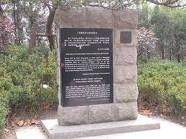 The memorial to the Jewish Ghetto of Shanghai in Wayside Park (now Huoshan Park)
Recovering Lost Jewish Lives in China: Yiddish Tears on the Bubbling Well Road, Paul French
Hardoon, Sassoon, Kadoorie, Ezra… all familiar names whose histories are well documented. But what of those less dramatic Jewish lives, what of those Jews in China who remained largely anonymous or lived on the fringes, in the margins or among the underbelly? Longtime Shanghai resident and NYT bestseller author Paul French will tell stories of those Jews in China, including where they danced all night in the 1940s Shanghai Ghetto; how Eliza Shapera was trafficked from a Bessarabian shtetl to a Shanghai bordello — and then murdered; how Mr. Kahn ended up in the Russian-Jewish slum of Yang-I-Hutung in Peking; who killed Sammy Weingarten in the Red Rose Cabaret, how Joe Farren ran away from Vienna’s Jewish ghetto, nearly became Shanghai’s biggest gangster and married Shanghai’s “Josephine Baker”; and why grown men cried when Lily Flohr sang in Yiddish on the Bubbling Well Road.
Posted: March 30th, 2013 | No Comments »
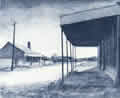
 I was recently back in Adelaide for the Writers’ Week and some meetings and took the opportunity once again to visit the marvellous Carrick Hill, a gorgeous 1930s period home in South Australia. Lovely as it is the real reason Carrick Hill is a treasure house is its art collection. Among the collection there are any number of Stanley Spencer’s, Jacob Epstein’s, Augustus Johns, not to mention a Gaugin, Vuillard and Boudins. Along with the Europeans there is a good collection of Australian artists less familiar to me. On both trips there that I have made one picture has stood out as amazingly impressive and I thought I’d share it as it is called The Chinaman’s Store painted in 1949 by Russell Drysdale. It sits in the dining room in a prominent place and so must have been precious to the owners too. I’m afraid this is the best version of it I have found online and it gives no hint of the beautiful colours or the sense (as several of us looking at it agreed) of a South Australian Edward Hopper painting…here’s a bit on the painting:
THE CHINAMAN’S STORE, 1949, is also a close study of the character of a vulnerable Australian country town – a simply built but solidly enduring place in a desolate, spacious and harsh landscape.
In this painting, unlike his usual “figure in the landscape” works, Drysdale has omitted any reference to the town’s inhabitants; the buildings must also stand as a reflection of the character of the people. However, this feature also serves to heighten the sense of desolation and desertion. The composition is simple: the store stands in the right-hand foreground opposite a nondescript wooden house, and in the background are several other houses and distant hills.
What might otherwise be an uninteresting scene is relieved by the richness of Drysdale’s colours. The various shades of brown, yellow and red, reminiscent of the colours of Venetian painting, characterise the “essence” of the land, and these are placed against a bright blue sky which serves to give a sense of the heat of the day. Patches of green grass hug the store’s verandah floor, softening the raw adjacent dusty thoroughfare.
Drysdale has no intention of hiding the ugliness of the scene, but presents it with authenticity and dignity. This is not the promised Utopia, but an exhausted, precarious landscape, in which the ghosts of defeated inhabitants linger on.
Adding to the feeling of unease and eeriness in this melancholy settlement, the dry road peters out into the infinity of a countryside which although invaded has not been subdued.
Posted: March 29th, 2013 | No Comments »
An interesting event if you happen to be Chengdu way…
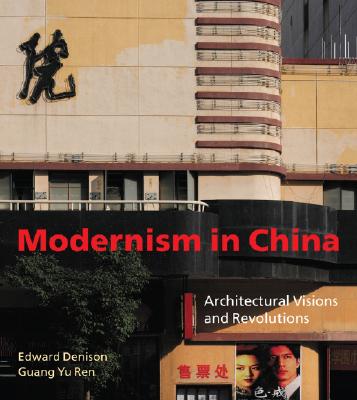
Architecture and the Landscape of Modernity in China before 1949
Edward Denison and Guang Yu Ren
Sunday, March 31st, 5:30pm
Chengdu Bookworm
FREE
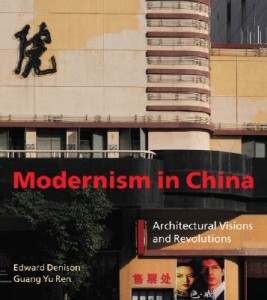
With building traditions spanning nearly five millennia, China boasts the longest continuous architectural lineage in history. Today, the country’s architectural aspirations are equally unprecedented, forming an omnipresent backdrop to the country’s glass-clad high-rises. However, linking past and present was a period of modernisation that revolutionised China’s architectural landscape and has been largely overlooked.
The history of China’s architectural encounter with modernity offers twenty-first century observers a unique insight into one of the most unprecedented and important manifestations of modernism outside the West – where the formation of an architectural modernism in China derived not only from the West, but also from the East.
Edward Denison is an independent consultant specialising in architectural and urban history.
Guang Yu Ren is a researcher and consultant specialising in architecture and the built environment. Guangyu is now based in London where she works as an advisor to firms working in China and co-authors books on architecture and design with Edward Denison.
Posted: March 29th, 2013 | No Comments »
A Shanghai RAS event of possible interest…
Hidden Treasures: An Exploration of Antique Maps of China and Asia, 16-18th Century
Vince Ungvary
Saturday 30th March, Registration 3:30 PMÂ – starts at 4:00 PM
The Tavern, Radisson Blu Plaza Xingguo Hotel 78 XingGuo Road, Shanghai
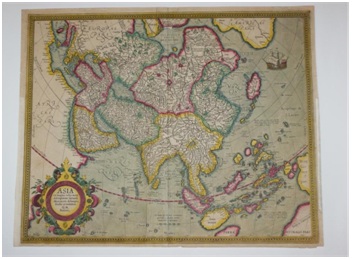
The history of Europe’s interactions with Asia is no better documented than through the maps that were produced by Europeans over a long period of time. From the time of Ptolemy in 150AD, maps of Asia had showed parts of the continent based on the scant information at the time provided by explorers and traders. For the next 1500 years, maps of Asia hardly changed from the Ptolemaic tradition. Even Marco Polo’s famous travels to China in the 13th century didn’t substantially alter the European conception of Asia’s geography although it did provide the impetus for the Age of Exploration by the Portuguese and the Spaniards in the 16th century to the Asian region. The search for trade opportunities, particularly of gold, silver and spices as well as silk and porcelain led to other nations joining the fray including England and Holland in the early to late 17th century. The Age of Exploration eventually led to European imperialism in Asia as Europe flexed its economic, political and technological muscle across the region.
Vince Ungvary is a graduate of Asian studies from Murdoch University, Perth, Western Australia where he majored in Modern Chinese History and Indonesian. Subsequent to his degree, Vince completed a post graduate degree of Marketing at Edith Cowan University, Perth. Vince has worked in the Asian region since 1991, first in Jakarta, Indonesia and then for the last 10 years in Shanghai.
Vince took up his passion of map collecting 15 years ago when he visited a house on the outskirts of New Delhi, only to find it was actually an antique bookstore and full of antique maps of Asia. Vince has since built his map collection which focuses mainly on Antique maps of Asia and China from the 16th century to the 19th century (and a few rare ones of pre-1949 Shanghai) to a collection of around 800 maps.
We will follow this course of history by seeing the changes in European conception and knowledge of Asia and China through the eyes of the map makers of those times. Actual examples of antique maps of Asia and China from the 1500’s, 1600’s and 1700’s will be displayed from Vince’s collection.
Next The Exhibition:
Walk along to
HONG MERCHANT GALLERY
N° 3 Lane 372 Xing Guo Road
(by Huaihai Road), Shanghai
To view Exhibition
Exhibition time: 5.45pm
Talk Cost: RMB 80.00 (RAS members) and RMB 130.00 (non-members). Includes one drink of 150 ml. glass of red or white wine/draft beer/soft drink/ tea or coffee. Those unable to make the donation but wishing to attend may contact us for exemption.
Exhibition Cost: Free
Membership applications and membership renewals will be available at this event.
RAS Monographs: Series 1 & 2 will be available for sale at this event. RMB 100 each (cash sale only).
To RSVP:Â Please “Reply” to this email or write to
RAS Bookings at: bookings@royalasiaticsociety.org.cn
Posted: March 28th, 2013 | No Comments »
An interesting post on Shanghaiist about the St Nicholas Russian Orthodox Church on Gaolan Road (formerly Rue Corneille in the old French Concession). Shanghailander Russians, it seems, got in there to have a service. The place has been through many incarnations – I remember the old Ashanti Dome restaurant well which was quite lovely (I don’t recall if the food was any good though). I posted back in 2009 about the “refurbishment” of the Church, built in 1934 – even in the Ashanti Dome days the nipples of the females painted in the frescoes on the ceilings had been covered by some purist Communist!! I thought it had been turned into a coffee shop for retired Communist Party cadres, but haven’t wandered down that streets for ages. The addition of a disco ball is rather disconcerting whether you consider the building a Commie retirees cafe or a Russian Orthodox Church really!! Anyway pics on Shanghaiist.
Posted: March 27th, 2013 | No Comments »
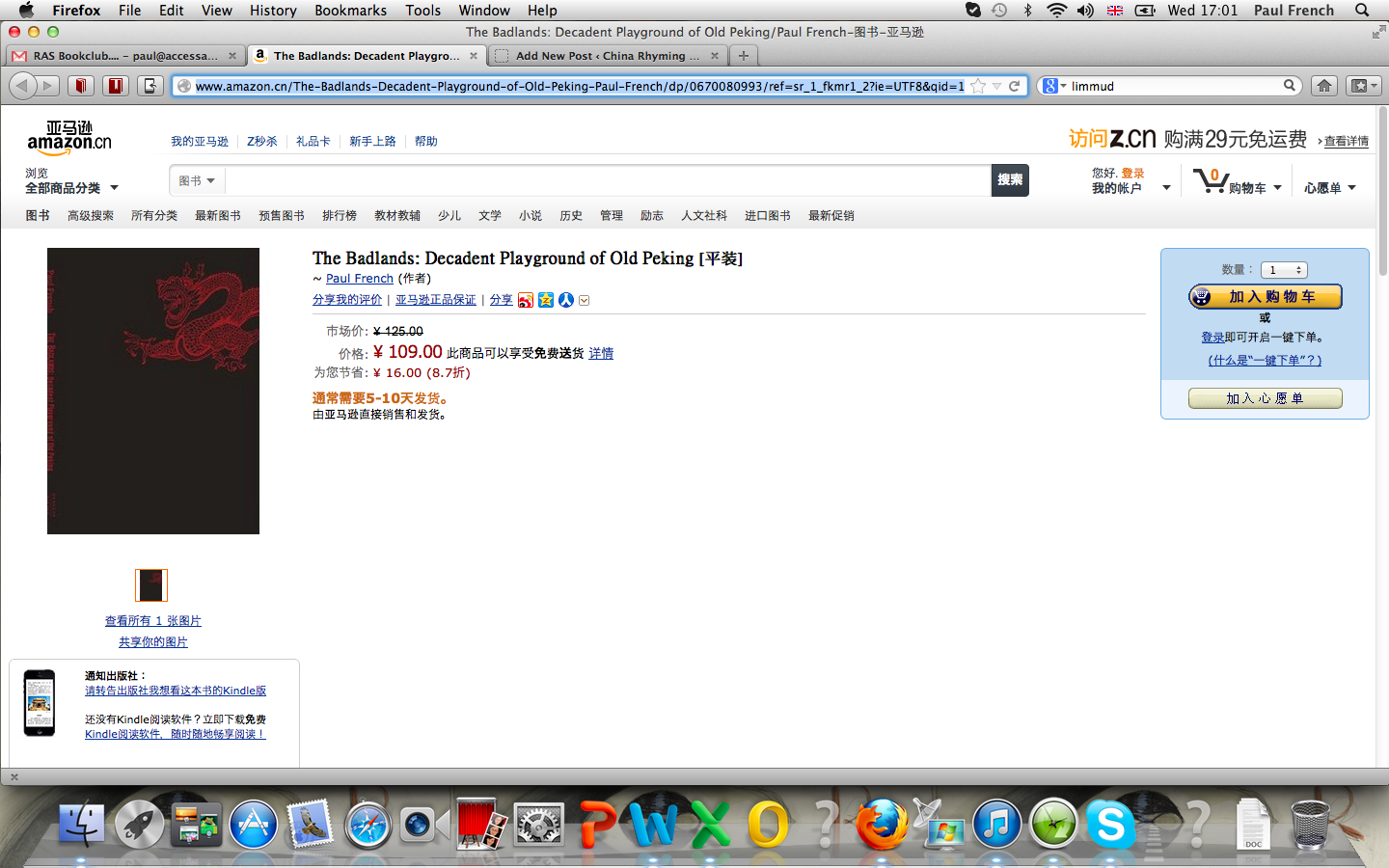
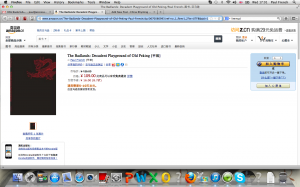
For anyone in China – just to let you know the limited edition (only available in Hong Kong, China and Australia) of my forthcoming e-book (everyone in the next couple of months) The Badlands: Decadent Playground of Old Peking, which is some back stories from the characters of the Peking Badlands in Midnight in Peking (now by the way just UK4.99 on Amazon.co.uk), is available on Amazon China here.
Posted: March 27th, 2013 | No Comments »
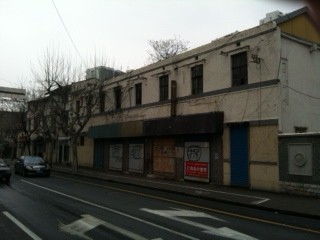
This building, on the junction of Taiyuan Road and Zhaojiabang Road (formerly Route Delastre and Rue de Zikawei), may not look very glamorous or particularly architecturally interesting but it is of importance for a couple of reasons. Firstly, it is in the former French Concession and does provide part of the architectural landscape, such as is left, of the area. A motley crew of real estate agents, various misguided foreigners without eyes and officials try to constantly tell me that there will be no more destruction in the French Concession but this is clearly not true as buildings keep getting pecked away at and disappearing.
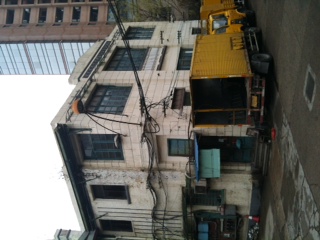
Secondly, this building was formerly on the less glamorous side of the Concession which was partly residential but partly light industrial. Indeed this building is actually an industrial property (as you can see from the pictures of the interior below). I’ve argued before that preservation can’t be just about big houses or important buildings but must also be aware of the need to preserve more ordinary housing and industrial architecture (the losses of industrial architecture are heaviest in Yangpu and Hongkou but there are bits and pieces elsewhere too. Anyway, this one is marked to go and one has to wonder about the fate of the slightly nicer and more architecturally interesting residential properties adjacent (as also shown below).
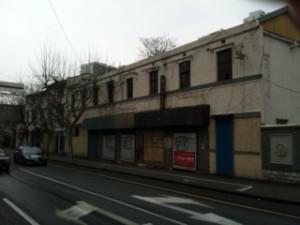 The condemned corner block…
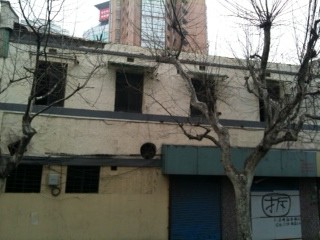 And a little closer….
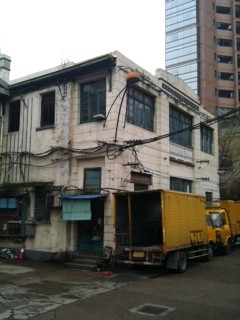
The light industrial unit it houses… 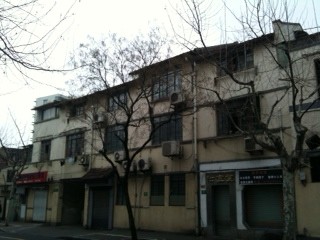
The quite nice residential block immediately adjacent to the west that must now also be threatened
Posted: March 26th, 2013 | No Comments »
This book by Liam D’Arcy-Brown, Chusan, appeared last year but it’s taken me a while to get hold of a copy (no Kindle version annoyingly)….a little niche in the greater Opium Wars story filled….
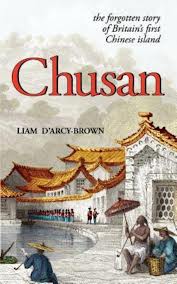
“We must religiously observe our engagements with China, but I fear that Hong Kong is a sorry possession and Chusan is a magnificent island admirably placed for our purposes.” So wrote the home secretary Sir James Graham to the prime minister Sir Robert Peel, as British diplomats prepared to return the island of Chusan to Chinese rule during the winter of 1845. For years, this now little-known island off the coast of Zhejiang province had been home to thousands of men, women and children of all classes and backgrounds, of all races and religions, from across the British Empire and beyond. Before the Union Jack ever flew over Hong Kong, it had been raised on Chusan. From a wealth of primary archives, Liam D’Arcy-Brown pieces together the forgotten story of how the British wrested Chusan from the Qing dynasty, only to hand it back for the sake of Queen Victoria’s honour and Britain’s national prestige. At a time when the Chinese Communist Party is inspiring a new brand of patriotism by revisiting the shame inflicted during the Opium Wars, here is a book that puts Britain’s incursions into nineteenth-century China in a fascinating and revealing new light.