Posted: March 24th, 2013 | No Comments »
We’ve not been overly blessed by good memoirs on North Korea – largely because so few people visit, let alone get to be stationed there for any significant length of time. John Everard is a different case – he was British Ambassador to Pyongyang from 2006-2008. Only Beautiful Please is his memoir of that time. As usual I won’t review here as I get asked to review elsewhere but details below…there’s also a longer review by Kerry Brown on the Asian Review of Books sites here.
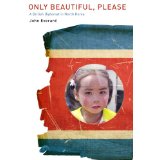
Coverage of the Democratic People’s Republic of Korea (DPRK) all too often focuses solely on nuclear proliferation, military parades, and the personality cult of its leaders. As the British ambassador to North Korea, John Everard had the rare experience of living there from 2006, when the DPRK conducted its first nuclear test, to 2008. While stationed in Pyongyang, Everard’s travels around the nation provided him with numerous opportunities to meet and converse with North Koreans.
Only Beautiful, Please goes beyond official North Korea to unveil the human dimension of life in that hermetic nation. Everard recounts his impressions of the country and its people, his interactions with them, and his observations on their way of life. He also provides a picture of the life of foreigners in this closed society, considers how the DPRK evolved to its current state, and offers thoughts on how to tackle the challenges that it throws up, in light of the failure of current approaches. The book is illustrated with often striking photographs taken by Everard during his stay in North Korea.
Posted: March 22nd, 2013 | 2 Comments »
ASIA HOUSE FESTIVAL OF ASIAN LITERATURE
7-22 MAY 2013
ASIA HOUSE FESTIVAL OF ASIAN LITERATURE – A SNEAK PREVIEW OF EVENTS:
Pre-Festival Events at Asia House and Alchemy (the Southbank’s annual festival of music, dance, literature, design and debate from India, the UK and South Asia):
Wednesday 3 April, 6.45pm, Asia House – How to Get Filthy Rich in Rising Asia
Man Booker Prize shortlisted author Mohsin Hamid (The Reluctant Fundamentalist) celebrates the launch of his new novel How to Get Filthy Rich in Rising Asia (one of the hottest books of the year ‘The Guardian’ has said), in conversation with Razia Iqbal.                      Â
Thursday 18 April, 6.45pm, Asia House – Women, Freedom and the Islamic World
With Turkey at number 122 on the Gender Gap Index, a formidable panel of female writers look at key issues concerning women in Islamic societies today. Turkey’s biggest selling female author Elif Shafak(Honour), joins Iraqi activist Haifa Zangana (Dreaming of Baghdad), and Iranian novelist Kamin Mohammadi(The Cypress Tree) to debate love, family, culture, war, freedom and autonomy, how writing can affect change and other concerns, at this event in partnership with British Council’s Turkey Market Focus 2013.
Sunday 21 April, Alchemy – A Long Way from Home: A Personal Journey from Helmand to England
Eighteen-year-old Najib Afghan, wounded in a bombing in Helmand and now a student in the UK, shares his personal journey from Afghanistan to Britain, updating his story following a recent visit to his home and family. Featuring Poetry of the Taliban with Felix Kuehn and moderated by Kenan Malik, this event is part of Asia House’s contribution to the 2013 Alchemy Festival at Southbank Centre.
Asia House Festival of Asian Literature events, 7-22 May 2013:
Tuesday 7 May, 6.45pm, The Commonwealth Club – Opening Night with Michael Palin
Globetrotter Michael Palin discusses his travels across Asia.
Wednesday 8 May, 6.45pm, Asia House – Nadeem Aslam in Conversation with Homa Khaleeli
From one of the most important young Pakistanis writing today comes an exquisitely written novel set in Pakistan and Afghanistan in the months following 9/11. Nadeem Aslam’s The Blind Man’s Garden is a story of war, love, of one family’s losses, and of the simplest, most enduring human impulses.
Friday 10 May, 6.45pm, Asia House – British Asian Culture: Doomed to be “Uncoolâ€?
‘Inspired’ by the term “Cool Britanniaâ€, a panel of “Cool British Asians†looks at the development of British Asian culture, food, literature and music in 2013 and asks the burning question: “can we ever be perceived as coolâ€? With poet, playwright and performer Siddhartha Bose (Kalagora), award-winning TV chef and writer Ravinder Bhogal (Cook in Boots), popular BBC radio and television presenter Nihal Arthanayake (DJ Nihal) and infamous broadcaster Bobbie Friction (BBC Asian Network, Desi Music); deftly moderated by award-winning journalist and author Sathnam Sanghera (The Boy with the Top Knot).
Monday 13 May, 6.45pm, Asia House – Cricket and the Rise of Modern India
Details to follow.
Tuesday 14 May, 6.45pm, Asia House – Re-Imagining the Chinese Dream                        Â
The popular view of China is one of an economic powerhouse set to dominate the 21st century. But what will recent political, economic and social changes mean to ordinary Chinese citizens and the rest of the world? Highly respected journalists and experts on China Will Hutton (The Writing on the Wall-China and the West in the 21st Century); Jonathan Fenby (Modern China, The Seventy Wonders of China); Gerard Lemos (The End of the Chinese Dream: Why Chinese People Fear the Future) and Isabel Hilton(ChinaDialogue, The Guardian), investigate beyond the tourist trail and press coverage, offering a revealing picture of all facets of China, including its own ability to cope with a changing world.                       Â
Thursday 16 May, 6.45pm, Asia House – Mark My Words: Censorship and Freedom of Expression
Panel discussion looking at censorship in India, Sri Lanka, China and across Asia, with experts in their field, journalists and commentators John Kampfner (Freedom for Sale); Tarun Tejpal (The Story of My Assassins),Frances Harrison (Still Counting the Dead) and Kirsty Hughes (Index on Censorship).
Monday 20 May – Burma Day at Asia House
A day of discussion, prose and poetry dedicated to Burma…including:
What Next For Burma? (The View from the Inside)
Discussion with Burma experts Ben Rogers (Burma-A Nation at the Crossroads), Wendy Law Yone (The Golden Parasol) and Burma Campaign UK coordinator Zoya Phan (Little Daughter). Moderated by award-winning television journalist, Sue Lloyd-Roberts.
Wednesday 22 May, 6.45pm, Asia House – Closing Night with Tan Twan Eng
A spectacular evening of food and drink and discussion to close the Festival, with twice shortlisted Man Booker Prize and Man Asian Prize author Tan Twan Eng (The Garden of Evening Mists).
Posted: March 21st, 2013 | No Comments »
Talking art the other day (The School of Shanghai 1840-1920 in Paris) reminded me that the Tate in London has a Roy Lichtenstein retrospective running till the end of May. I’ve never personally been a fan of pop art and all that American cultural referencing but, apparently, included in the exhibition are several of Lichtenstein’s Chinese landscapes as well as the more familiar pop art stuff. So, if like me you’d normally avoid the fighter planes and Disney kitsch, the landscapes may be worth the entry price…

That Lichtenstein would be interested in Chinese landscapes is not that odd if you think of him as an artist always interested primarily in form and style. By the sixties, when Lichtenstein painted his Chinese landscapes, he’d already been interested in Chinese art for two decades having bought a book on Chinese landscapes in Paris while stationed there as a GI. He was later further exposed to Chinese art as a student at Ohio State University in the late 1940s. Lichtenstein was particularly captivated by the traditional Chinese painting he encountered, in particular from the Song Dynasty (960–1279 AD). But then aren’t we all! But moving from that to painting landscapes yourself is quite a major step….

…of course Lichtenstein’s Chinese landscapes are reinterpretations rather than copies or attempts to paint in exactly the same style. Lichtenstein himself stated:
“I think (the Chinese landscapes) impress people with having somewhat the same kind of mystery (historical) Chinese paintings have, but in my mind it’s a sort of pseudo-contemplative or mechanical subtlety…I’m not seriously doing a kind of Zen-like salute to the beauty of nature. It’s really supposed to look like a printed version.â€
Nowadays of course Liechtenstein’s Chinese landscapes are perhaps better known that any individual Song Dynasty painters (at least in the west). The Gagosian Gallery in Hong Kong ran an exhibition of the landscapes recently and some feature in the Tate retrospective in London. I noticed, wandering through one of those “instant fakes”art shops in Hong Kong the other day, among the morass of dreadful big headed laughing peasants and Cultural Revolution posters spiked to show everyone heading to KFC (really, is anyone still buying that stuff??!!) some fake Lichtenstein Chinese landscapes with the tell tale dot printing effect. Some sort of flattery and recognition I suppose.
Posted: March 20th, 2013 | 1 Comment »
I can only apologise to you dear readers – quite how a book featuring Manchuria and a plague of marmots managed to slip by me I cannot imagine. Yet it did – but not forever – and so, below, the details of the fascinating Great Manchurian Plague of 1910-1911 by William Summers. There’s a longer review at the Asian Review of Books here by the way.

When plague broke out in Manchuria in 1910 as a result of transmission from marmots to humans, it struck a region struggling with the introduction of Western medicine, as well as with the interactions of three different national powers: Chinese, Japanese, and Russian. In this fascinating case history, William Summers relates how this plague killed as many as 60,000 people in less than a year, and uses the analysis to examine the actions and interactions of the multinational doctors, politicians, and ordinary residents who responded to it.
Summers covers the complex political and economic background of early twentieth-century Manchuria and then moves on to the plague itself, addressing the various contested stories of the plague’s origins, development, and ecological ties. Ultimately, Summers shows how, because of Manchuria’s importance to the world powers of its day, the plague brought together resources, knowledge, and people in ways that enacted in miniature the triumphs and challenges of transnational medical projects such as the World Health Organization
William C. Summers is professor of the history of science and medicine, molecular biophysics and biochemistry, and therapeutic radiology at Yale University.
 You’re all going to die!!!
Posted: March 19th, 2013 | No Comments »
Should you happen to be visiting Paris in the next few months….
L’ÉCOLE DE SHANGHAI (1840-1920)
Peintures et calligraphies du musée de Shanghai
8 mars – 30 juin
From 8 March to 30 June 2013, the Musée Cernuschi will be continuing its exploration of Chinese painting with “The School of Shanghai 1840-1920,†after “Six Centuries of Chinese Painting†in 2009 and “Chinese Artists in Paris†in 2011.
The exhibition gathers exceptional items loaned by the Museum of Shanghai, and enabling to “discover a key period of Chinese art history, when painters and calligraphers settled in Shanghai created the new Modernity,†in the 19th century, under the Qing dynasty. In the 1840s, the Jiangnan region, in Southern Central China, was troubled by conflicts in the towns of Nankin, Yangzhou and Hangzhou. Subsequently, a brilliant artistic community, present since the 18th century, decided to settle in Shanghai. “Historical upheavals provoked a deep cultural change, but also a true renewal of the arts, characterised by free lines and the irruption of colour†as explains the museum’s website.
The exhibition presents firstly the heritage of Jiangnan, and then highlights some of the major figures that influenced the stylistic evolution, before eventually observing how the transfer of calligraphic models to the pictorial field crowned the expressive power of lines, especially with the “birds and flowers†category.