Posted: July 21st, 2012 | 2 Comments »
So I came across this article on something called the Ahlulbayt News Agency website (no idea who they are I’m afraid). Anyway, it did attract my attention as it raised the issue that most mosques in China (not including predominantly, or once predominantly anyway, Muslim areas such as Xinjiang) have a Chinese architectural style reminiscent of traditional Chinese temple architecture. This is not surprising of course as the builders of these mosques knew how to build Chinese temples so that’s what they did. Similarly you can see Christian churches in cities like Istanbul built like mosques (the Haggia Sophia for instance) as that’s what Turkish builders knew how to do. That’s why China’s most famous mosque, the Niujie in Beijing (below) which dates back to 996AD, looks more like a temple than a traditional middle eastern mosque with trademark minarets, domes etc.we can all tink of other examples in cities around China – there is a busy mosque in Chengdu for instance which is also Chinese temple like in design and quite beautiful.
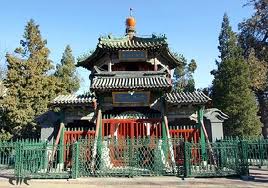
But apparently that is changing and now new mosques in China are more likely (70% likely actually, according to the article) to be middle eastern in style and design. Apparently it’s a combination of skills, costs and taste – Muslims and Muslim converts now think mosques should look like minarets etc, presumably not what Muslims in China thought in 996AD?
While on the subject I must recommend Michael Aldrich’s well researched and beautifully designed book The Perfumed Palace: Islam’s Journey from Mecca to Peking.

Posted: July 21st, 2012 | No Comments »
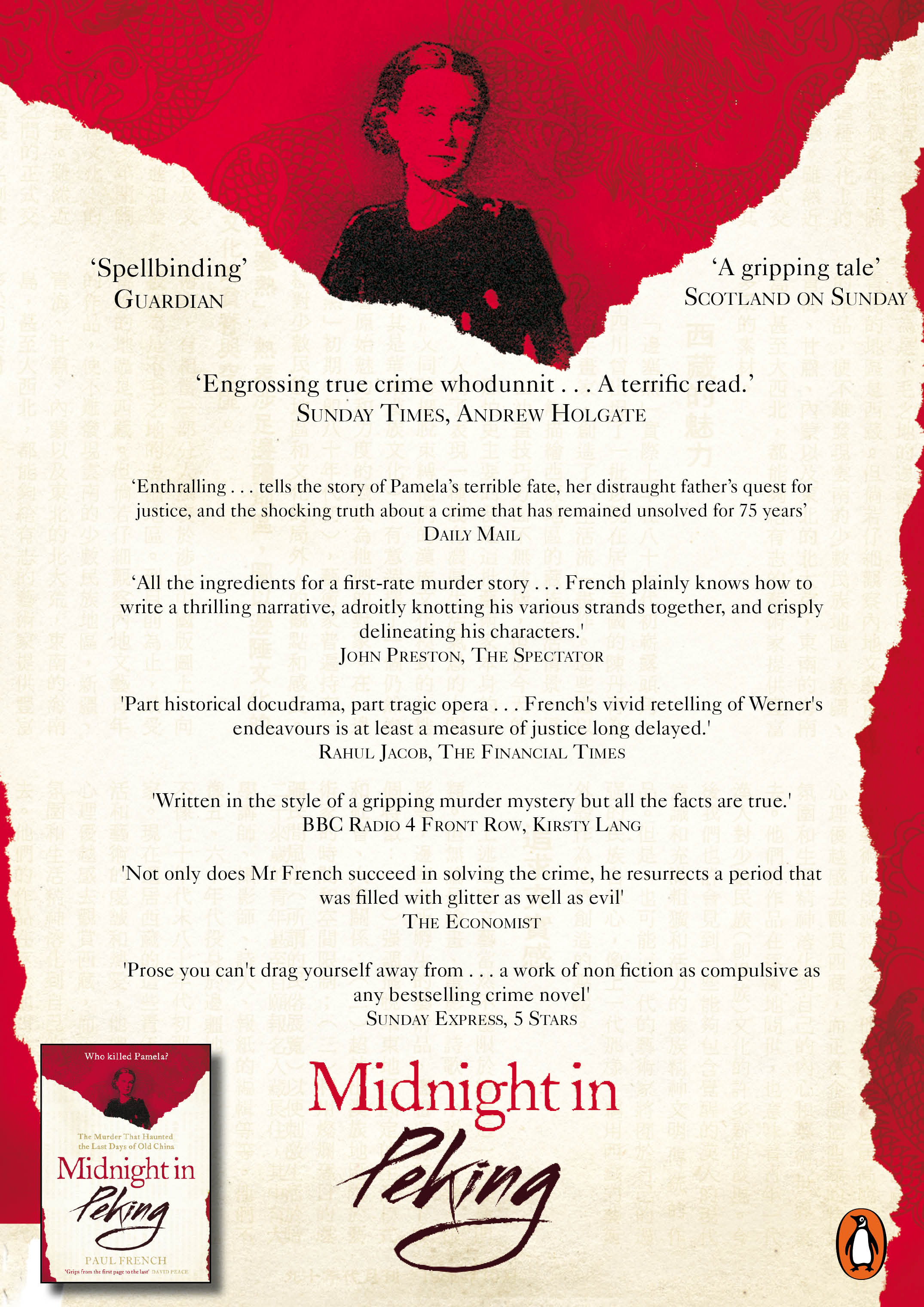
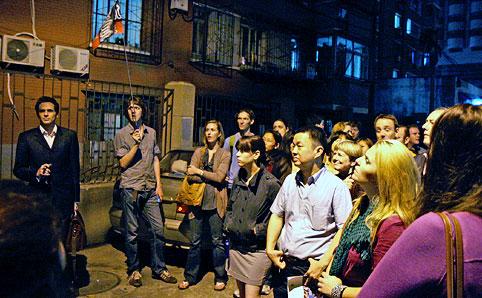
The San Francisco Chronicle has a list of things to do in Beijing that are free and fun – 798, Tiananmen, Ritan Park, Hutong strolling and the Midnight in Peking walking tour!!
Nice…
Here’s the tour online
And here’s some good folk actually on the tour….
Posted: July 20th, 2012 | 1 Comment »
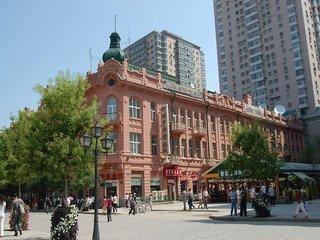
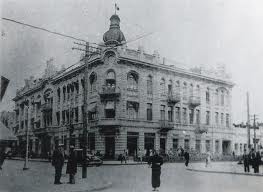
I first noted Harbin’s terrific Hotel Moderne back in 2008 (here) and remain a fan of that building though wouldn’t recommend it as a hotel to anyone (except those who like to try and channel old White Russians like me). I note that there is an essay online in the East Asian History journal all about the Hotel Moderne by Mark Gamsa of Tel Aviv University. Well worth a read – here’s a pic of the hotel today and yesterday:
Posted: July 20th, 2012 | No Comments »
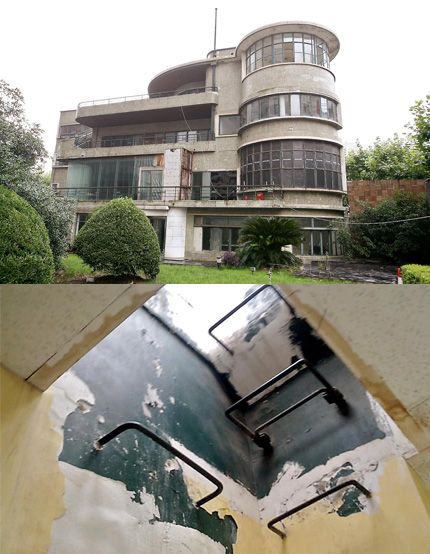
As this is reported in the Shanghai Daily we can imagine that the damage is even worse than they would report. This property, the old DV Woo house, has long been one of Shanghai’s best – a unique design. I’ll leave you to read the story and weep – still, on the positive side there is nothing that does not appear rescuable. I’m afraid that I’d also have to take issue with the article’s absurd claim that Xintiandi is a great example of preservation!! Anyway, do have a read and be encouraged that there are at least some Chinese academics who care…click here
Posted: July 19th, 2012 | 2 Comments »
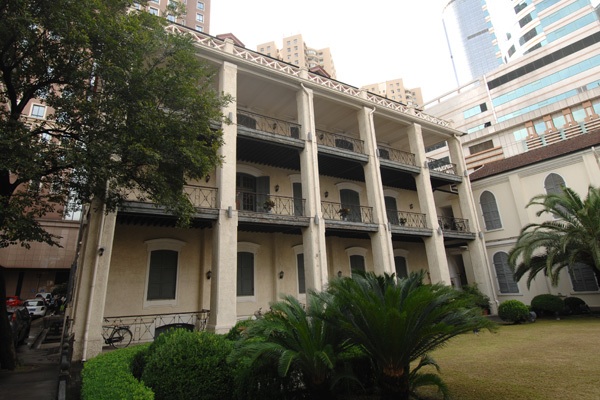
Anthem Press, publishers of Fat China among many other fine tomes, are doing a Library of the Month blog – had to get a plug for Shanghai in….
Click here
Posted: July 18th, 2012 | No Comments »
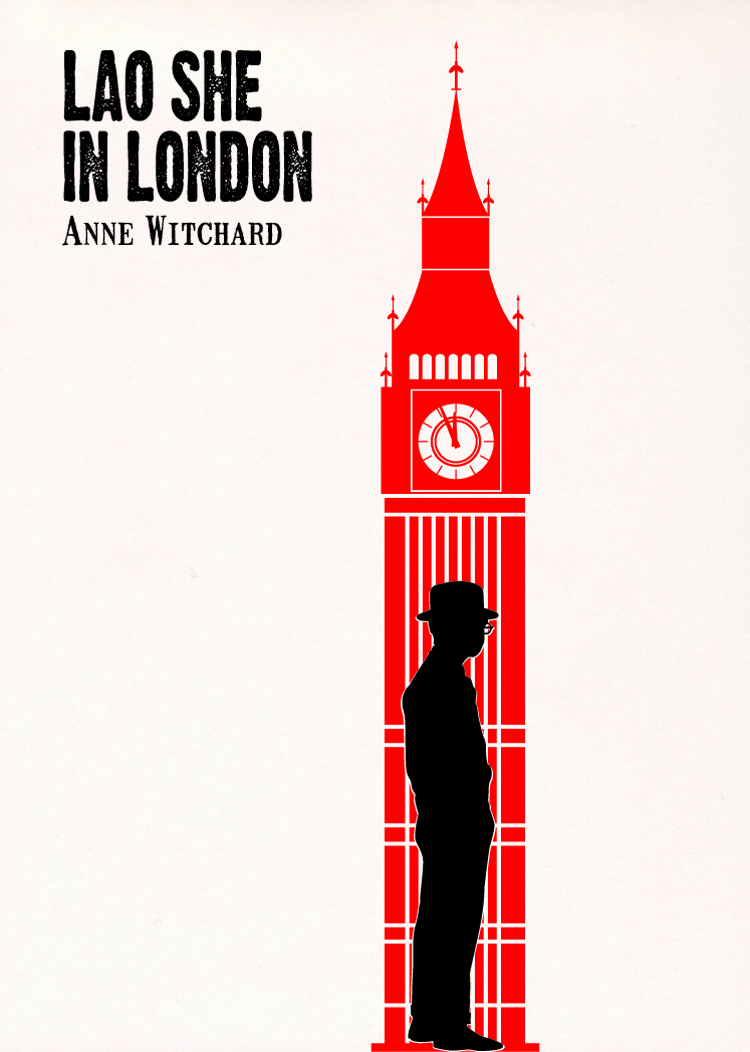
As series editor of the new Royal Asiatic Society Shanghai – Hong Kong University Press China Monographs series (more details here) I’m getting pretty excited now that we will have out first books out at the end of the summer. So here’s a sneak preview of the first book – all about the great Chinese writer Lao She and his years living in London in the 1920s and its effect on him and his writing. Details and cover below:
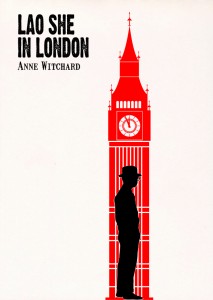
Lao She in London
‘London is blacker than lacquer’
Lao She remains revered as one of China great modern writers. His life and work have been the subject of volumes of critique, analysis and study. However, the four years the young aspiring writer spent in London between 1924 and 1929 have largely been overlooked. Dr Anne Witchard, a specialist in the modernist milieu of London between the wars, reveals Lao She’s encounter with British high modernism and literature from Dickens to Conrad to Joyce. Lao She arrived from his native Peking to the whirl of London’s West End scene – Bloomsburyites, Vorticists, avant-gardists of every stripe, Ezra Pound and the cabaret at the Cave of the Golden Calf. Immersed in the West End 1920s world of risqué flappers, the tabloid sensation of England’s “most infamous Chinaman Brilliant Chang” and Anna May Wong’s scandalous film Piccadilly, simultaneously Lao She spent time in the notorious and much sensationalised East End Chinatown of Limehouse. Out of his experiences came his great novel of London Chinese life and tribulations - Ma & Son: Two Chinese in London. However, as Witchard reveals, Lao She’s London years affected his writing and ultimately the course of Chinese modernism in far more profound ways.
Anne Witchard is Lecturer in the Department of English, Linguistics and Cultural Studies, University of Westminster. She is the author of Thomas Burke’s Dark Chinoiserie: Limehouse Nights and the Queer Spell of Chinatown (Ashgate Publishing, 2009) and co-editor with Lawrence Phillips of London Gothic: Place, Space and the Gothic Imagination (Continuum, 2010).
Endorsements
“A beautifully written book that combines literary biography with a remarkably succinct account of British modernism and an evocative portrait of interbellum London, as viewed through Chinese eyes. Anne Witchard reminds us eloquently of the key role played by Chinese influences – both classical and modern - in literary modernism, and makes a great contribution to our understanding of Lao She’s London years.” Julia Lovell, Birkbeck College, University of London
“Sent by missionaries to teach Chinese in London, the fastidious writer and intellectual Lao She arrived in 1928 in a city brimming with prejudice where tourists visited Limehouse to see opium dens and experience the Yellow Peril at first hand. Lao She’s novel about London reflects his experience of missionary condescension and popular panic. Anne Witchard’s wonderful weaving of Chinese and British intellectual lives with the horror engendered by characters such as Dr Fu Manchu is a fascinating reminder of how attitudes and prejudices needed to change.†Frances Wood, Curator, Chinese Collections, British Library
“This perceptive and engaging book explores the London years and writings of one of China’s finest twentieth century novelists. Lao She came to Britain to teach Chinese, but as Witchard ably shows, the fiction and essays he wrote here teach us instead new ways to understand 1920s London, Anglo-Chinese relations, and the transnational world of modern literature.†Professor Robert Bickers, Department of History, University of Bristol
Posted: July 18th, 2012 | No Comments »
An article here in the Global Times (I know, I know…) about a group of students trying to map the remaining architecture of Yangpu distririct (formerly Eastern District or Yangtzsepoo). Though the students found some buildings worthy of preservation (I believe there are more than they found) many have since been destroyed of course. As one student points out – “The only thing we could do after that was change the color of the mark for the building on the map. We changed it from red to black. Black indicates that the building has been lost forever,” – there’s a lot of black on any map of Yangpu I have to tell you!! Anyway, they mention some interesting buildings and, as this blog is mostly read by foreigners, do please go north of Suzhou Creek and have a look around – their is interesting architecture in Shanghai outside of the former French Concession!! Honestly!!