Posted: February 2nd, 2012 | 5 Comments »
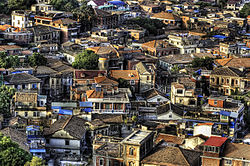
OK, so it’s been over 6 years I just realised since I last got time to visit Gulangyu Island in Xiamen (Amoy). Then I saw this article on Gulangyu on CNNGo Shanghai, the island that was home to the majority of the foreign population when Amoy was a treaty port. The article (and CNNGo does not run anything but gushing articles for some reason) claims it’s still charming though when I was last on the island, though still blessedly car free, the treaty port era western houses were mostly in a very bad state of repair and basically crumbling away. Since then I’ve heard differing reports about restoration or destruction so any serious information welcome. This article suffers a couple of problems in that the author appears to be a first time visitor so therefore has no idea whether Gulangyu is more or less charming, more or less preserved and protected than it was a decade ago and, sadly, the pictures accompanying the story give no indication as to the state of repair of the island’s housing stock. The fact that the article claims the government is to charge an entry fee worries me – we all saw the ‘tartification’ that happened to Shanghai’s water towns and countless other locations once that happens. Any recent and informed information and opinion on Gulangyu much appreciated.
Posted: February 1st, 2012 | 2 Comments »
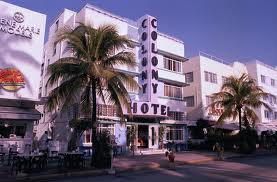
I know I am very late with my annual Shanghai Architecture: What We Lost list for 2011 but it is coming along and I’ll get it up in the next couple of weeks – though the destruction last year was slightly less than previous years due to construction slow down and the architecture catastrophe that was the EXPO moving on, there were, and are, still significant casualties. Anyway, before that then here’s a piece celebrating the best architecture in the city from art-deco fan Spencer Doddington on CNNGo Shanghai – click here. Usefully Spencer explains why Shanghai’s art-deco tradition is different from either New York or Miami, the two art-deco American cities most often spoken of in comparison to Shanghai. A picture of South Beach’s marvellous Colony Hotel below – there’s some great Shanghai photos accompanying the CNNGO article
Posted: February 1st, 2012 | No Comments »
Alexander Grantham
With a new introduction by Lord Wilson of Tillyorn
Echoes: Classics of Hong Kong Culture and History series
January 2012  244 pp. 36 b/w illus.
Paperback ISBN 978-988-8083-85-5Â HK$180 / US$25.00
“A lively, witty, candid and invaluable guide to understanding the mentality of colonial administration at its highest levels. Like all long-serving colonial governors Grantham was treated almost as a demi-god in the Crown Colony of Hong Kong, and it was only when he had his toes trodden on in a crowded railway carriage while on leave in England that he was powerfully reminded of how ordinary he really was.” — Steve Tsang, author of A Modern History of Hong Kong
- By Alexander Grantham (è‘›é‡æ´ª), one of the most important Hong Kong colonial governors whose decade was a very eventful one — postwar reconstruction, 1949 revolution, huge increase in population and industrialization.
– An important first-hand account of the workings of Britain’s colonial system; also contains vivid anecdotes about life behind the scenes in Government House.
- A very readable, personal informal memoir — quite humorous in places.
Sir Alexander Grantham began his career in the British colonial service as a cadet in Hong Kong in 1922. He served in Bermuda, Jamaica and Nigeria, and as Governor of Fiji before returning to Hong Kong as Governor in 1947 until his retirement in 1957.
Posted: January 31st, 2012 | No Comments »
I’ll be at Adelaide Writers’ Week this March along with tons of other folk – it’s a stunningly good list, part of the wider Adelaide Festival and I’m glad I get to be there for all of it. Here’s some links, I’ll highlight my stuff closer to the date –
Adelaide Writers’ Week
My major session – rather grandly titled as The China Hand: Paul French (but don’t worry I’ll be talking about books and other people not me and Nick Jose is moderating to stop me doing precisely that!)

Posted: January 30th, 2012 | No Comments »
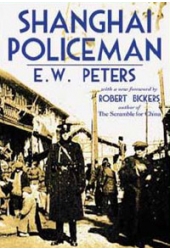
EW Peters’s classic account of being a Shanghai copper, Shanghai Policeman, in the 1930s is now reprinted thanks to Earnshaw Books. Shanghai Policeman is a problematic book – Peters is a highly complicated and conflicted character who’s actions and motives are often strange and not always fully explained satisfactorily in the book. Still, it is an interesting mix of kidnappers, robbers, the Shanghai riot squad, beggar boats and English blokes get themselves into some messes in Shanghai (usually female related as ever). The book also sheds a lot of light on Shanghai’s old Eastern District, what is now Yangpu, an area that remains terra incognito to 99.9% of foreigners who ever come to China these days but used to be well known to the older Shanghailanders. There’s a new introduction by Robert Bickers too, so well worth picking up.
Posted: January 29th, 2012 | No Comments »
My new year’s blogging resolution was to include more poetry on this blog – poetry with a Chinoiserie feel. I’ve posted a couple of Vachel Lindsay Chinois poems already (here and here) and today some of the great Ezra Pound. Pound had a long love affair with all things Oriental, Chinese and Chinoiserie and, of course, if a highly problematic character politically and ideologically. His early career in London saw him fascinated by Japan and China and become a translator, encouraged by he great Harriet Monroe.
This poem, entitled Ancient Wisdom, rather cosmic appeared (perhaps not first, but it’s where I first came across it) in the second (and last) edition of Blast, the short-lived but fascinating journal of the Vorticists produced ostensibly by Wyndham Lewis.This edition and poem appeared in 1915 and was entitled the “War Issue” and was hard hitting regarding the mechanised carnage in France at the time. The poem was later included in Pound’s collection Lustra, published a year after Blast (2) in 1916.
So-shu was the Japanese form of Chuang Chou (Tzu), a Chinese Taoist philosopher. This is Pound’s version of a Li Po poem about Chuang Tzu – Arthur Cooper, Li Po’s great translator also translated several versions of this poem. I’ve included Cooper’s translation below out of interest. Pound seems, to me, lighter and more concise but probably (and I’ve not checked the original) Cooper was more accurate to Li Po – but then Cooper was primarily a translator and Pound primarily a poet so perhaps not totally unexpected. So first Pound:
So-shu dreamed,
And having dreamed that he was a bird, a bee, and a butterfly,
He was uncertain why he should try to feel like anything else,
Hence his contentment.
— Ezra Pound
and now Cooper:
Did Chuang Chou dream
he was the butterfly
or the buterfly
that it was Chuang Chou?
In one body’s
metamorphoses
All is present
infinite virtue!
– Arthur Cooper
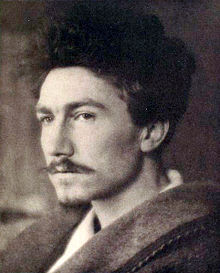
Pound – looking every bit as a radical poet should
Posted: January 28th, 2012 | No Comments »
James Palmer featured on this blog a few years ago for his great book The Bloody White Baron about Baron Ungen von Sternberg, the White Russian General who marauded across Mongolia. It was a rip roaring read about one of the twentieth century’s true nutters!! So, great to see his new book has finally hit the shelves – Heaven Cracks, Earth Shakes – about the 1976 Tangshan Earthquake. He’ll be in Shanghai and Suzhou at the Royal Asiatic Society in March apparently.
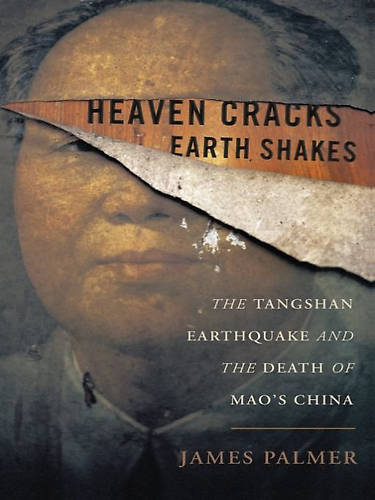
When an earthquake of historic magnitude leveled the industrial city of Tangshan in the summer of 1976, killing more than a half-million people, China was already gripped by widespread social unrest. As Mao lay on his deathbed, the public mourned the death of popular premier Zhou Enlai. Anger toward the powerful Communist Party officials in the Gang of Four, which had tried to suppress grieving for Zhou, was already potent; when the government failed to respond swiftly to the Tangshan disaster, popular resistance to the Cultural Revolution reached a boiling point.
In Heaven Cracks, Earth Shakes, acclaimed historian James Palmer tells the startling story of the most tumultuous year in modern Chinese history, when Mao perished, a city crumbled, and a new China was born.
Posted: January 27th, 2012 | No Comments »
A few years ago when I was writing my history of foreign journalists in China, Through the Looking Glass (hard copy or very competitively priced Kindle edition) I gathered together a series of rather odd comparisons of China by visitors to places back home that struck me as slightly silly, but fun. Perhaps one day I’ll get enough to do something with, but until then here’s a new one I came across recently and the others below from the great and the good for your delectation:
The great and usually erudite and brilliant W Somerset Maugham wrote:
‘…the bamboo, the Chinese bamboo, transformed by some magic of the mist, look just like the hops of Kentish field’
indeed!! But compared to the below perhaps not so odd:
- The American comedian Will Rogers compared the countryside around Harbin to Nebraska when he visited in the early 1930s.
- In the 1870s Jules Verne compared Hong Kong to a town in Kent or Surrey
- In 1933 Peter Fleming toured China and compared Chengde to Windsor
- He then compared Peking with Oxford for some reason!
- Later in 1938 Auden and Isherwood described the countryside around Guangzhou as reminiscent of the Severn Valley
- And then during his stay in China during the Second World War the (yet to be at the time) famous Sinologist Joseph Needham compared Fuzhou to Clapham and, perhaps most bizzarely, wartime Chongqing to Torquay!
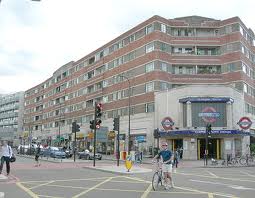
And so…here’s Clapham in case you thought yourself transported via this photograph to Fuzhou with Joseph Needham!!