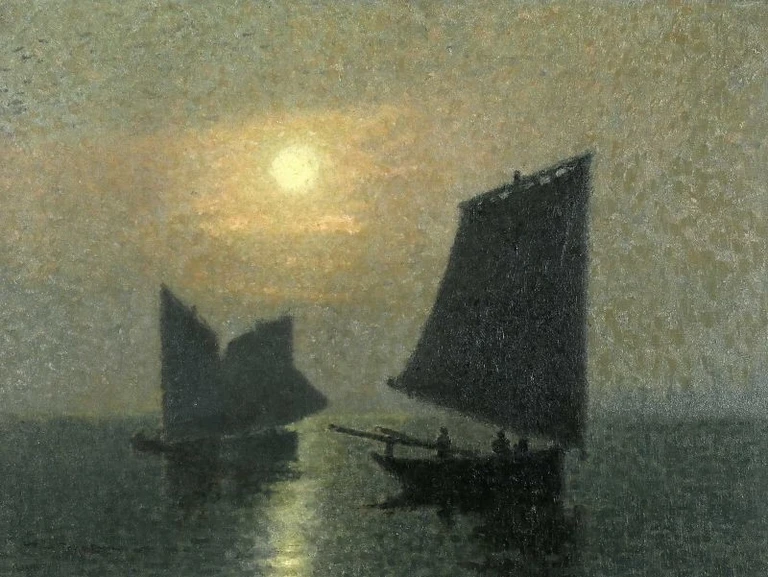
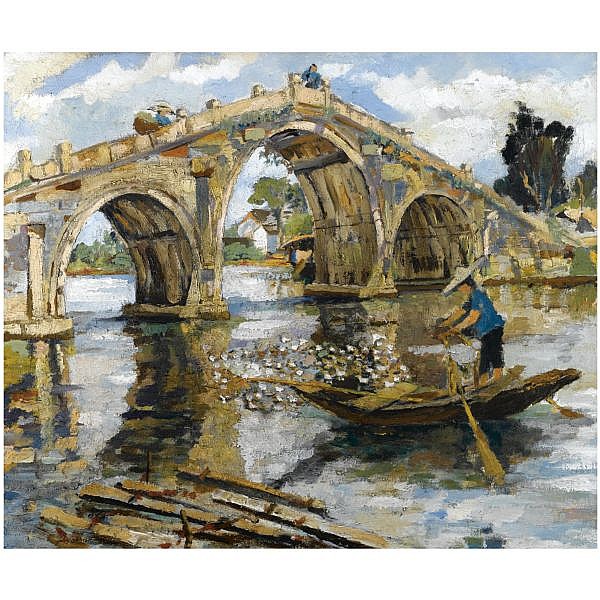
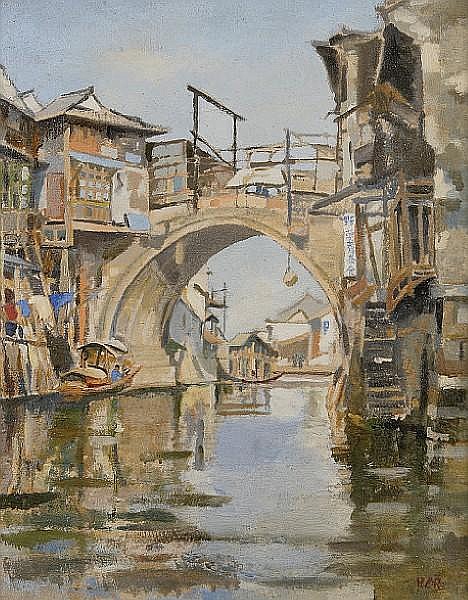
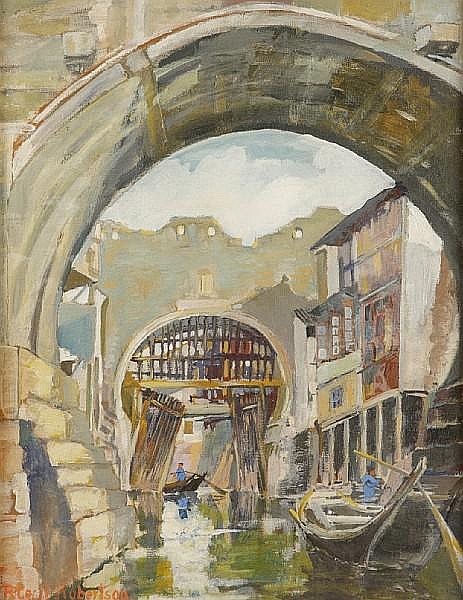
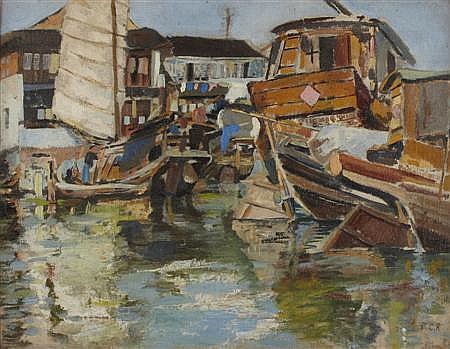
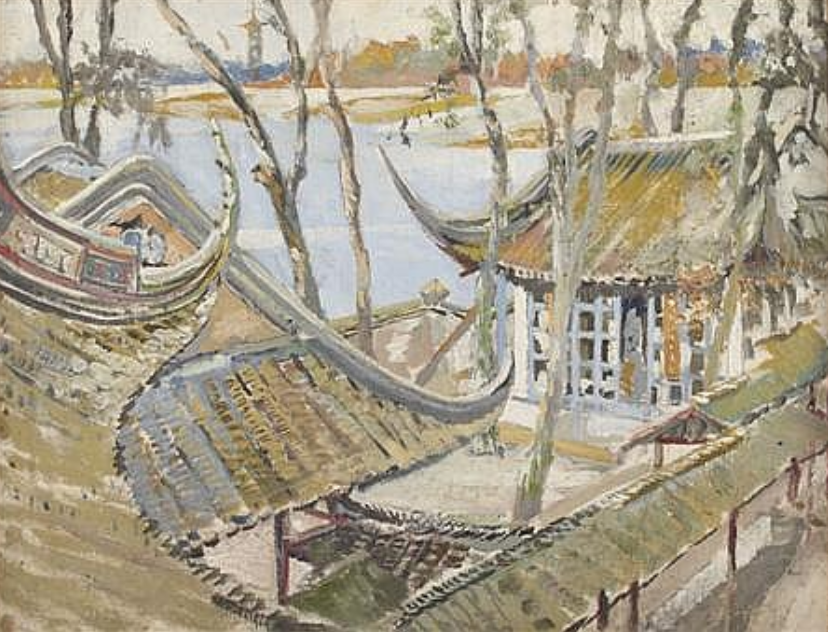
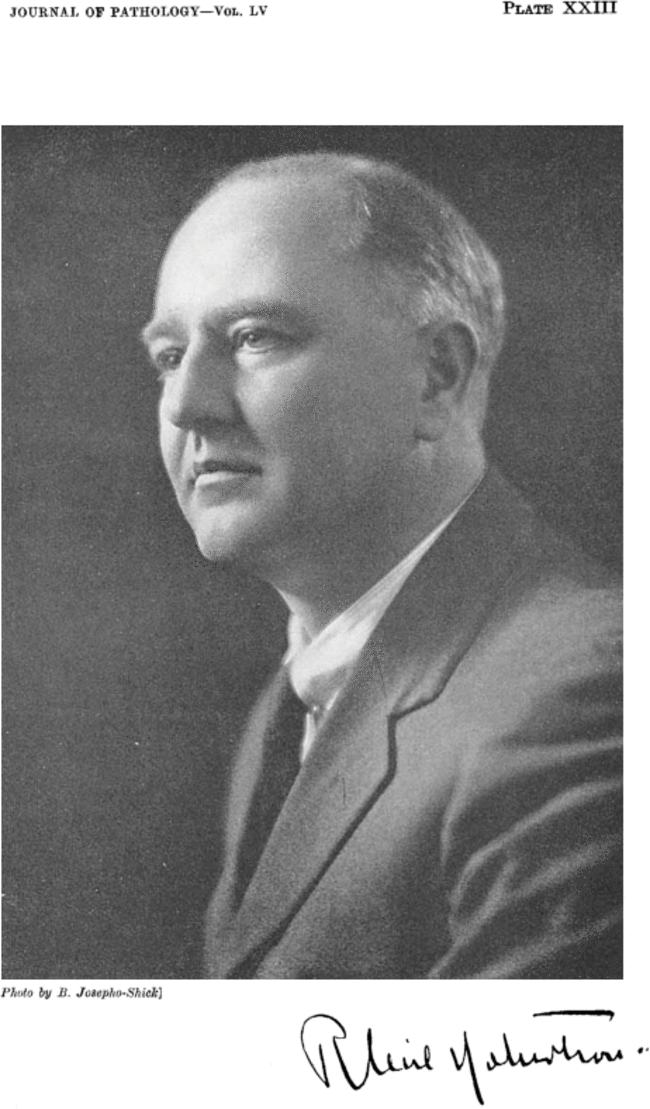
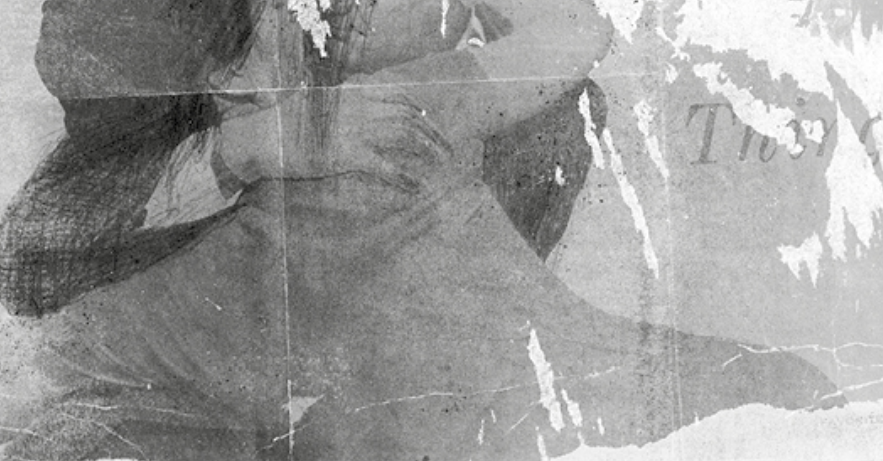
Robert Cecil Roberston, born in Kilmarnock, Scotland,1889 and died in Hong Kong 1942 while interned during the Japanese occupation. He was a captain in the Royal Army Medical Corps during WW1. He was involved in The British Army Aid Group (BAAG) was a paramilitary organisation for British and Allied forces in southern China during the Second World War, interned in Stanley where he died. He’s buried in Hong Kong Cemetery. He was also a pretty good artist – some examples below….
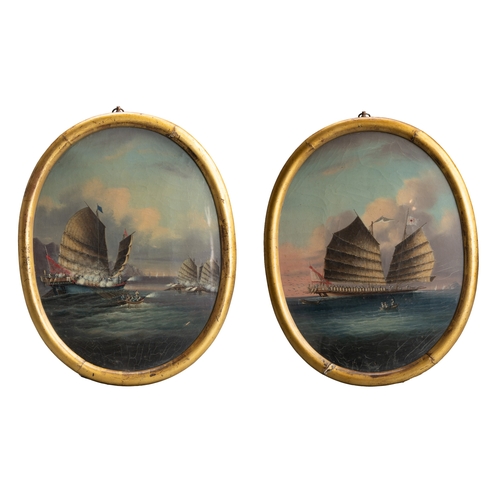
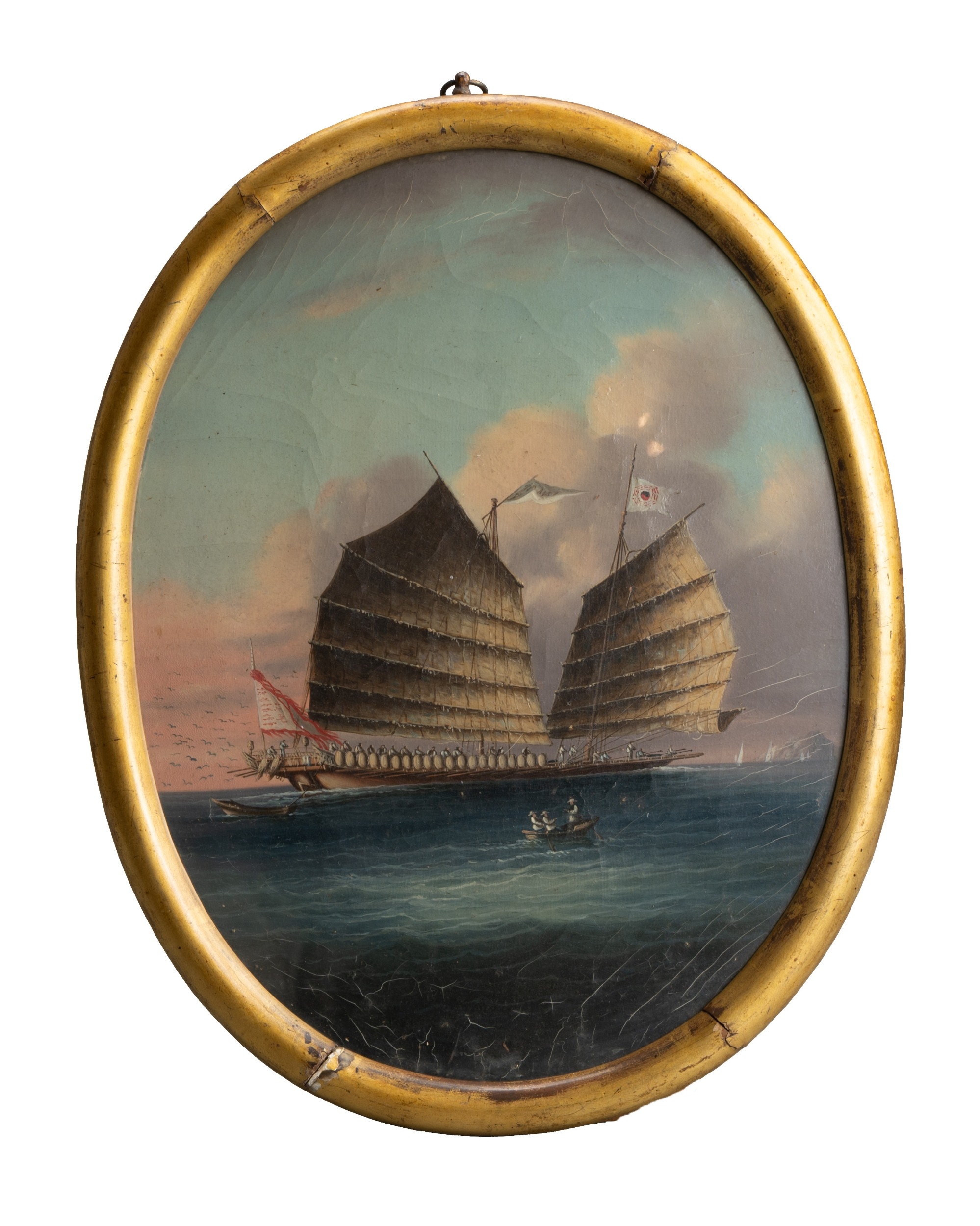
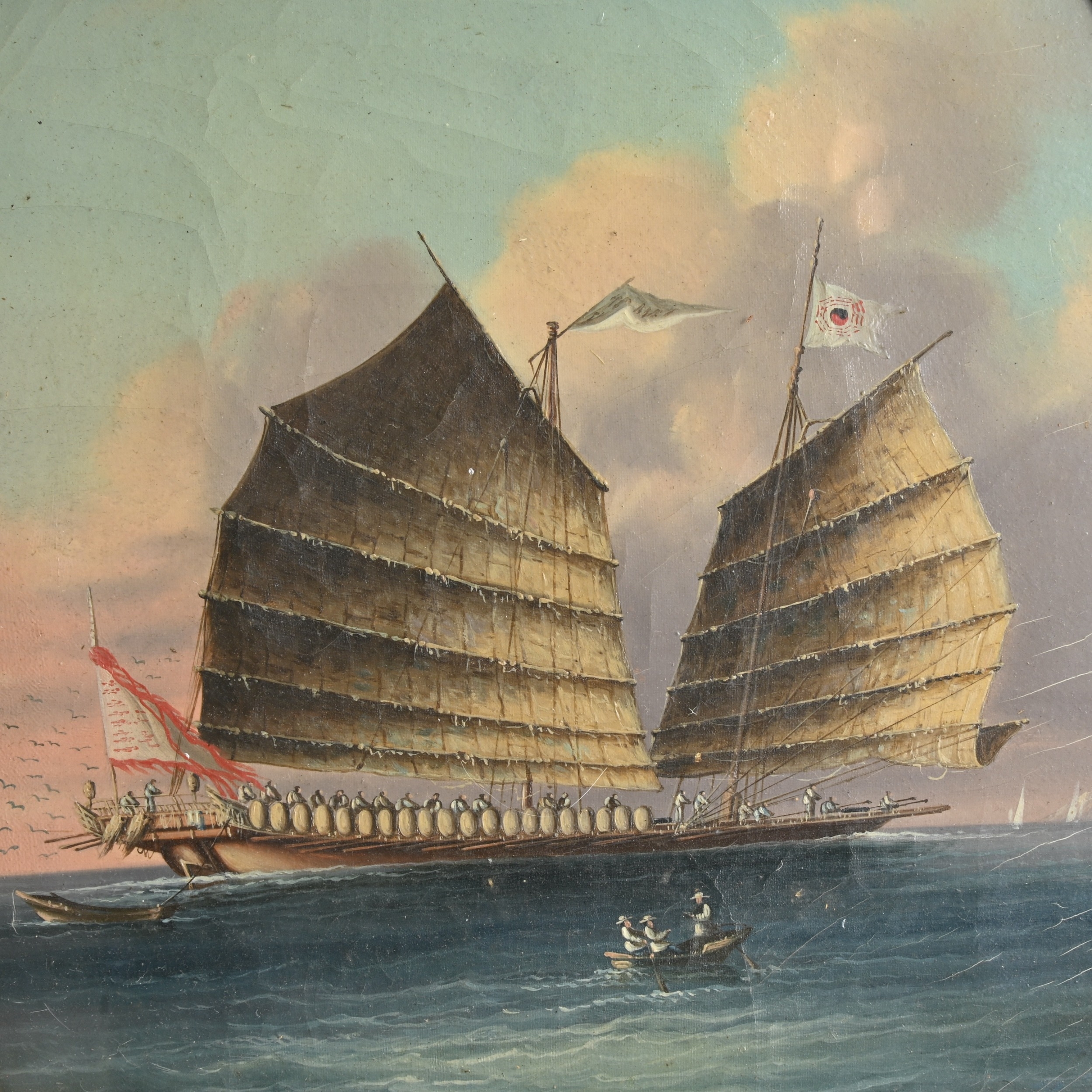
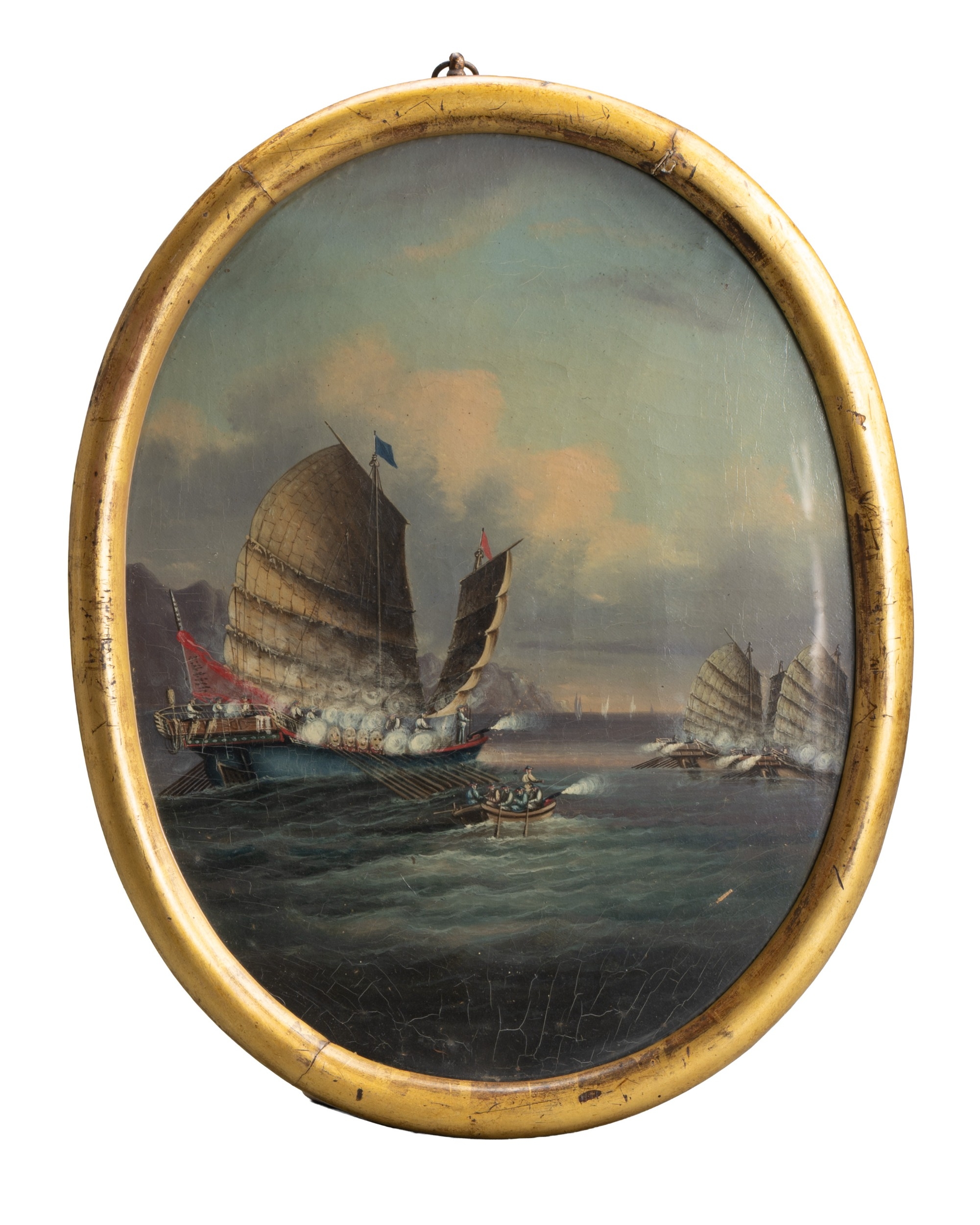
Framed glazed oil paintings of war junks off the south China coast, 1870 by Commander Seymour Spencer-Smith (1841-1893). Spencer-Smith was stationed on the Royal Navy China Station at various intervals between 1869 and 1875 (by which time he attained the rank of Captain) involved in the suppression of heavily armed pirate networks in the South China Sea aboard the gunboat HMS Cockchafer, rampant a decade after the Second Opium War.
Seymour Spencer-Smith survived the Navy – serving on HMS St. Andrew during operations in Chinese waters and in command of HMS Rapid, only to die in a house fire at his Westminster home.
If anyone is able to identify the war junk flags I’d appreciate any information?
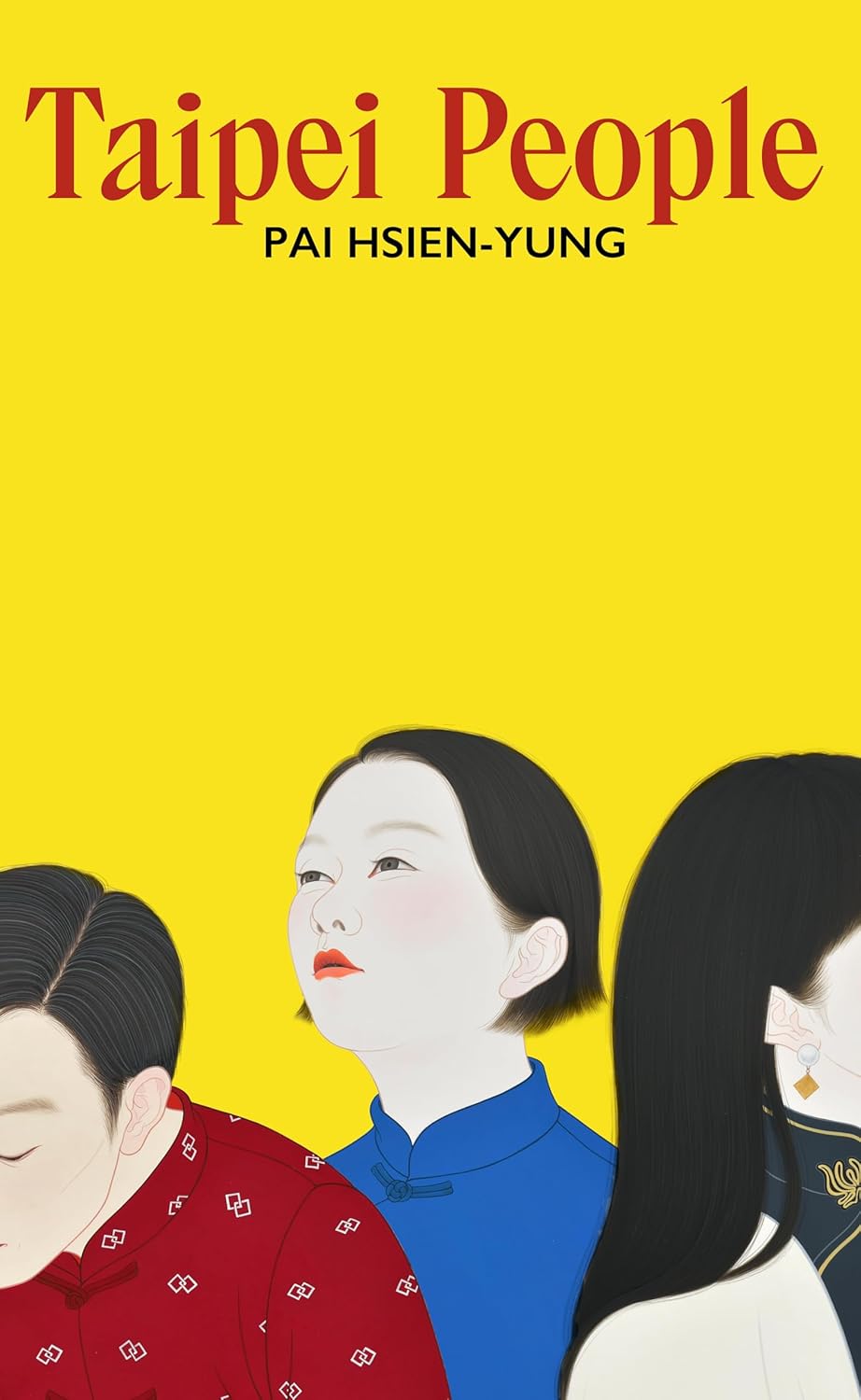
I’ll probably be talking about this new short story collection published this May, Taipei People, from Pai Hsien-Yung (Vintage Classic) more on the blog, but wanted to mention specifically that it includes the short story The Eternal Snow Beauty, a classic of Modernist writing about Shanghai.
Cover art by Yuwa Kato
Taiwanese-American author Pai Hsien-Yung has been often overlooked in translation, and this collection rectifies that omission. Guilin-born (1937) Pai was the son of a (Muslim) KMT General. He grew up in Shanghai, Nanjing and Chongqing (with a brief period at a Catholic school in Hong Kong) before his family left for Taiwan. He later moved to America (and became a Buddhist – religion #3). Taipei People, a collection of short stories dealing with the relocation of various Chinese people from mainland China to Taiwan after the Nationalist defeat in 1949 (Pai’s family actually departed in 1952), was published in Chinese in 1971. His stories employ literary techniques of Modernism, nostalgia, melancholy and remembrance with historical fiction. The great literary critic CT Hsia believed Eileen Chang (Zhang Ailing) and Pai Hsian-Yung were the best Chinese short fiction writers of the twentieth century. And, if you are a fan of Chang, particularly her more direct Shanghai/Hong Kong short stories such as Lust, Caution, Love in a Fallen City, The Golden Cangue then you’ll appreciate Pai.
But I want to just specifically mention his story The Eternal Snow Beauty. The aging “Snow Beauty” (Yin Hsueh-yen) looks back on her days as the belle of Shanghai’s Paramount Ballroom. She, like so many of her former clients, has left for Taipei but is still the centre of attention at upscale mahjong soirees she arranges at her new home. It is a quite incredible story as it both recreates the per-revolutionary days of the Paramount and the new lives of the slightly down-at-heel self-exiled former bourgeois Shanghainese in Taipei. Like Lust, Caution, old Shanghai aficionados will spot the Paramount, Park Hotel, the Jessfield, the Lyceum Theatre and other locations. For those interesting in 1950s Taipei it is also an evocation of that world the Shanghainese tried to recreate – a world of qipao, mahjong, ua-hua, xiaolongbao and smart social gatherings. The scene is the old Cheng Chong (Chengzhong) District, now incorporated into the larger Zhongzheng District, that was once the most fashionable area of town and heavily influenced by the Shanghainese who went to Taiwan and took their sophisticated bourgeois Shanghai ways with them.
The Eternal Snow Beauty, which was originally written in the 1960s (so only 15 years or so after its setting period) has been available in English before – in a translation by Catherine Carlitz and Anthony C Yü published in the excellent, but perhaps niche, Renditions (that translated so much good Chinese Modernist writing). And, indeed, this is the translation used in the new Vintage Classic edition too.
Anyway, while for those who study the city or just find old Shanghai fascinating the new edition of Taipei People in English and The Eternal Snow Beauty is a treat, accompanied by about another dozen stories that cove the same period and those who fled China for Taiwan.
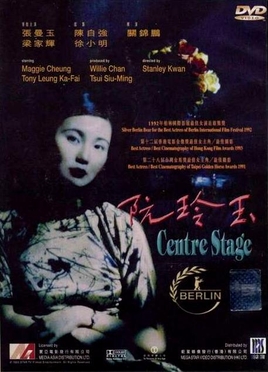
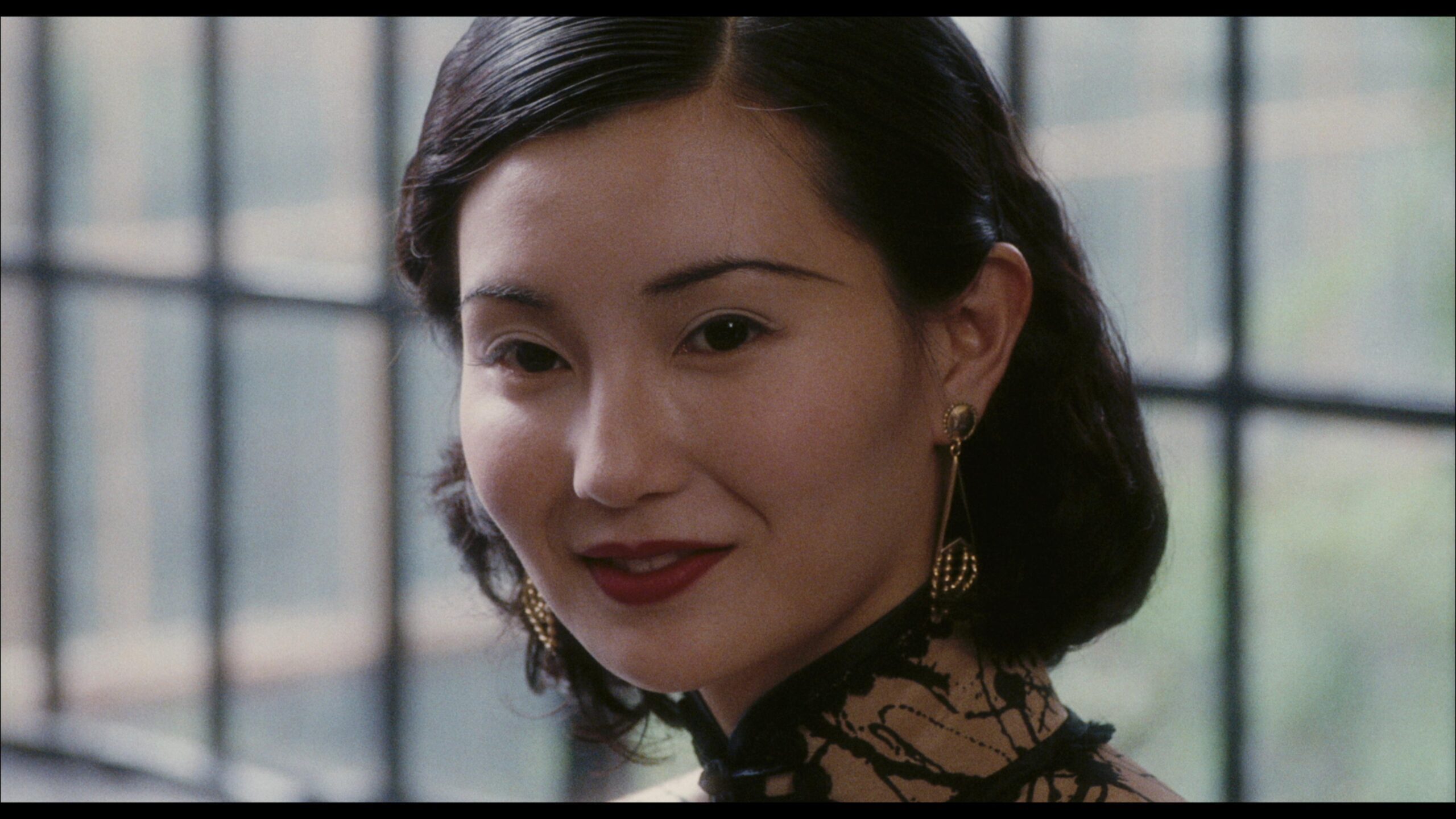
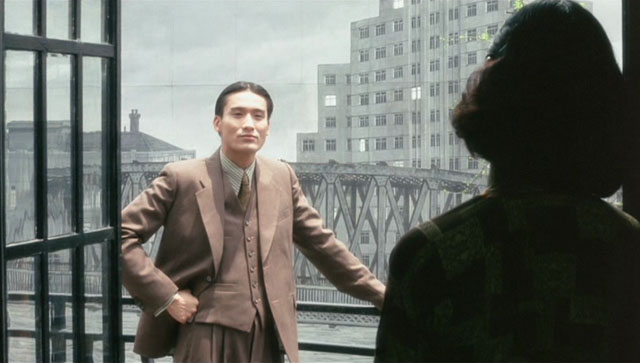
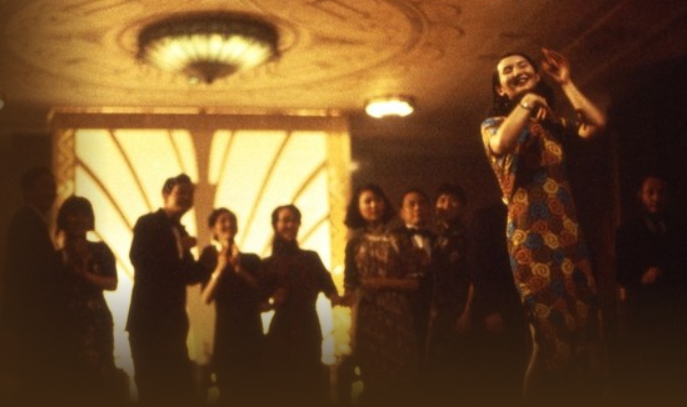
Lucky Americans (don’t say that very often!) – to commemorate its 35th anniversary director Stanley Kwan’s acclaimed Shanghai classic “Centre Stage” has got a new restored 4K version which will be screened across North America from August 7, 2026.
For those that have never seen the movie, it’s based on the life of Chinese silent film actress Ruan Lingyu, portrayed by Maggie Cheung, one of the most prominent Chinese film stars of the 1930s. Sadly she committed suicide in her apartment in Shanghai at the age of 24. Cheung is fantastic as Ruan Lingyu and got the Silver Bear for Best Actress at the 42nd Berlin International Film Festival (the first Chinese-language actress to receive the honour).
My latest column (in Portuguese) for Paragrafo (#99) the arts and literature supplement to Macao newspaper Ponto Final. On Han Suyin’s autobiographically inspired novel A Many Splendoured Thing (1952) and how it represented Macao as a transgressive location at the time… illustration as ever by Rai Rasquinho – click here
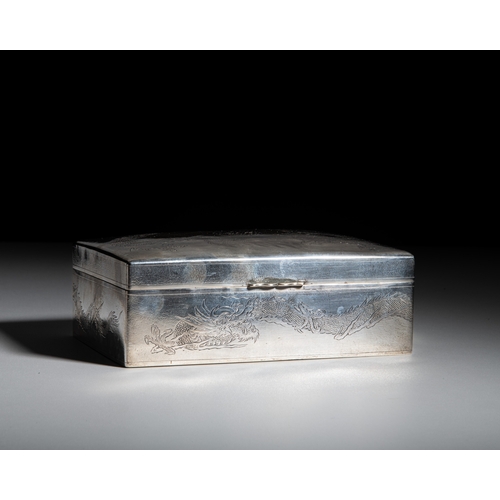
A Chinese-made silver cigarette box c.1935 with a three spirited imperial five-clawed dragons. The center of the lid features a circular engraved presentation medallion which reads: ‘PRESENTED TO A.A. MALCOLM BY CHINESE STAFF RIVERSIDE S.P.C. MARCH 1935’.
A fairly standard presentation cigarette box but the inscription makes it interesting. Riverside S.P.C. refers to the Riverside Station of the Shanghai Power Company (S.P.C.), which was one of the largest power plants in Asia during the 1930s. Originally commissioned as a coal-fired plant with a 65-meter chimney in 1897 and later known as the Nanshi Power Plant it is now redeveloped as the Power Station of Art (PSA), China’s first state-run contemporary art museum, located on the Huangpu River.
Malcolm, who lived on Haerbin Road (now Harbin Lu) worked for the SPC until the Japanese occupation of Shanghai and then, I believe, was interned. Malcolm had obviously been in Shanghai some time – in 1925 he is listed as a “charge engineer” (responsible for the design, implementation, and maintenance of battery storage control systems) working for the “Electricity Department” of the Shanghai Municipal Council.
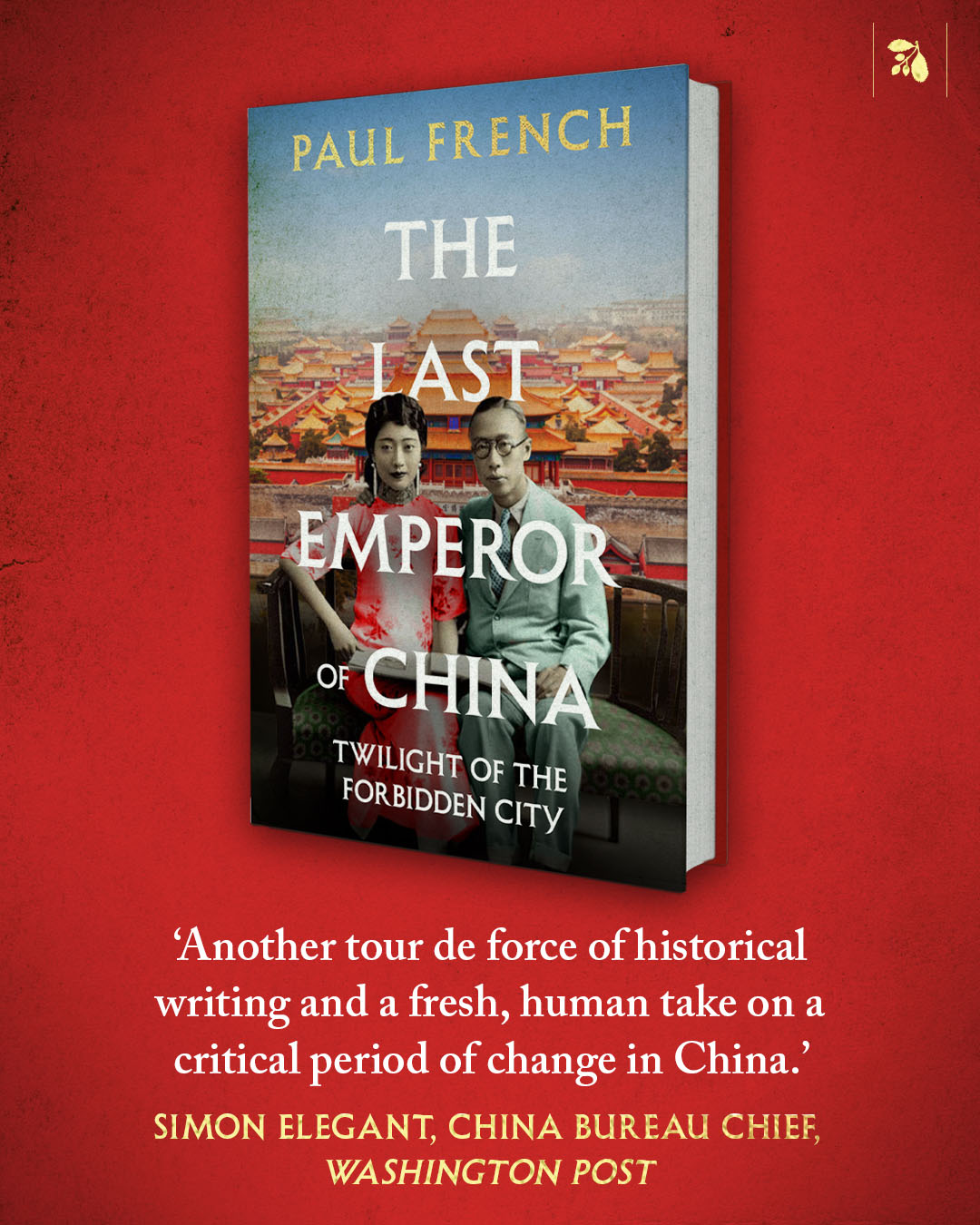
My forthcoming book (August 27), The Last Emperor of China: Twilight of the Forbidden City (Elliot and Thompson)is now available to download on Netgalley! If you’re a reviewer you can request to download the book early and share their honest review on the platform…. click here… you can of course also pre-order here…
And, if you’re in the USA fear not, the US edition will be out in early November from St Martin’s Press – all the details and pre-ordering links here
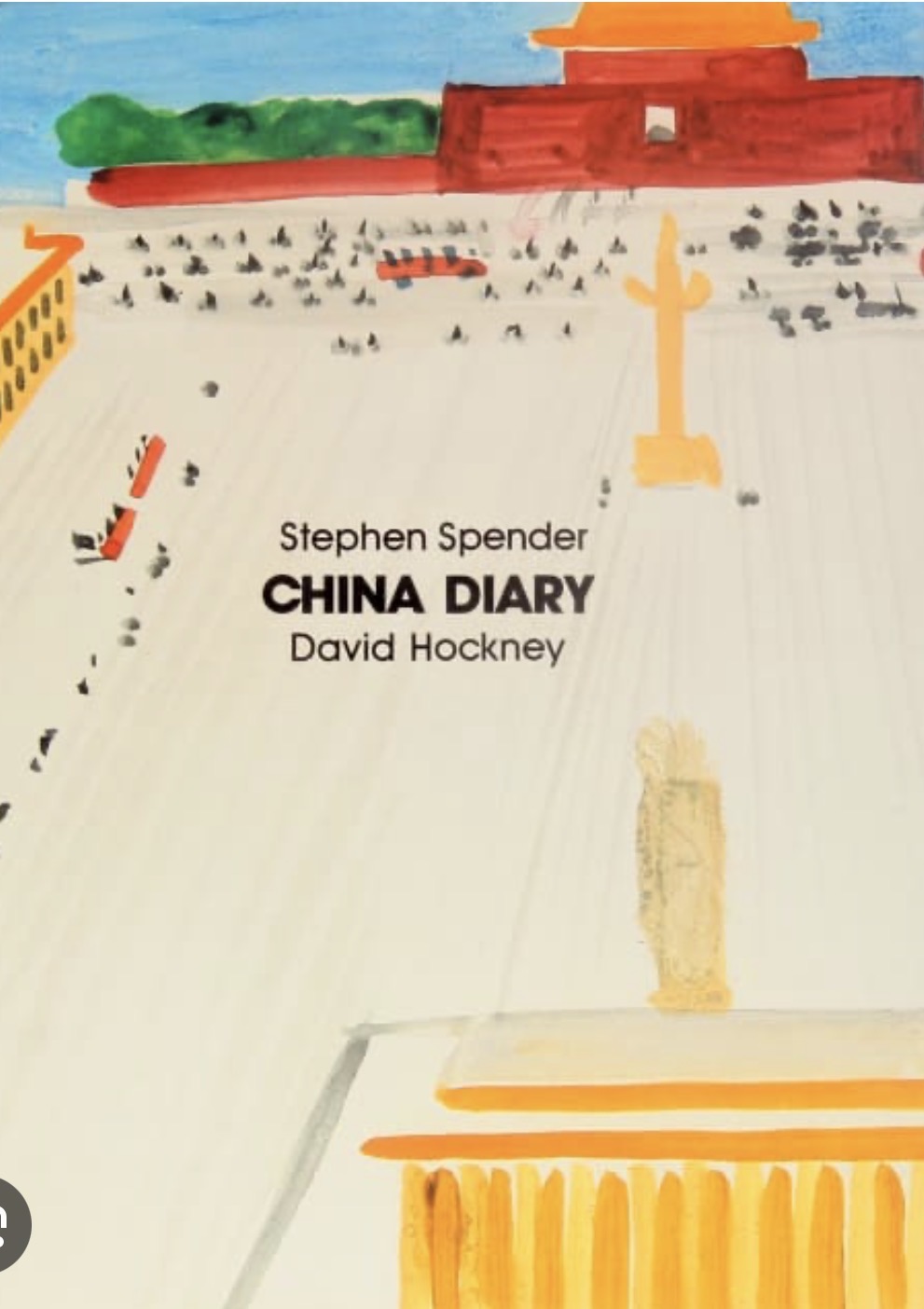
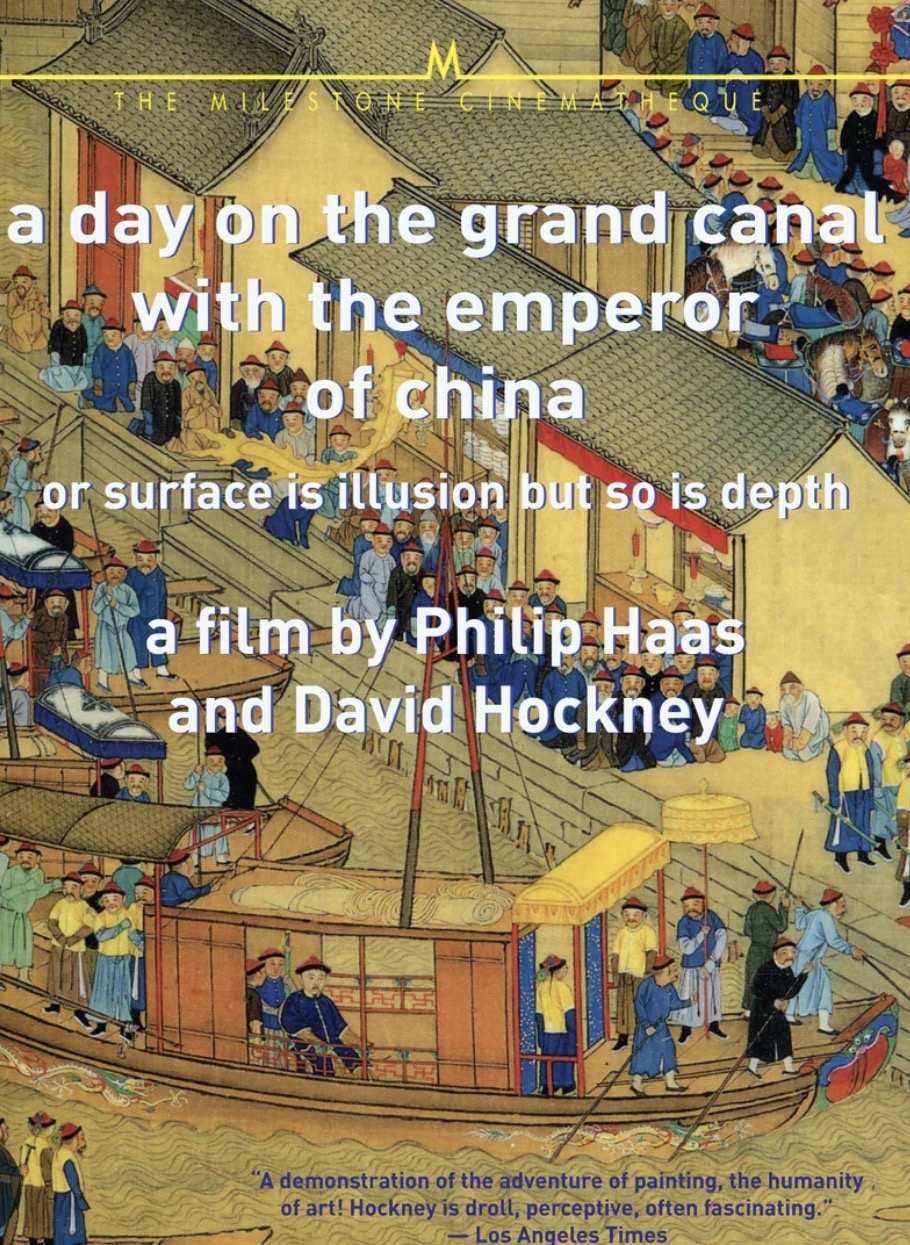
In 1981 Hockney visited China with the poet Stephen Spender, which inspired their collaborative 1982 book China Diary. Hockney also explored traditional Chinese landscape scrolls in his acclaimed 1988 documentary film A Day on the Grand Canal with the Emperor of China, where Hockney examines a 72-foot-long 17th-century Qing Dynasty scroll.