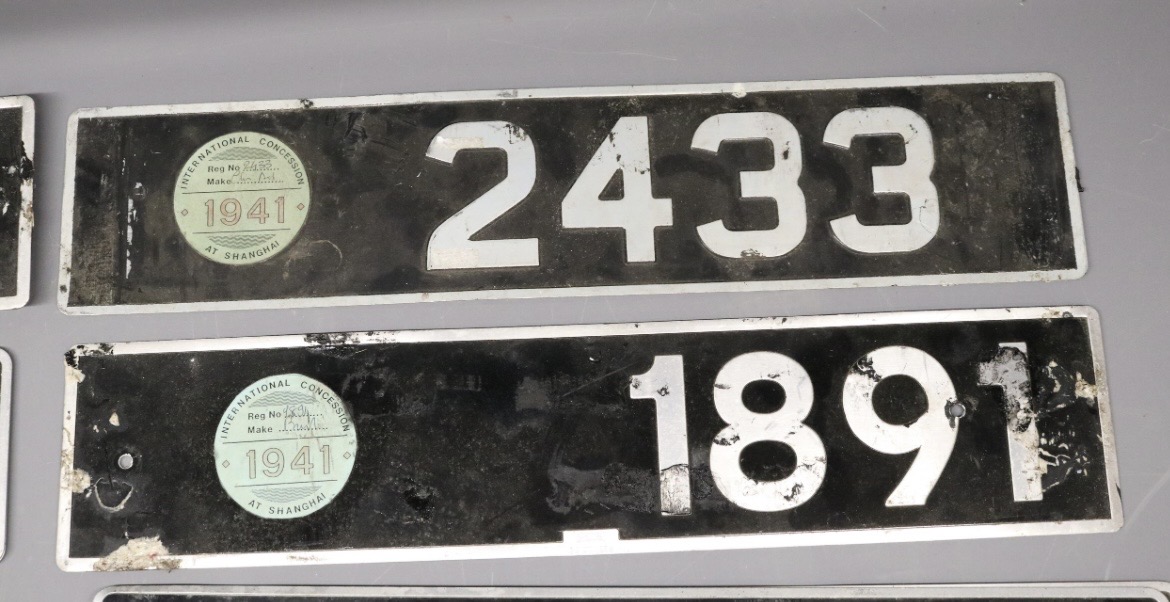
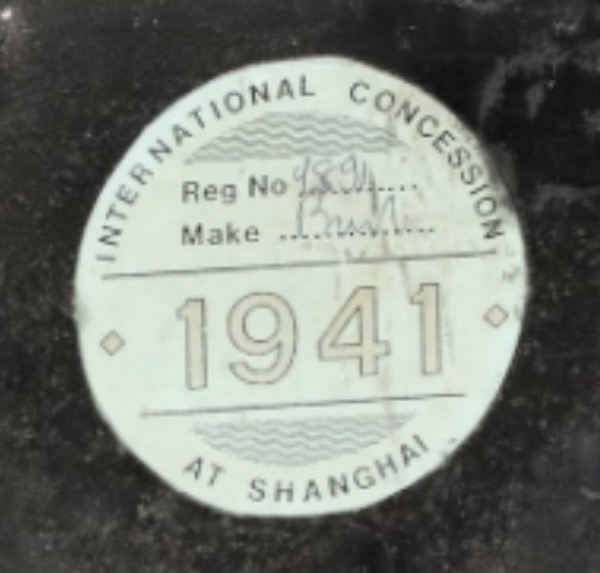
Shanghai International Settlement (often called the International Concession as here) four-digit licence plates with identifying stickers. These were first issued in 1902. Many cars practically had three plates – these plus a French Concession “F” plate, and a plate for the surrounding Chinese-administered district idenitifable by the Nationalist China blue sky with white sun emblem.
The one shown here is for 1941 – presumably the last issued? The Japanese occupied the International Settlement on December 8th and the foreign concessions were formally dissolved never to be restarted by agreement with the Nationalists in Chongqing in 1943. This one was for a Buick.
Marking 45 years, Alisan Fine Arts’ “Then and Now” programme opens with The Chinese Avant-Garde in Paris, examining artists shaped by the post-war French capital. Featuring Zao Wou-ki, Chu Teh-chun, T’ang Haywen and Walasse Ting, the show traces how each forged a distinct visual language by bridging Chinese traditions with European modernism. From Zao’s atmospheric abstractions and Chu’s calligraphic energy to T’ang’s meditative ink works and Ting’s vivid, expressive figures, the exhibition maps a pivotal moment in global art history.
Highlights include rarely seen works like Chu Teh-chun’s Untitled series and Walasse Ting’s “A Loving Gaze,” alongside major canvases and works on paper spanning the 1950s to 1990s. Together, they reveal how diaspora artists asserted new identities within the avant-garde. Presented as part of French May 2026, the exhibition forms part of the wider “Then and Now” programme alongside Alisan Atelier’sNew Voices in Paris Now: Between Memory and Matter.
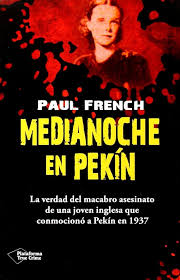
I have a (very) few copies of my book of my short book Midnight in Peking in Spanish to give away – Medianoche en Pekin (Plataforma Barcelona). As ever email paul@chinarhyming.com – it’s first come, first served and I can mail anywhere except the PRC and the USA…
A picture of Shanghai right before the communists arrived in 1949. Chinese students and professors at Tongji University sell their personal effects to buy rice for students whose homes were either destroyed or occupied by communist forces in the Chinese Civil War. January 1949, photograph by Warren Lee.
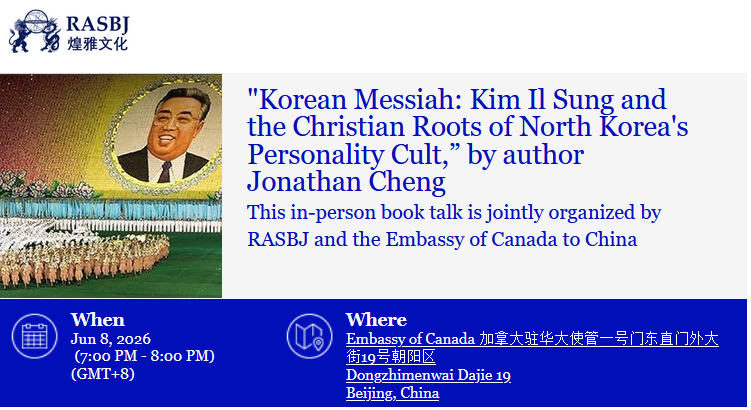
Jonathan Cheng’s new book is getting excellent reviews — so don’t miss the author’s first book talk in China! This event is jointly organized by RASBJ and the Embassy of Canada to China which is generously hosting it in the embassy. Tickets are free for RASBJ members — as a membership benefit — and invited guests. Hope to see you there!
WHAT: “Korean Messiah: Kim Il Sung and the Christian Roots of North Korea’s Personality Cult” an in-person book talk by Jonathan Cheng moderated by Melinda Liu. Co-organized by the RASBJ and the Embassy of Canada to China.WHEN: Monday June 8, 2026, from 7:00-8:00 PM (Beijing Time). Doors will open at 6:30 PM.
WHERE: Embassy of Canada to China, Gate 1 (South Gate), 19 Dongzhimenwai Dajie, Chaoyang District, Beijing. 加拿大驻华大使管一号门东直门外大街19号朝阳区Please provide an original, government-issued photo ID. Visitors are not permitted to bring electronic devices such as laptops and USB sticks into the Embassy; cellphones are permitted but usage is restricted.
MORE ABOUT THE EVENT: In his first book talk in China, Jonathan will trace the roots of North Korea’s Kim dynasty back to state founder Kim Il Sung and his upbringing in the Presbyterian church — and talk about how it came to shape the state that he founded and presided over for half a century (and then handed off to his son and later his grandson). Kim Il Sung, a fluent Chinese speaker, was born and raised on the outskirts of a city, Pyongyang, that was so thoroughly Christianized in the first half of the twentieth century that it was known as “the Jerusalem of the East.” He spent many of his formative years in Manchuria, where he lived in the home of a Korean pastor who he later hailed as “the saviour of my life.” Jonathan will share how his book project — twelve years in the making — came to life, and argue that it should change the way that we think about and understand North Korea. Published in April 2026, the book has been favorably reviewed by the New York Times, the Economist, and the New Yorker which named it one of the Best Books of 2026 So Far. It is available on Amazon.com including in Kindle and audiobook versions.
ABOUT THE SPEAKER: Jonathan Cheng is the China bureau chief for The Wall Street Journal, overseeing the Journal’s coverage of politics, economics, business, technology and society in China. He runs a team of more than two dozen correspondents and researchers in Beijing, Shanghai, Hong Kong, Taipei, Singapore and New York. Before this, Jonathan was the Korea bureau chief for the Journal, running coverage of the Korean peninsula. He’s been to North Korea twice. A native of Toronto, Canada, Jonathan graduated from Princeton University with a degree in history.
HOW MUCH: Free for RASBJ members and invited guests. If you wish to attend but are not a member of the Canadian community and are not an RASBJ member, you can join RASBJ as a member using the following link: https://rasbj.glueup.cn/org/rasbeijing/memberships
Then register for the event as described below.
HOW TO JOIN THE EVENT: Please click “Register” or “I Will Attend” no later than noon June 5, and follow the instructions. Be sure to provide the details of the passport or government-issued photo ID that you will use to enter the Embassy. After successful registration you will receive a confirmation email. If you appear not to have received it, please check your spam folder. As seating will be limited, please register early to avoid disappointment!
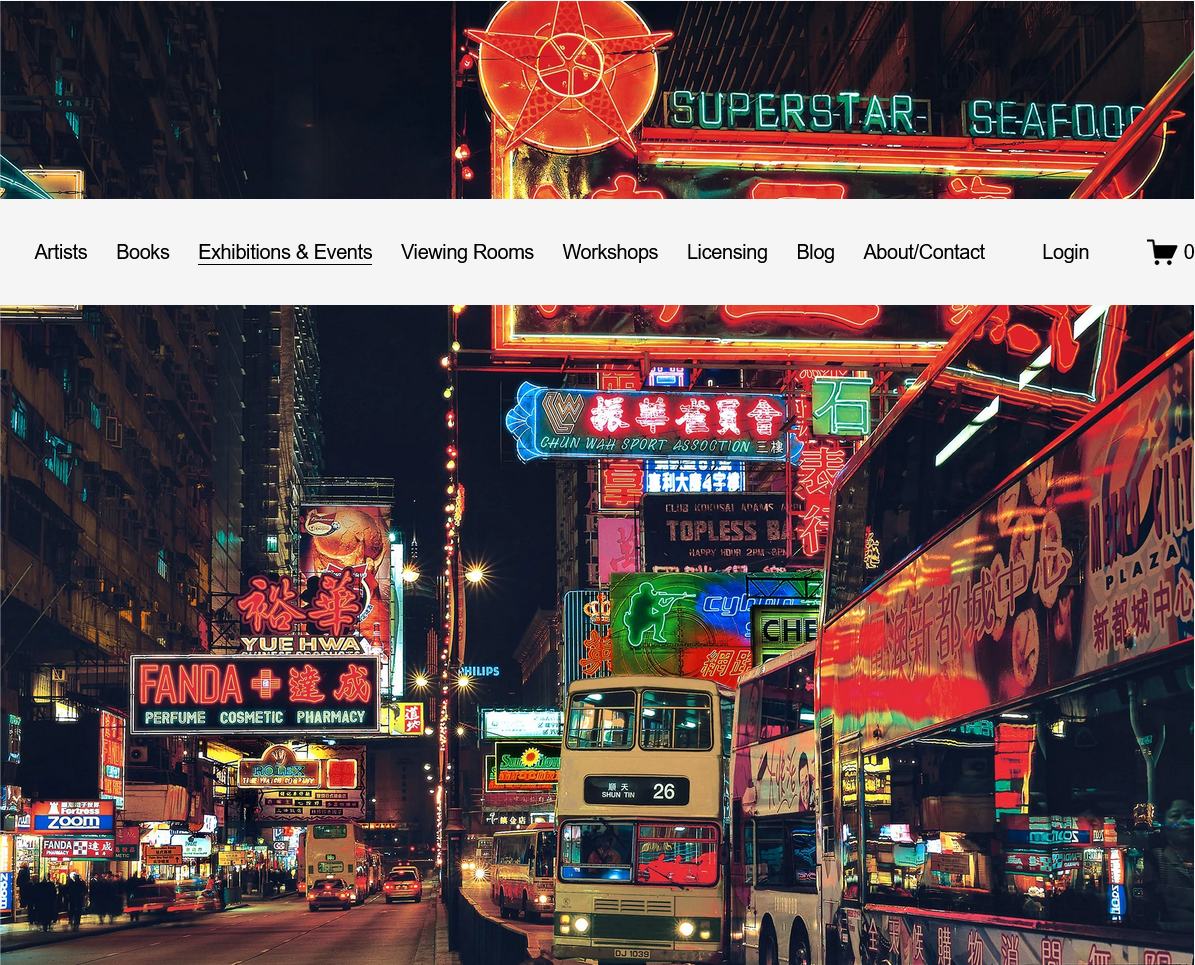
Keith Macgregor’s City of Lights, published by Blue Lotus Editions, will showcase Hong Kong’s neon heritage with images from the 1990s and 2000s.
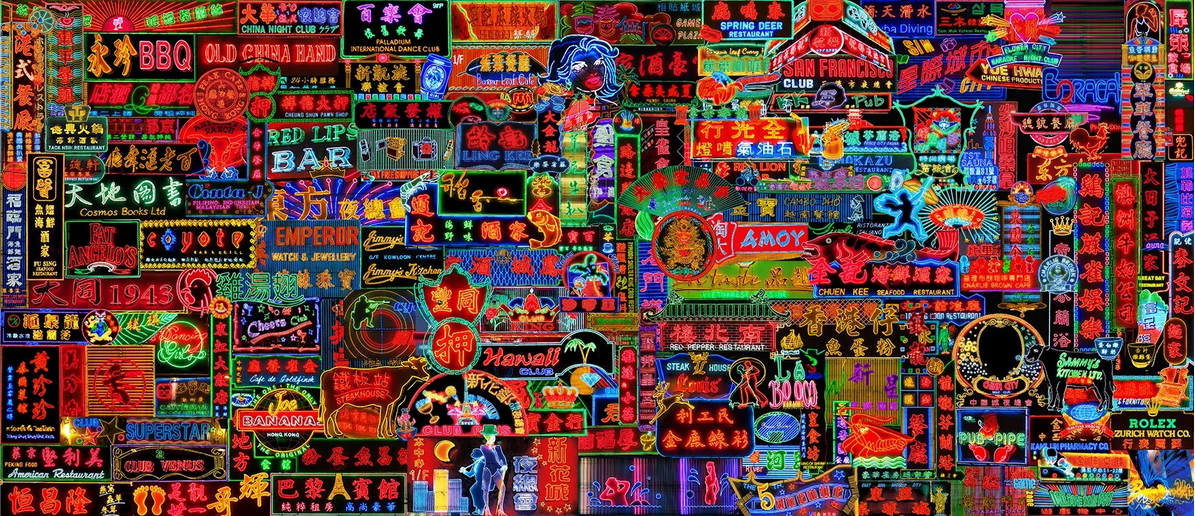
Keith Macgregor, Neon collage #3
The blurb from Blue Lotus:
Blue Lotus Gallery presents City of Lights, an extensive archive by photographer Keith Macgregor documenting Hong Kong’s neon-drenched skyline of the 1990s and 2000s. The book, featuring hundreds of previously unseen images, and accompanying exhibition serve as both a record of the city’s iconic neon signage and a tribute to a bygone era: a time when these signs shaped the city’s visual identity.
“Like so many others, I took neon for granted when I was younger, viewing it as urban wallpaper rather than investigating the creativity, skill, engineering, and imagination needed to create these dynamic, superb works of art,” said Macgregor. Through hundreds of vivid, previously unseen images, he captures the restless energy of a city defined by its illuminated streets.
At its height in the 1980s, Hong Kong’s skyline shimmered with more than 100,000 neon signs. Today, fewer than 400 remain. City of Lights arrives at a pivotal moment, when the urgency to document and preserve this vanishing heritage has never been greater. A renewed fascination among Hong-Kongers is evident in the success of recent exhibitions at the Hong Kong Design Institute and Tai Kwun, presented in partnership with Tetra Neon Exchange (TNX), reflecting a collective desire to reconnect with and safeguard this defining chapter of the city’s visual history.
Beyond the photographs, the book draws on the human stories behind the glow. It features conversations with those fighting to keep the craft alive: the master benders who hand-bent the glass, the installers who braved the heights, and the conservationists and creators ensuring neon has a future in the city.
“Keith’s body of work constitutes one of the largest photographic archives of Hong Kong’s streets and neon signage,” said co-author Cardin Chan, former general manager of TNX and founder of the cultural heritage company, The Indispensible Hong Kong. “For those of us committed to preservation, it is an invaluable visual record.”
Yet the project’s significance extends beyond the signs themselves. As businesses close—such as the iconic Sammy’s Kitchen earlier this year—it becomes clear that even when a sign is saved, the city around it inevitably moves on. Families grow and storefronts evolve, making this archive all the more essential; it captures the fleeting moments and memories of a Hong Kong in constant flux.
Crucially, the narrative is one of evolution rather than just loss. While the era of massive commercial signage may be fading, neon is finding a new life. City of Lights highlights this transition, showcasing how a new generation of creators—such as the artist Jive Lau—is reimagining the medium for the modern age, ensuring the city’s neon spirit continues to shine in new, innovative forms.
About Keith Macgregor:
British photographer Keith Macgregor has spent decades documenting Hong Kong during a period of extraordinary transformation. Born in 1946 and raised between England and Asia, he settled in Hong Kong, where he ran a successful business specialising in Asian furniture until the late 1990s.
Alongside his business, photography became a serious and sustained pursuit. Macgregor began capturing the city’s streets, harbour, skyline and, above all, its neon-lit nights. His images resonated widely; postcards produced from his photographs sold in the millions during the 1980s, circulating his vision of Hong Kong across the world and helping to define how the city was perceived both locally and internationally.
In 1998, recognising that Hong Kong’s iconic neon signage was rapidly disappearing, he embarked on an ambitious effort to document as many signs as possible. Spending weeks photographing across Hong Kong Island, Kowloon and the New Territories, he created an extensive archive of this vanishing streetscape. The project culminated in his seminal book Neon City: Hong Kong at Night (2002), now regarded as a vital record of a lost era.
As redevelopment, regulation and LED technology transformed the urban landscape, Macgregor’s photographs gained renewed significance. His work preserves not only the brilliance of the signs themselves, but also the craftsmanship and spirit that once illuminated the city.
Through dedication, timing and an instinct for Hong Kong’s defining visual moments, Keith Macgregor has secured his place as one of the pre-eminent chroniclers of its luminous past.
I reviewed the new James McNeill Whistler retrospective at Tate Britain for the SCMP highlighting the influence of Japanese and Chinese art and crafts on his work. Blue-and-white ceramics, uchiwa fans and Lange Leizen all feature, along with a recreation of the stunning Peacock Room (1877). It’s well worth a visit. Click here to read
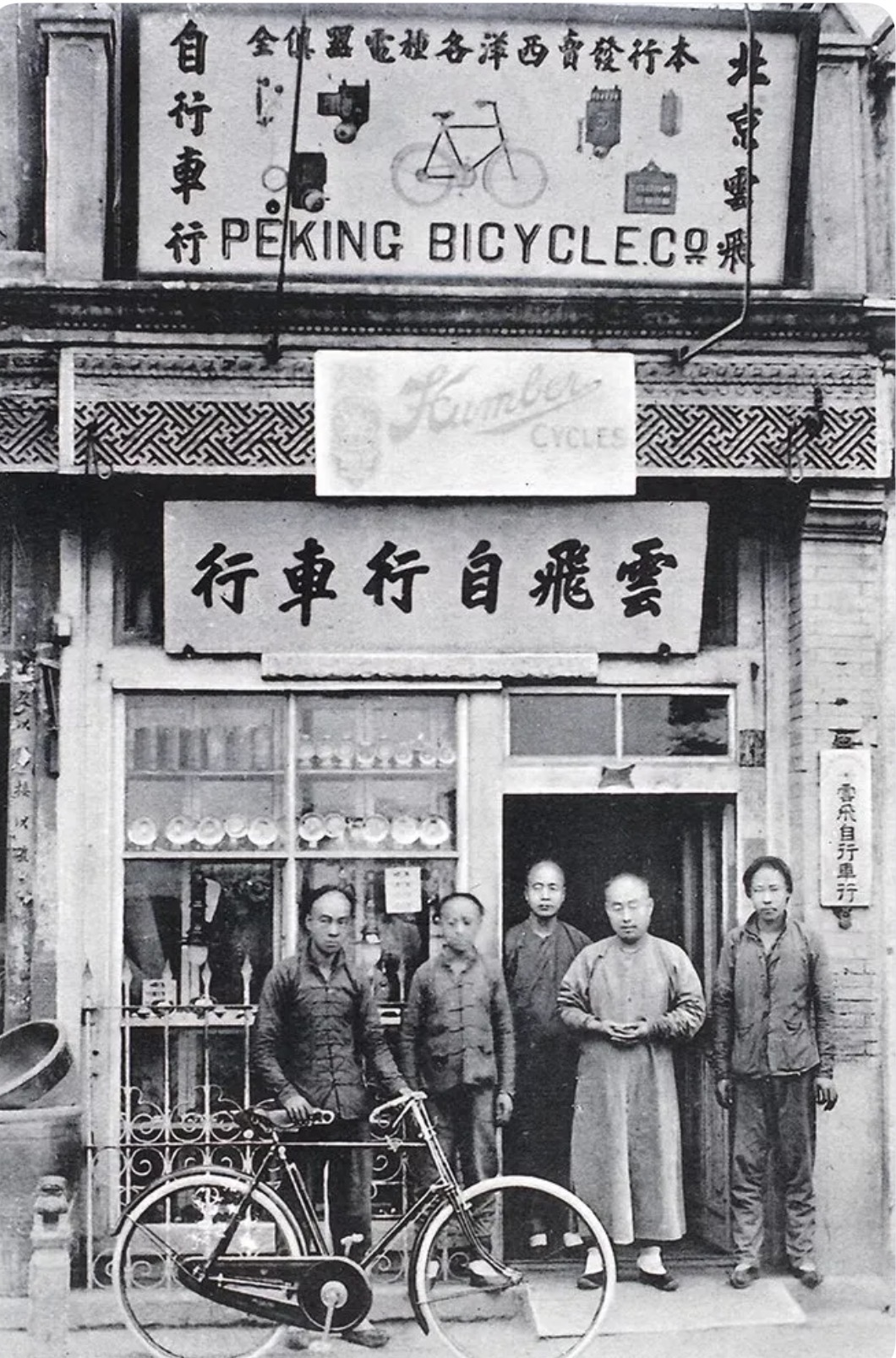
This is an old photo well known to collectors and historians that seems to have suddenly started doing the rounds on social media the way things do these days… it’s the Daqing bicycle shop in Peking (c.1900-1912).
There’s many reasons this is interesting – a great shot of a full shop frontage, text running in three directions, late Qing modernity etc etc.
But also in this period we find ourselves in of a sudden gush of dubious China Experts offering their opinions on the complexities of the China Market and its many mysteries only they can solve, I love that Daqing were the China reps for Nottinghamshire’s Humber bikes. All these supposed China experts would charge you a fortune and claim you need specialist skills to establish a relationship like that now, but presumably Humber and Daqing did it all fine 125 years ago with a few letters, some cargo ships and perhaps a travelling salesman passing through Peking.