Posted: April 1st, 2016 | No Comments »
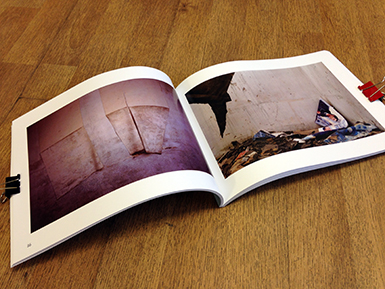
Anne Witchard has a Q&A with James H Bollen on the Los Angeles Review of Books China Blog regarding his new book of photography, Wallpaper: The Shanghai Collection. I’ve written about James’s previous book that dealt with the Shanghai imagery of JG Ballard here. In his new book Bollen juxtaposes images of architectural destruction in Shanghai with quotes from William Morris. The Q&A and some images from the book are here….details of how to get the book are on Bollen’s website here….
Posted: March 31st, 2016 | 1 Comment »
David Leffman’s The Mercenary Mandarin, the life of William Mesny, is all new to me…so thank you Blacksmith Books for publishing….
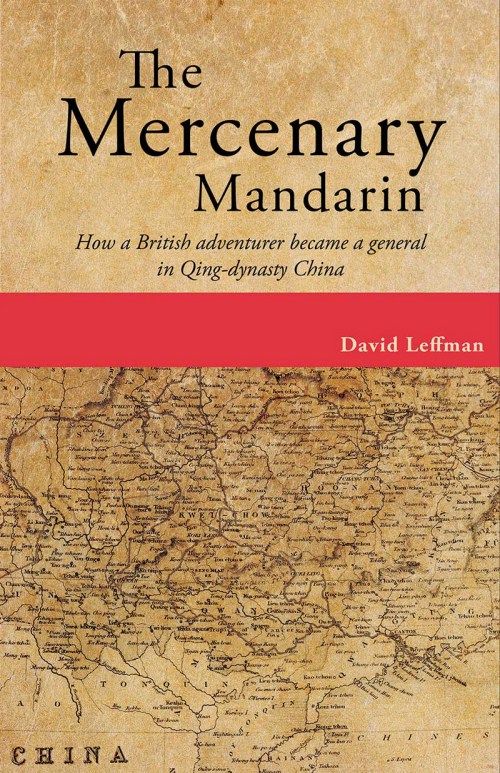
Jersey-born William Mesny ran off to sea as a boy and jumped ship at Shanghai in 1860 when he was just 18. Amid the chaos of foreign intrigue and civil war in 19th-century China, he became a smuggler, a prisoner of the Taiping rebels, a gun-runner and finally enlisted in the Chinese military.
After five years of fierce campaigning against the Miao in remote Guizhou province, Mesny rose to the rank of general and used this privileged position to travel around China – to the borders with Burma, Tibet and Vietnam – writing opinionated newspaper articles, collecting plants and advising government officials on the development of railways, telegraphs and other modern reforms.
Mesny eventually settled in Shanghai with a 16-year-old concubine and published Mesny’s Chinese Miscellany, a weekly magazine about his experiences. But his story was not to end well. After his implication in an illicit arms deal, his fortunes never recovered, and when he died in 1919 he was working as a desk clerk.
David Leffman has spent over 15 years footstepping Mesny’s travels across China, interviewing locals and piecing together his life story from contemporary journals, private letters and newspaper articles.
Posted: March 31st, 2016 | No Comments »
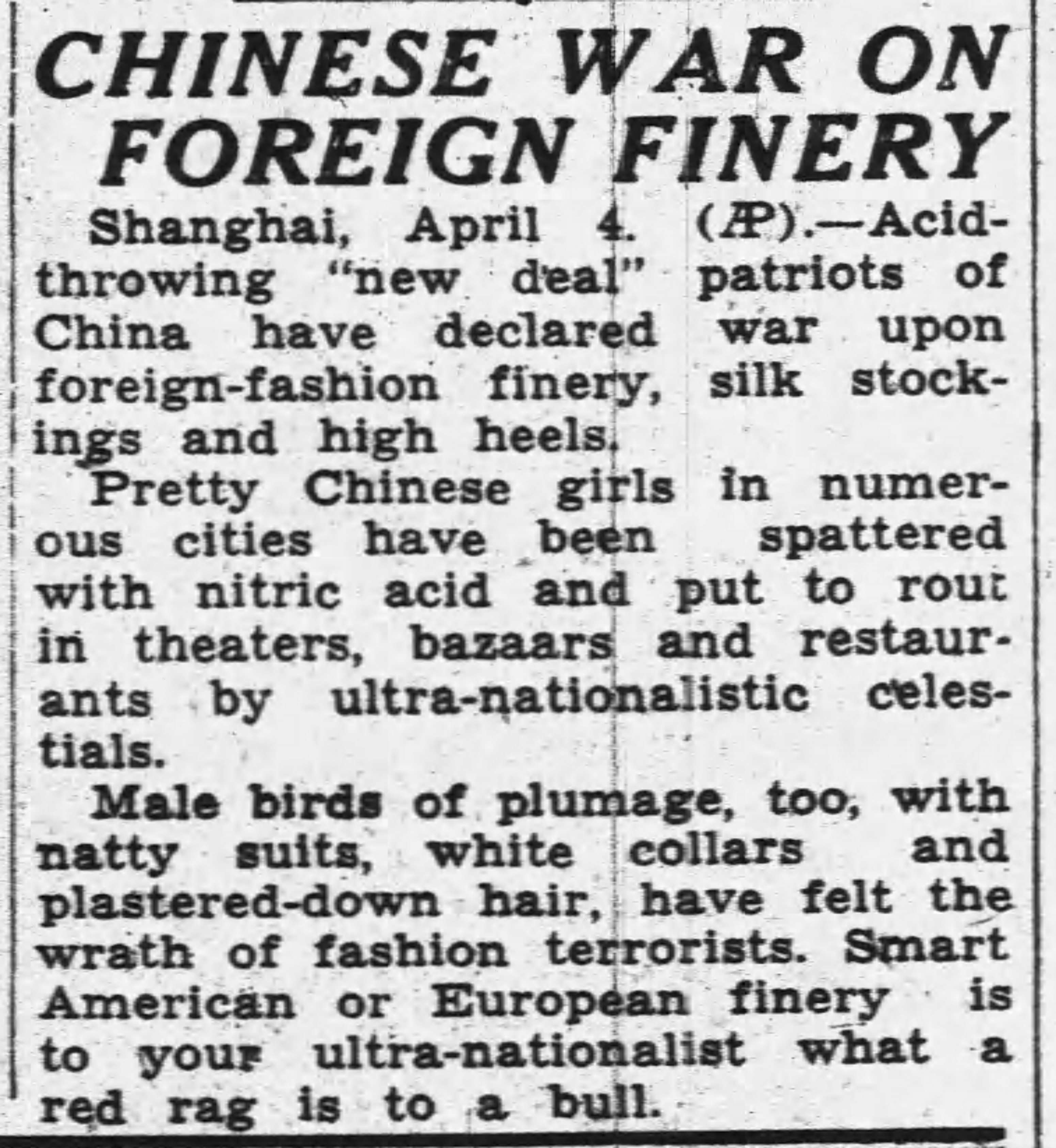
Some extreme nationalists reacted very angrily to the new, more racey, fashions of 1934 Shanghai. It seems some “patriots” got very annoyed by imported foreign fashions, particularly silk stockings and high heeled shoes. A spate of nasty acid throwings hit the city in April. The problem spread to other cities – a Chinese woman in new foreign clothes a Hankow cinema had nitric acid thrown into her lap in the dark – her assailant escaped. The rather vile craze seems to have passed swiftly but left some women badly scarred.
Posted: March 31st, 2016 | No Comments »
Tuesday, 12th April 2016
7:00 pm – 9:00 pm
Comparing the Architecture of Colonial Rangoon & Concession-era Shanghai
Speaker: Kate Baker & Tess Johnston
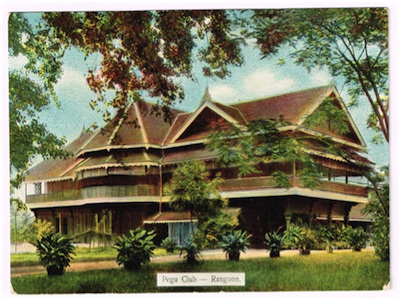
Tess Johnston and Kate Baker have traveled together to Yangon on two separate occasions to view the fading glory that was once colonial Rangoon. They will share their descriptions and photographs, both then and now, of some of the most significant colonial architecture in Asia. Places of interest include the legendary Pegu Club, one of the most exclusive clubs in Asia and how it looks today, and the Secretariat, the massive government building in which Britain’s bureaucracy flourished. They will ask the question,  “Can comparisons be made to the colonial architecture in Shanghai?â€
ABOUT THE SPEAKERS
Tess Johnston first came to Shanghai in 1981 to work at the American Consulate General and in 1996, after over thirty years in the diplomatic service, she retired and stayed on to research, write, and lecture. She and her co-author, Shanghai photographer Deke Erh (Er Dongqiang), have published over 25 books, including fifteen volumes on Western architecture and the expatriate experience in old China.
Kate Baker lived in Shanghai for four years and in the Asia region for nearly 20 years. Collaborating with other Shanghai explorers, Kate wrote a guide detailing walks outside of Shanghai as well as the fifth Shanghai Walks book “The Wheres Where of the Who’s Who of Old Shanghaiâ€. Her book entitled, “Jiading: Centuries of History, Decades of Change†was published in 2015. She currently resides in Washington, DC.
More details here
Posted: March 26th, 2016 | No Comments »
Apologies for a few days break in service on China Rhyming – I’m in Ireland for the centenary of the Easter Uprising and decided to go internet free for a few days. If you’re in Athenry, I’ll see you around – otherwise, here’s Aldous Huxley on Shanghai….
In 1926 Aldous Huxley summed up Shanghai’s secret (after a very brief stay on a voyage from Manila to Kobe) as, “Life itself…dense, rank, richly clotted life…nothing more intensely living can be imaginedâ€. But his diary does have a bit more on the city…
An excerpt from Aldous Huxley’s diary, 1926 (published as Jesting Pilate, 1926)

I have seen places that were, no doubt, as busy and as thickly populous as the Chinese city in Shanghai, but none that so overwhelmingly impressed me with its business and populousness. In no city, West or East, have I ever had such an impression of dense, rank richly clotted life. Old Shanghai is Bergson’s elan vital in the raw, so to speak, and with the lid off. It is Life itself. Each individual Chinaman has more vitality, you feel, than each individual Indian or European, and the social organism composed of these individuals is therefore more intensely alive than the social organism in India or the West. Or perhaps it is the vitality of the social organism – a vitality accumulated and economised through centuries by ancient habit and tradition. So much life, so carefully canalised, so rapidly and strongly flowing – the spectacle of it inspires something like terror. All this was going on when we were cannibalistic savages. It will still be going on, a little modified, perhaps by Western science, but not much-long after we in Europe have simply died of fatigue. A thousand years from now the seal cutters will still be engraving their seals, the ivory workers still sawing and polishing, the tailors will be singing the merits of their cut and cloth, even as they do to-day, the spectacled astrologers will still be conjuring silver out of the pockets of bumpkins and amorous courtesans, there will be a bird market, and eating houses perfumed with delicious cooking, and chemists shops with bottles full of dried lizards, tigers’ whiskers, rhinoceros horns and pickled salamanders, there will be patient jewellers and embroiderers of faultless taste, shops full of marvellous crockery, and furriers who can make elaborate patterns and pictures out of variously coloured fox-skins, and the great black ideographs will still be as perfectly written as they are to-day, or were a thousand years ago, will be thrown on to the red paper with the same apparent recklessness, the same real and assured skill, by a long fine hand as deeply learned in the hieratic gestures of its art as the hand of the man who is writing now. Yes, it will all be there, just as intensely and tenaciously alive as ever-all there a thousand years hence, five thousand, ten. You have only to stroll through old Shanghai to be certain of it. London and Paris offer no such certainty. And even India seems by comparison provisional and precarious.

Posted: March 25th, 2016 | 1 Comment »
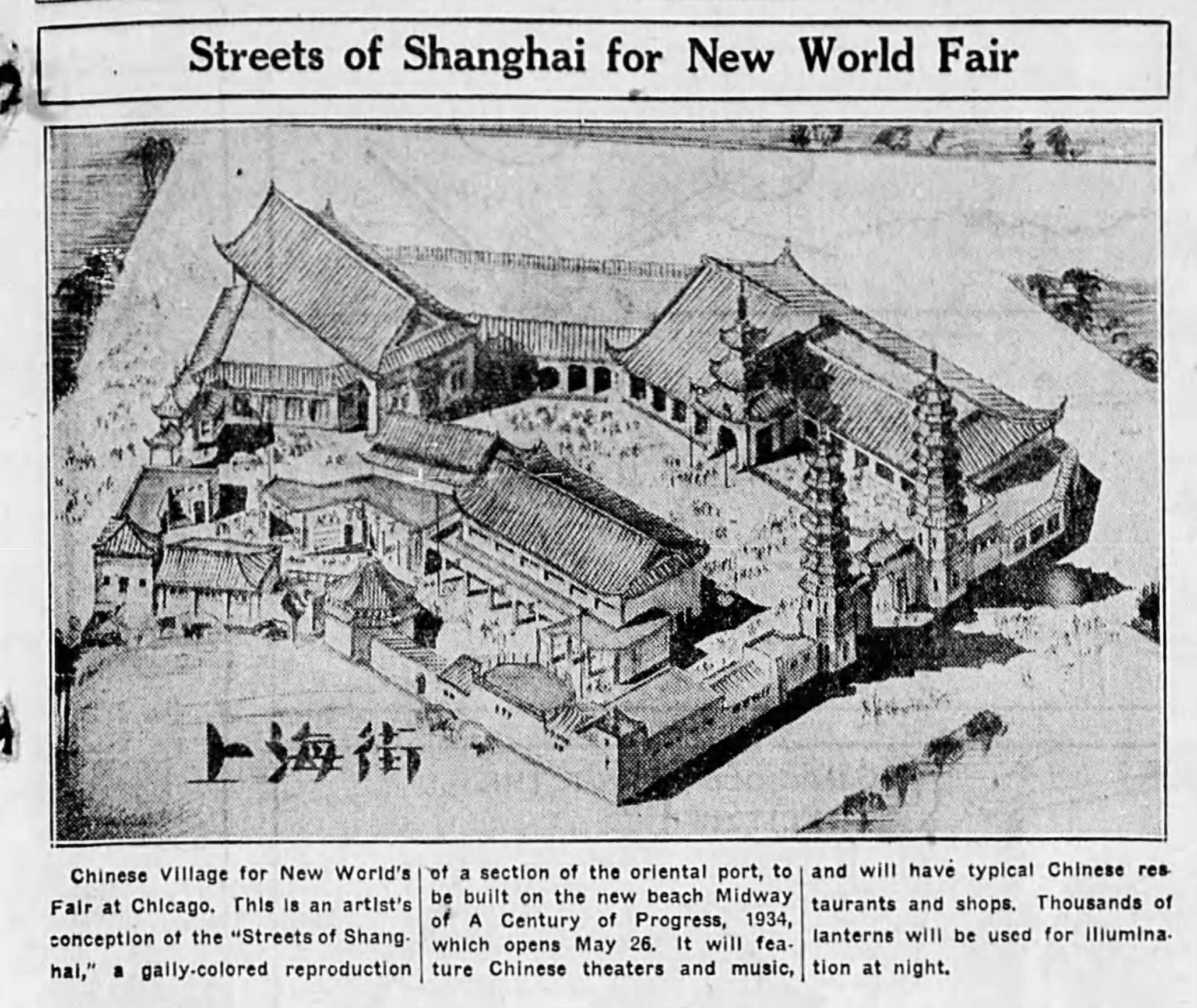
It didn’t turn out quite like this in the end but here are the plans for the Chinese Village to be erected at the New World’s Fair in Chicago in 1934 – “A Century of Progress”. The theme was, supposedly, “Streets of Shanghai”. The pagodas got built as the entrance but it was a bit more scaled down inside eventually.
Posted: March 24th, 2016 | 2 Comments »
The Standard was a Chinese-language daily newspaper in Shanghai based at offices on Foochow Road (Fuzhou Road). The Cumine family, who also owned the Shanghai Mercury English language newspaper at one point, as well as several successful property and architectural businesses, were very rich. Shanghai-born Henry Monsel (H.M.) Cumine was in charge of the paper – a man who also was a highly regarded architect and cartographer of Shanghai and environs and somewhat of an expert on Shanghai’s torturous land regulations – the family owned a lot of Shanghai property including a large mansion on Route de Grouchy (Yanqing Road) in Frenchtown. He was Managing Director of the China Land and Building Co., Ltd. and a partner in the local architectural practice Cumine and Milne, based at offices at 38 Kiangse Road (Jiangxi Road). He also had long had an interest in publishing.
But just how much day-to-day business of the paper was controlled by Cumine is debatable. The Japanese pressured Shanghai to close down pro-Free China newspapers and many arranged for foreign owners, straw men often, to become the titular owners of these papers to avoid the Japanese. Cumine, who I believe was of Scots ancestry, did this service for a number of newspapers to allow them to keep publishing (although he was, according to some sources, paid a rather handsome salary for rendering this service).

Posted: March 23rd, 2016 | No Comments »
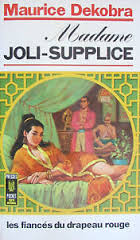
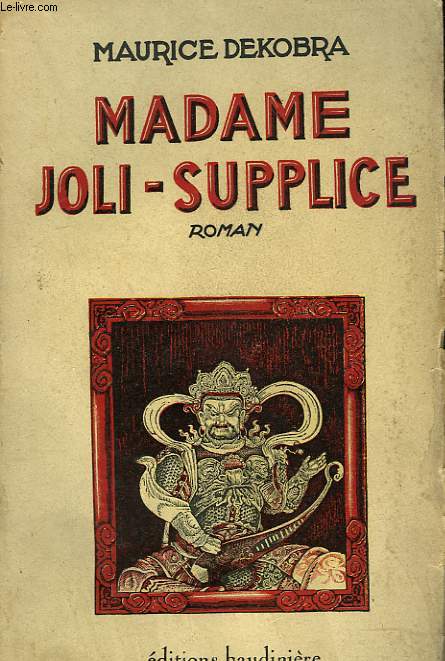
Just a small correction – possibly of no interest to anyone but myself. In May 2014 I wondered which book Graham Greene was referring to in his 1936 novel A Gun for Sale when he refers to a book called His Chinese Concubine. I managed to identify it as an English translation of a Maurice Dekobra novel, but got the wrong one. I said it was Tu Seras Courtisane (1927), but it is in fact Madame Joli-Supplice (1935). A little obscure perhaps, but now you know…and so do I…..the covers give it away really!