Posted: August 8th, 2012 | No Comments »
…as well we my Carl Crow biography now on Kindle I also note that Andrew Field’s Shanghai’s Dancing World: Cabaret Culture and Urban Politics, 1919-1954 is now available on Kindle too if you’ve had trouble sourcing it…
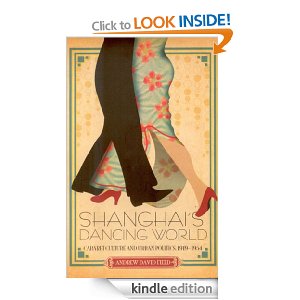
Drawing upon a unique and untapped reservoir of newspapers, magazines, novels, government documents, photographs and illustrations, this book traces the origin, pinnacle, and ultimate demise of a commercial dance industry in Shanghai between the end of the First World War and the early years of the People’s Republic of China. Delving deep into the world of cabarets, nightclubs, and elite ballrooms that arose in the city in the 1920s and peaked in the 1930s, the book assesses how and why Chinese society incorporated and transformed this westernized world of leisure and entertainment to suit its own tastes and interests. Focusing on the jazz-age nightlife of the city in its â€golden age,†the book examines issues of colonialism and modernity, urban space, sociability and sexuality, and modern Chinese national identity formation in a tumultuous era of war and revolution.
Posted: August 7th, 2012 | No Comments »
Hong Kong University Press has been electronificating (or whatever) it’s back catalogue and so my book Carl Crow: A Tough Old China Hand is now available in a Kindle edition…
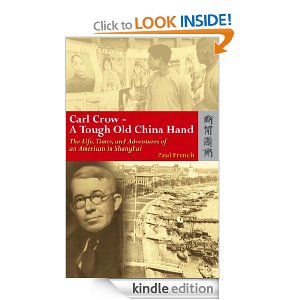
Carl Crow arrived in Shanghai in 1911 and made the city his home for the next quarter of a century, working there as a journalist, newspaper proprietor, and groundbreaking adman. He also did stints as a hostage negotiator, emergency police sergeant, gentleman farmer, go-between for the American government, and propagandist. As his career progressed, so did the fortunes of Shanghai. The city transformed itself from a dull colonial backwater when Crow arrived, to the thriving and ruthless cosmopolitan metropolis of the 1930s when Crow wrote his pioneering book – 400 Million Customers – that encouraged a flood of businesses into the China market in an intriguing foreshadowing of today’s boom.
Among Crow’s exploits were attending the negotiations in Peking that led to the fall of the Qing Dynasty, getting a scoop on Japanese interference in China during the First World War, negotiating the release of a group of Western hostages from a mountain bandit lair, and being one of the first Westerners to journey up the Burma Road during the Second World War. He met most of the major figures of the time, including Sun Yat-sen, Chiang Kai-shek, the Soong sisters, and Mao’s second-in-command Zhou En-lai. During the Second World War, he worked for American intelligence alongside Owen Lattimore, coordinating US policies to support China against Japan.
The story of this one exceptional man gives us a rich view of Shanghai and China during those tempestuous years. This is a book for all with an interest in Shanghai and China of this period, and those with an interest in the development of journalism and business there.
Posted: August 6th, 2012 | No Comments »
Mao’s old friend, then frenemy, then nemesis and then just dead old counterrevolutionary Lin Biao lived in a cave for while and now some entrepreneur has turned it into a bar. Accoridng to Reuters: “Shaped in the form of an aeroplane, an attendant opens the door to the entrance of a cave that was once the headquarters of former Chinese Communist military leader Lin Biao, located in mountains on the outskirts of Beijing. The cave has been turned into a ‘Military Bar’ using old military ordnance as furniture including sandbags, helmets, artillery shells and land mines. Marshal Lin Biao used the cave as his military headquarters in 1968 shortly before he died when his plane crashed in Mongolia following what appeared to be a failed coup to oust Chairman Mao. He was shortly after his death officially condemned as a traitor by the Communist Party of China”
Reuters has a load of pictures here
Well it’s not your average Dog and Duck is all I’m saying!
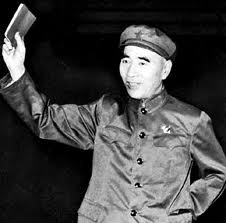 Yes, I would like to see the wine list thank you very much
Posted: August 6th, 2012 | No Comments »
Travelling through the Neckar Valley in Germany hunting for schlosses and castles we came across this place – the Chinahaus in Freiberg am Neckar. Pretty large, built from the ground up in Ming Dynasty style and inside the projects owner and architecture has displays of furtniture and objects he’s designed and made – see the Chinahaus’s website here.


Posted: August 5th, 2012 | No Comments »
 You could do worse than Francesca Brill’s The Harbour for a bit of light summer reading and I enjoyed it immensely but it might be a bit problematic for the historians – the lightly novelised story of Emily Hahn, Charles Boxer and Shao Xunmei (Sinmay Zau) ranging from Shanghai to Hong Kong and Hahn’s affair with Boxer and having his baby during the Japanese occupation. There’s some oddities – poor “Stevie”, the charter based on Emily “Mickey” Hahn has to walk in heels and all dolled up one night from the Cathay Hotel to Blood Alley (a fair way south of there) and then to a cafe in Hongkew (right back the same way and then a good trot north) – that’s a fair old trek, in heels!! To the best of my knowledge Sinmay Zau was not moving between Hong Kong and Shanghai in disguise as part of the anti-Japanese resistance. But it’s a novel so that’s fine and all fun.
However Brill weaves in the highly contentious theory that Boxer was a traitor who gave away the whole British intelligence structure in the Far East. This, of course, doesn’t go down well with Boxer loyalists. This all relates back to an article published by Hywel Williams in The Guardian (conveniently published just shortly after Boxer’s death) where he accused him of collaborating. Many thought this shabby – an accusation that could have been raised when Boxer and others from the time in Hong Kong when he was imprisoned and tortured by the Japanese were still around to contest it, and also shabby of The Guardian to only print the story after Boxer’s death and when safe from prosecution for libel. Certainly Boxer had a love and deep appreciation of Japanese history and culture and had studied in Japan before the war. His alleged collaboration though remains undocumented though, presumably for dramatic purposes, is raked up again in The Harbour. Hopefully this won’t now become an accepted part of the Boxer narrative. A summary of the so-called “CR Boxer Affair” and the accusations against him is here from the Council on Foreign Relations. At the end of the book Brill does note some similarities and differences with the real stories around Hahn, Boxer, Zau, Madame Kung etc but doesn’t note anything about the accusations against Boxer of collaboration.
I’m also a little concerned about poor old Ursula Boxer, here called Sylvia, getting a hard time – Ursula was Boxer’s first wife, the one he ditched for Hahn. She is often referred to as the most beautiful women in the Colony (sorry, I don’t know of a photograph of her) but she always gets a rather hard time from the heavily pro-Hahn crowd that write the story these days. Was she really as silly, pompous, snobby and ditzy as she’s so often (including here mostly) portrayed? If Boxer is lauded by the Hahn Loyalists for cleverly picking Mickey are we to believe his judgement was so far off with Ursula? She often seems to get a bit of a hard time for being a blonde and therefore a bit stupid and self-involved which seems a bit unfair? Additionally she’s often portrayed as an ice cold English bitch compared to the supposedly warm hearted, emotionally open and a bit goofy (in a cute way inevitably) American Hanh? All popular tropes of course, but any truth in them? Ursula went of to evacuation in Australia under British orders and instructed by Boxer, and then her husband played away back in Hong Kong with Hahn, she got preggers, he dumped Ursula unceremoniously – what did she do wrong to always be portrayed so unfavourably? Poor Ursula does get a rather hard time historically I feel and here once more.
Of course I do like that Brill mentions the ne’erdowells and low lifes that were in Stanley internment camp along with the usually reported posh Brits and stuck up housewives! But then ne’erdowells in China are my thing!
 Hahn and Boxer
Posted: August 5th, 2012 | No Comments »
I note the publication of Philip P Choy’s San Francisco Chinatown: A Guide to its History and Architecture. As someone who’s wandered the streets of SF’s Chinatown a few times this would be a good addition to a return trip I suspect. See here an excerpt on the Huffington Post.

San Francisco Chinatown is the first “insider’s guide” to one of America’s most celebrated ethnic enclaves by an author born and raised there. Both a history of America’s oldest Chinese community and a guide to its significant sites and architecture, San Francisco Chinatown traces the development of the neighborhood from the city’s earliest days to its post-quake transformation into an “oriental” tourist attraction as a pragmatic means of survival. Written by architect and Chinese American studies pioneer Philip P. Choy, and featuring photographs and walking tours, the book details the triumphs and tragedies of the Chinese American experience in the United States.
Posted: August 4th, 2012 | 1 Comment »
Here’s a story about Pingyao and its preservation (or otherwise) from The Atlantic
Here’s a piece from the China Daily on the seemingly never ending debate about preservation of the Great Wall
The Global Times is also concerned about the Wall it would seem
I’ve mentioned the documentary currently being made by Arthur Jones and Steven Schwankert about HMS Poseidon, the British submarine that sank of the China coast in the 1930s. Schwankert’s also producing a book on the tragedy too apparently – “The Real Poseidon Adventure: China’s Secret Salvage of Britain’s Lost Submarine”. Here he is interviewed about the project in The San Francisco Chronicle.
And here’s historian Valerie Hansen on what aspects of Chinese history most appeal to Beijing taxi drivers!
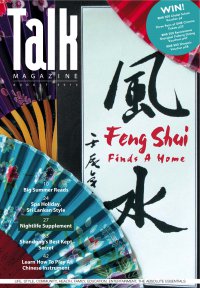
And if you’re looking for a summer read – there’s some recommendations here – including from me I’m afraid – in the August issue of Shanghai Talk magazine.
Posted: August 4th, 2012 | 3 Comments »
As you know I don’t do book reviews on this site due to getting paid to do them in other places but I just caught up with Shanghailander Andy Best’s Parkour Girl and Yellow Fish Car on Kindle (for a very reasonable two quid). It came out last year and I should have plugged then but hadn’t read it. Great fun and somewhat different reading for me – that Best is a massive JG Ballard fan and based in Shanghai should be enough to peak the interest of many China Rhyming readers. Andy Best’s web site is here by the way and there’s one for the book too.

Zack Smith is a young American ex-pat in modern day Shanghai. He is frustrated, culture shocked, directionless and even suspects himself of being a bit racist. There seems to be no end in sight to his misery until one day a chance encounter leads him to an underground world of Chinese vigilantes and heroes.
“Parkour Girl and Yellow Fish Car†mixes a solid literary voice and a detailed rendering of modern Shanghai with the action and set pieces of the comic book hero universe.
Follow Zack into the world of Parkour Girl, Yellow Fish Car, Fidel, Brother Power and Hong Ling Jin and more. See the Shanghai of nail houses, Urban Security Officers, the human flesh search engine, Kappa Girl, post-nineties kids and hitmen. Finally, witness the climactic showdown with the criminal underground at a half demolished estate of lane houses that stand at the very line between Shanghai’s past, present and future.
This book contains language, humor and scenes that deal with violence, sex and real life experience.


