Posted: August 3rd, 2012 | 14 Comments »
My thanks to Christine Maiwald of Germany who is currently investigating her illustrious ancestor Hermann Breuer, formerly of Melchers and Co. in Shanghai and a well known member of the city’s German community (any information on Hermann do let me know and I’ll pass along). Christine was also kind enough to pass along to me some memories of Pamela Werner (in case you’ve been living in a cave and don’t know, she’s the tragic murder victim in Midnight in Peking) that an old friend of hers had from the former popular northern Chinese summer holiday retreat of Peitaiho (no Beidaihe). Many foreigners in northern China including Peking and Tientsin decamped to Peitaiho every summer to escape the furnace like heat of the cities. ETC Werner had a summer house there and so did DCI Dennis, the policeman from Tientsin who investigated Pamela’s murder. Christine’s friend’s memories are interesting as they also shed light on just how many rumours were flowing around about who killed Pamela – it wasn’t her boyfriend, he had an alibi. Anyway, here’s her memories below and, by the way, if someone’s looking for a good research project on old China gathering together all the old stories, characters and pictures of Peitaiho would be a great way to spend some time!
…a friend born in Tientsin in 1921 whether she knew Pamela – and indeed she knew her from Peitaiho where they had adjoining holiday homes. She remembered that Pamela was sweet with lots of freckles and at the time thought of as a bit “frivolousâ€. She flirted with the boys on the beach and she already had a boyfriend who was later suspected of having murdered her. The rumour being that the motive was jealousy – because of the heart.
 Peitaiho – the view from Butiriff’s Tower
Posted: August 3rd, 2012 | No Comments »
I guess we should note that Tan Twan Eng’s The Garden of Evening Mist has been longlisted for the Booker this year….the only Asian related title on the list.

Set during the Japanese occupation, The Garden of Evening Mists follows young law graduate, Yun Ling Teoh, as she seeks solace among the plantations of the Cameron Highlands. Here she discovers Yugiri, the only Japanese garden in Malaya, and its owner and creator, the secretive Aritomo. Aritomo agrees to accept Yun Ling as his apprentice “until the monsoon†so that she can design a garden in memorial to her sister. But over time the jungle starts to reveal secrets of its own…
Posted: August 2nd, 2012 | No Comments »
I’m no expert on music, Chinese or otherwise, though I have noticed that a number of books on the Chinese punk scene have been appearing. I’ve noted both Matthew Niederhauser’s Sound Kapital and Jonathan Campbell’s The Long Strange March to Chinese Rock & Roll. Now we have David O’Dell’s Inseparable, The Memoirs of an American and the Story of Chinese Punk Rock. I haven’t read it yet and don’t review, but only note, books on this blog – but I like the cover!
Only a small blurb on amazon (below) so I refer you to a full review in The Austin Chronicle.
He’s also speaking at the Beijing Bookworm on August 14th

David O’Dell was one of the earliest supporters of the Chinese punk rock scene that started taking shape in 1995 in Beijing. The book is a rich and uniquely personal collection of stories, over one hundred previously unreleased photos and translated song lyrics from the earliest Chinese punk bands and the dizzying development of the scene – it is unlike anything you have ever read, or ever will read, about China.
Posted: August 1st, 2012 | 3 Comments »
300 Shots at Greatness is a blog by the author and editor Derek Sandhaus, now a resident of Chengdu, concerning all things baijiu. I decided to ask him about any references by foreigners in China to their encounters with the filthy yet ubiquitous stuff. Here‘s what he came up with from Marco Polo to Pere Huc! Well done Derek, and he managed to throw in a good Sapajou cartoon that I believe was originally commissioned by Carl Crow for his book Foreign Devils in the Flowery Kingdom.

Posted: July 31st, 2012 | No Comments »
After previewing the first in my (when I say mine, I mean I’m the Series Editor) China Monographs series (Lao She in London) published jointly between the Royal Asiatic Society Shanghai and Hong Kong University Press…So here’s the second in the series coming out this autumn…
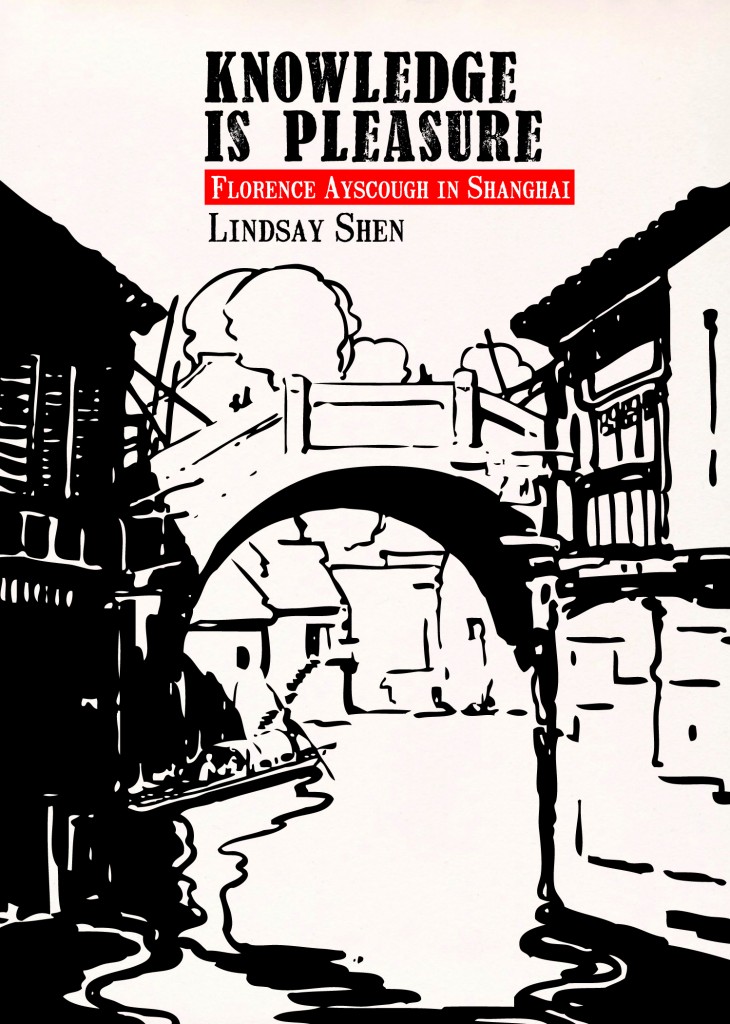
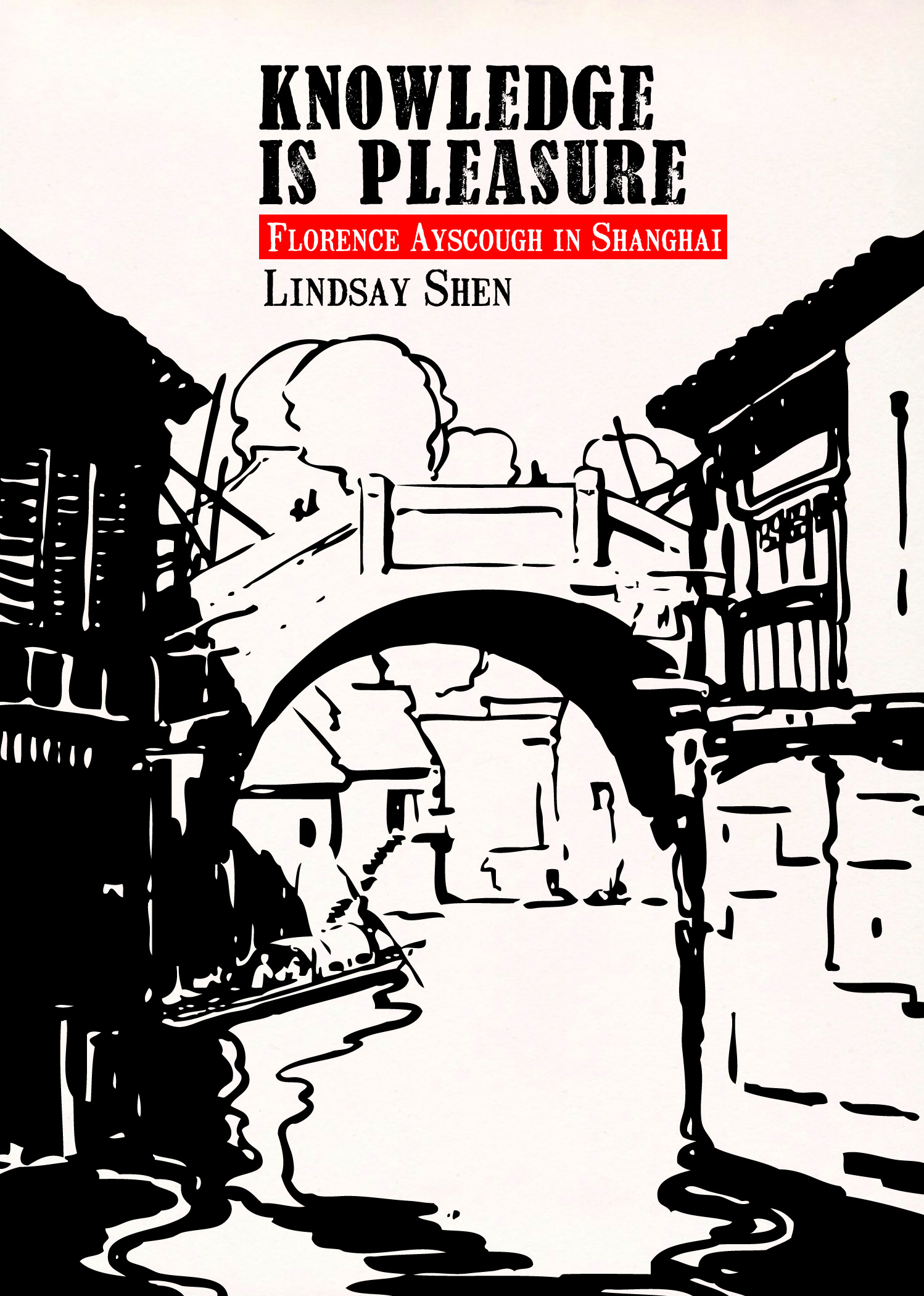
Knowledge is Pleasure: A Life of Florence Ayscough
‘The Sensuous Realist’
Florence Ayscough – poet, translator, Sinologist, Shanghailander, avid collector, pioneering photographer and early feminist champion of women’s rights in China. Ayscough’s modernist translations of the classical poets still command respect, her ethnographic studies of the lives of Chinese women still engender feminist critiques over three quarters of a century later and her collections of Chinese ceramics and objets now form an important part of several American museum’s Asian art collections. Raised in Shanghai in an archetypal Shanghailander family in the late nineteenth century, Ayscough was to become anything but a typical foreigner in China. Encouraged by the New England poet Amy Lowell, she was to become a much sought after translator in the early years of the new century, not least for her radical interpretations of the Tang Dynasty poet Tu Fu published by the renowned literary critic Harriet Monroe. She later moved on to record China and particularly Chinese women using the new technology of photography, turn the Royal Asiatic Society’s Shanghai library into the best on the China Coast and build several impressive collections featuring jars from the Dowager Empress Xi Ci, Ming and Qing ceramics. By the time of her death Florence Ayscough has left a legacy of collecting and scholarship unrivalled by any other foreign woman in China before or since. In this biography, Lindsay Shen recovers Ayscough for posterity and returns her to us as a woman of amazing intellectual vibrancy and strength.
Lindsay Shen is Associate Professor at Sino-British College, Shanghai. She is Honorary Editor for the Royal Asiatic Society China in Shanghai. She has published in the fields of design and museum studies in Europe and the United States.
Endorsements
“In this well-researched book, Lindsay Shen has brought Florence Ayscough to life and painted a fascinating picture of the many aspects of the life of the foreign community in old Shanghai. Using enchanting prose, Lindsey shows us a scholarly and unusual woman who, in her study of Chinese language and culture was ahead of her times.”
Jane Portal
Matsutaro Shoriki Chair
Art of Asia, Oceania and Africa
Museum of Fine Arts, Boston
“This is a sensitive and elegantly written biography of one of the most passionate Sinologists of the late nineteenth and early twentieth centuries. The author moves fluidly between closely shadowing Florence Ayscough’s remarkable life and immersion in Chinese culture and stepping back to illuminate her setting and kindred spirits. Those previously familiar with only a few of Ayscough’s pioneering achievements will find in this monograph a coherent narrative unfolding before them; those for whom she is an unknown name are in for the delight of discovery.  Lindsay Shen is to be admired for recognizing that this impressive story is worth telling and for giving it such vividly human character.”
Elinor Pearlstein, Associate Curator of Chinese Art, Art Institute of Chicago
“Shen’s insightful, yet gentle exploration of the life and work of Florence Ayscough serves to bring a very human face and elegant persona to the tumultuous and challenging world of turn of the 20th century Shanghai. Ayscough’s homes in the British settlement serve as vantage points from which we are provided an insider’s view of the many challenges she and others faced at the end of the colonial era in China. Shen explores with equal parts analytical interest and romantic fascination Ayscough’s embrace of Chinese society, art, literature and horticulture. Her examination reveals the complexity of colonial life marked by a distinct mixture of undying devotion to the colonized culture and rather unpleasant disdain for aspects of its indigenous identity. This dichotomous perception of China lies squarely at the heart of Ayscough’s experience, an experience that is easy to romanticize but equally easy to criticize.  Ayscough struggles with her self-identity in the pages of Shen’s text as she clings to aspects of the China in which she was born just as that same China undergoes a profound and irreversible transformation. Perhaps nowhere is this more evident than in Ayscough’s decision as a self-taught scholar of Chinese to take on the challenge of retranslating the poetry of Tu Fu. Through her translations, Ayscough reveals an understanding of and sensitivity to the subtlety of Chinese poetry that no pervious English language translator had managed to capture. Shen through her unfolding of the layers of Ayscough’s remarkable life reveals both the great intellectual triumph that she achieved and the troubling colonial moment that she so precisely embodied.”
Robert Mintz, Chief Curator and Mr. and Mrs. Thomas Quincy Scott Curator of Asian Art, The Walters Art Museum, Baltimore, Maryland
Posted: July 30th, 2012 | No Comments »
Well done to Patrick Wright, author of the book Passport to Peking, for spotting so many new dodgy China comparisons. I’ve listed a bunch of them before (here) – everyone from Somerset Maugham to Peter Fleming, Will Rogers to Jules Verne and others. Invariably it seems the Brits are the worst offenders at this silliness of comparing China to parts of England (or occasionally other places). Wright though has a stunning bunch that need to be added to the list:
Peking – ‘Just like Bedford’ – This is from the first Peking Broadcast Morgan Philips, secretary of the Labour Party and member of the 1954 delegation to China, sent a radio broadcast back to London claiming that Peking was “just like Bedford”. He told his listeners on the BBC eager to hear of a country so far away and so different, “As I saw the great mass of cycles on the road I was reminded of a day in Bedford during the last war. I had just started to drive. I was passing through the town at the time the workers were leaving the factories for the lunch hour break. All at once I seemed to be submerged in cycles. Peking is just like that.”
Phillips was then shown a new housing estate in Beijing which led him to say that he never expected to see Gorbals tenements built with a sense of pride – that’s right, Beijing housing estates reminded him of Glasgow!!
Rex Warner, the English classicist, writer and translator, visited Mongolia in the 1950s and commented that he thought the music on the local radio, “like Hebridean songs” – news to most Mongolians I expect! Warner moved on to Peking where he noted that the British Ambassador, Humphrey Trevelyan’s house in the embassy compound reminded him of Wimbledon Common.
Clement Atlee, Labour Party leader and winner of the 1945 General Election thought the views from the Hankow Bund over the Yangtze River (now largely idle) ‘rather like the Thames at Tilbury’ and told this to readers of the New York Times in 1954. Now while NY Times readers may be smart I’m not sure how many can conjure an image of the loveliness of Tilbury in their minds!!
J D Bernal, the controversial scientist, found ‘the endless rows of donkey carts’ in Peking ‘very reminiscent of Ireland’ and also noted the ‘infinite variety of houseboats in Canton some of which are like ‘very old and battered Oxford College barges’ and bicycles ‘shoaled like silver herrings – more even than in Cambridge’
And finally, a real corker – Hugh Casson, the architect describes Peking’s Maoist reconstruction as ‘the Croydon-esque silhouettes of the new public buildings’.
Below behold the China like vistas:

The Peking-like vista of Bedford High Street in the 1950s…
 
 The Gorbals….

Wimbledon Common

Sunset over Tilbury…

Bernal thought Canton barges resembled these Oxford College barges (the 1920s above) – some of the ones he saw must have been Flower Boats in a pre-Maoist life, basically barges full of old whores, not unlike what one imagines an Oxford barge contains quite honestly…

 And finally, the beauty that was Croydon in the 1950s
Honestly, why anyone ever went to China I do not know!!!
Posted: July 29th, 2012 | No Comments »
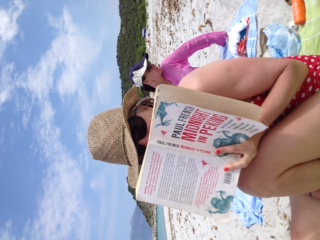
As Midnight in Peking was chosen as a summer holidays read by several newspapers we (that’s Penguin really) thought why not establish a gallery of pictures of people actually reading Midnight while on their holidays….and so it has occurred on Facebook here. So far there have been entries sent in from the grasslands of Inner Mongolia, Beijing (of course!) and Corsica! And the holiday season’s only just started – don’t worry if the global financial crisis is biting – staycation photos are fine as are shots of reading on a Kindle or ipad (we trust you not to be reading 50 Shade of Grey and pretending!).
A special prize will be awarded to anyone sending a photo from an Olympic venue…
here’s an early sample:

From the grasslands of Inner Mongolia…
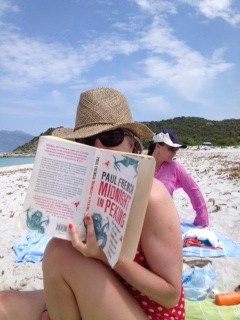
to the beaches of Corsica…
Posted: July 29th, 2012 | No Comments »
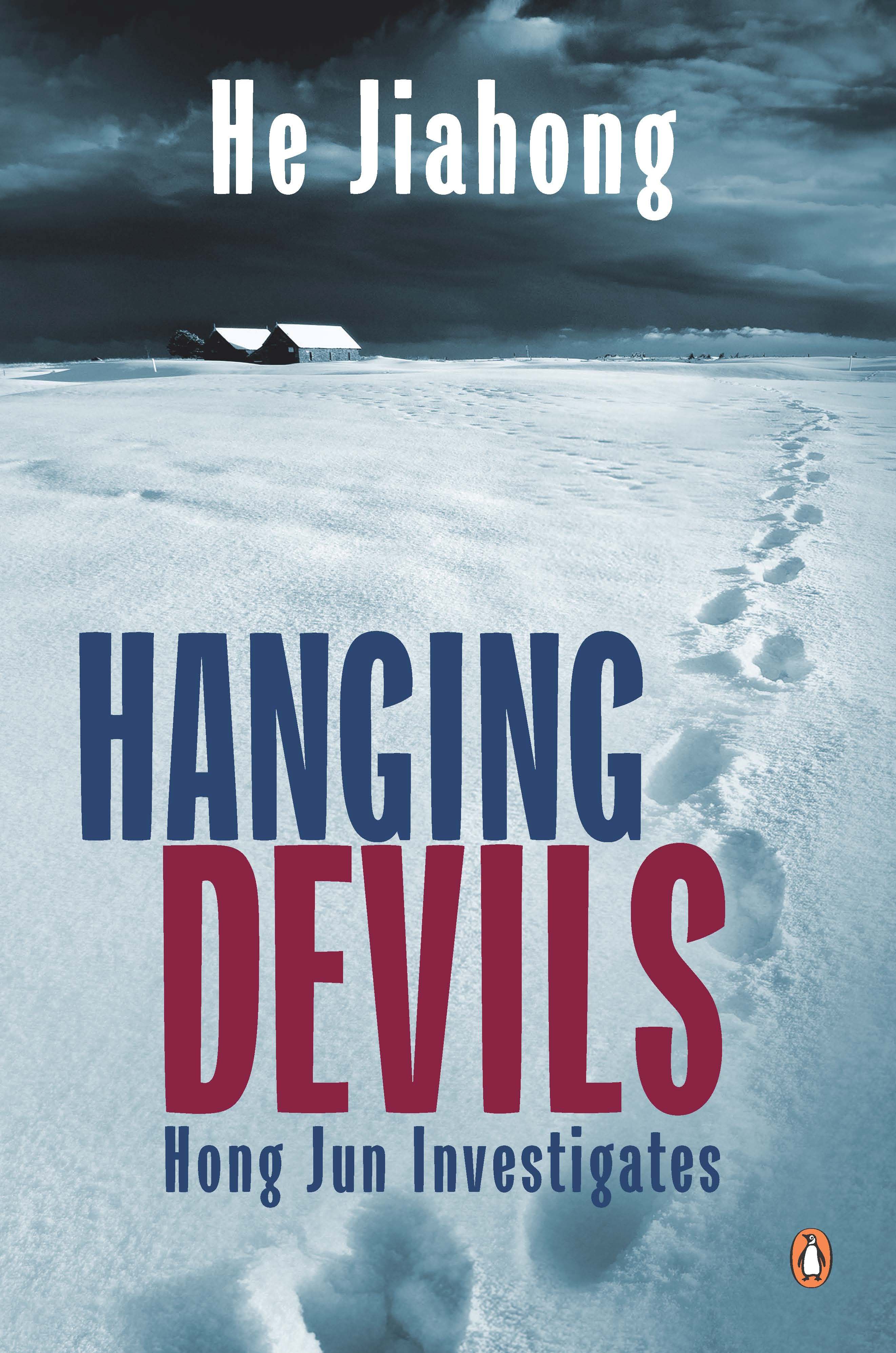
OK, so Penguin China are my delightful publishers but I’m pushing this anyway as I’ve known about it for a long time, read some early passages in translation and am eager to read the whole thing. It’s also translated by a good friend Duncan Hewitt (of Getting Rich First fame) so I’m sure he’s done a good job. A Chinese noir! I do hope the first of many – look out for Hanging Devils!
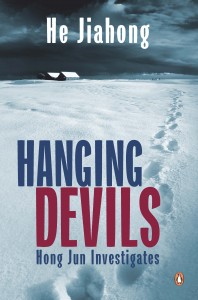
When Hong Jun returns to China from studying and working as a lawyer in the US, he opens the doors to his new practice in Beijing intent on helping ordinary people defend their rights, but he soon finds himself embroiled in a case which is anything but ordinary.
Ten years earlier, in 1984, on a state farm in the brutally icy, rural northeast of China, local beauty Li Hongmei was raped and murdered. There were two suspects and whilst one disappeared, the other confessed making it a seemingly open and shut case. But now it looks like the wrong man may have been sent down for the crime. His newly-rich brother is prepared to pay whatever it takes to clear his name and he thinks Hong Jun is the right man for the job.
In a quest for justice, Hong Jun returns to the sins of the past and delves deep into the sleazy underbelly of China’s corrupt legal system. When he stumbles upon what appears to be official complicity in a cover-up he must challenge those who hold the rule of law secondary to personal ambition and the whims of local officials to solve a case shrouded in both mystery and treachery and one that ambiguously alludes to the ancient legends of the Heilongjiang Mountains where the murder took place.
Inspired by real events, Hanging Devils is a gripping legal thriller in the finest tradition of international crime fiction.
Professor He Jiahong is one of China’s leading experts on criminal evidence, evidential investigation and criminal procedure. He obtained his doctorate in judicial science from Northwestern University in Illinois and is currently professor at the school of law of the People’s University in Beijing.