Posted: July 17th, 2012 | No Comments »
Anne de Courcy’s new book, The Fishing Fleet, takes the fascinating subject of those women who came to India looking for husbands are striking out back home in England. I won’t retell the whole story here as the book sounds worth reading and there’s an excellent review here in the Guardian with some pictures too. A little China add-on (and I don’t know if de Courcy mentions this) but in the early part of the twentieth century there was a similar shortage of marriageable white females in Shanghai to keep all the young Griffins working there under control and away from the temptations of the whorehouse or, God Forbid!!!, the Chinese! However, the women that arrived in Shanghai then had already struck out in England, India and had maybe, following the shipping lines, also failed to secure a husband in Ceylon, Rangoon, Penang, Port Swettenham, Kuala Lumpur, Singapore and Hong Kong before arriving on the Bund. They were, rather cruelly, known as the “empty bottles” by the time they got to China; not that some didn’t eventually find themselves a man and become the duchesses of Shanghailander society eventually.
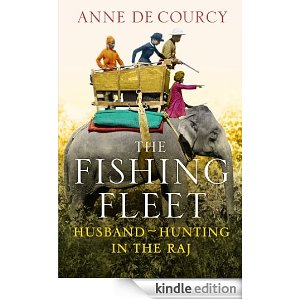
From the late 19th century, when the Raj was at its height, many of Britain’s best and brightest young men went out to India to work as administrators, soldiers and businessmen. With the advent of steam travel and the opening of the Suez Canal, countless young women, suffering at the lack of eligible men in Britain, followed in their wake. This amorphous band was composed of daughters returning after their English education, girls invited to stay with married sisters or friends, and yet others whose declared or undeclared goal was simply to find a husband. They were known as the Fishing Fleet, and this book is their story, hitherto untold.For these young women, often away from home for the first time, one thing they could be sure of was a rollicking good time. By the early twentieth century, a hectic social scene was in place, with dances, parties, amateur theatricals, picnics, tennis tournaments, cinemas, gymkhanas with perhaps a tiger shoot and a glittering dinner at a raja’s palace thrown in. And, with men outnumbering women by roughly four to one, romances were conducted at alarming speed and marriages were frequent. But after the honeymoon life often changed dramatically: whisked off to a remote outpost with few other Europeans for company and where constant vigilance was required to guard against disease, they found it a far cry from the social whirlwind of their first arrival.Anne de Courcy’s sparkling narrative is enriched by a wealth of first-hand sources – unpublished memoirs, letters and diaries rescued from attics – which bring this forgotten era vividly to life.
Anne de Courcy is a well-known writer and journalist. In the 1970s she was Woman’s Editor on the LONDON EVENING NEWS and in the 1980s she was a regular feature-writer for the EVENING STANDARD. She is also a former feature writer and reviewer for the DAILY MAIL.
Posted: July 16th, 2012 | No Comments »
A few years ago Alfreda Murck published her paper on Mao’s famous sainted mangoes (she did it to help raise money for the Wenchuan earthquake if I remember right) and it’s a fascinating story. She’s telling it again in Shanghai this Thursday…
A LITERARY LUNCH AND ILLUSTRATED LECTURE BY ALFREDA MURCK
EAT. TALK. THINK.
RMB 188, includes three course lunch, coffee or tea
Reservations required: +8621 6350 9988, or click here.
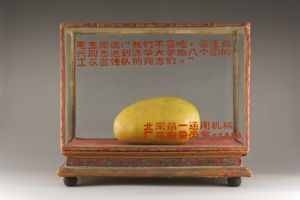
In August 1968, a Pakistani foreign minister arrived in Beijing with a crate of mangoes as a gift for Chairman Mao Zedong. Mao was not inclined to eat them. He sent them instead to workers who, ten days before, had put down warring factions of Red Guards at Tsinghua University. The workers were continuing to occupy the campus as “Mao Zedong Worker’s Propaganda Teams.” Greeted with awe, the mangoes quickly became religious relics that were celebrated as talismans of Mao’s love for the workers.
The summer of 1968 thus marked a turning point in China’s Great Proletariat Cultural Revolution (1966-1976). Student Red Guards, who had been the leaders, were by passed while workers were asked to take charge.
Freda Murck tells the story of the sanctification of the mango through artifacts found in the flea markets of Beijing, as well as photographs and magazines of the period.
About the Speaker: Freda Murck worked in the Asian Art Department at the Metropolitan Museum of Art, New York from 1978-1991. Since 1991, she has lived with her husband Christian Murck in Taipei and Beijing, publishing articles on Chinese art and a book on how eleventh century scholars combined poetry and painting to express dissent: Poetry and Painting in Song China: The Subtle Art of Dissent (Harvard 2000). She was one of the curators for the exhibition China: The Three Emperors, 1662-1795 (Royal Academy, London 2005). She collaborated with two Luo Ping specialists in curating the exhibition Eccentric Visions: The Worlds of Luo Ping (1733-1799). She currently serves as a consultant to the Beijing Palace Museum’s English web-page and as a researcher in the Palace Museum’s Painting and Calligraphy Research Center.
Posted: July 16th, 2012 | No Comments »
I’m not going to say anything about this except that it’s the first time in my life I’ve used the word “awesome” in a non-religious, non-melting down volcano or approaching tsunami way. Cat Women – 1930s – old Shanghai – a perfect end to the weekend surely…
click here
Posted: July 15th, 2012 | No Comments »
I’m afraid this book, China Interrupted, is horrendously expensive so I haven’t got it but I also know that there are China Rhyming readers with access to university libraries who may have a copy. I haven’t got the spare change and I rather think that any missionaries reading this might prefer to give their money to some sort of “saving Chinese souls” fund. Anyway, it does sound like a potentially interesting story.
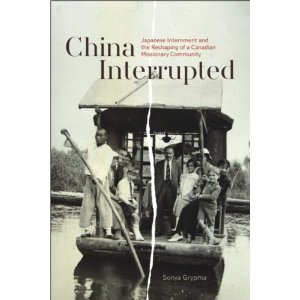
This is the story of the richly interwoven lives of Canadian missionaries and their China-born children (mishkids), whose lives and mission were irreversibly altered by their internment as “enemy aliens” of Japan from 1941 to 1945. Over three hundred Canadians were among the 13,000 civilians interned by the Japanese in China. China Interrupted explores the experiences of a small community of Canadian missionaries who worked in Japanese-occupied China and were profoundly affected by Canadas entry into the Pacific War. It critically examines the fading years of the missionary movement, beginning with the perspective of Betty Gale and other mishkid nurses whose childhood socialisation in China, decision to return during wartime, choice to stay in occupied regions against consular advice, and response to four years of internment reflect the resilience, fragility, and eventual demise of the China missions as a whole. China Interrupted provides insight into the many ways in which health care efforts in wartime China extended out of the tight-knit missionary community that had been established there decades earlier. Urging readers past a thesis of missions as a tool of imperialism, it offers a more nuanced way of thinking about the relationships among people, institutions, and nations during one of the most important intercultural experiments in Canada’s history.
Posted: July 14th, 2012 | 1 Comment »
…and so concludes out little blast of Chinois poetry in this, China Rhyming’s, year of Chinois Poetry!! A third short poem by Amy Lowell from the Harriet Monroe edited collection published in 1917. This one is called Falling Snow:
THE SNOW whispers about me,
And my wooden clogs
Leave holes behind me in the snow.
But no one will pass this way
Seeking my footsteps,Â
And when the temple bell rings again
They will be covered and gone.
Posted: July 14th, 2012 | No Comments »
OK, so I enjoyed Amy Lowell’s poem yesterday – Reflection – so we’re all going to read another one today – this time entitled Hoar Frost and again from The New Poetry Anthology that Harriet Monroe edited in 1917 (read the whole book if you like). So here you go – notice the repetition from yesterday of the “silken outer garment” motif kids.
IN the cloud-gray mornings
I head the herons flying;
And when I came into my garden,
My silken outer-garment
Trailed over withered leaves.Â
A dried leaf crumbles at a touch,
But I have seen many Autumns
With herons blowing like smoke
Across the sky.
Posted: July 13th, 2012 | No Comments »
What do you mean you forgot that 2012 was China Rhyming’s year of Chinois poetry? How could you – what do you mean some of it’s a bit rubbish!! How dare you – we’ve had Ezra Pound, WB Yeats, Sacheverell and Edith Sitwell, not to mention Vachel Lindsay (twice). Well, you’re going to get some more – it’s good for you!!
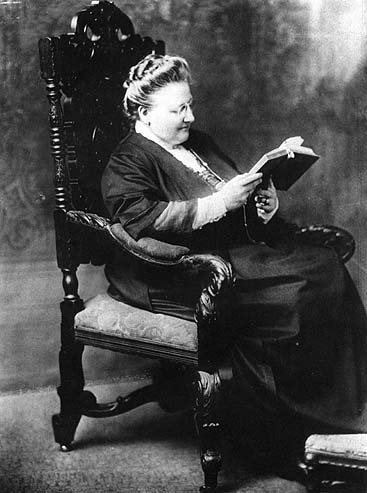
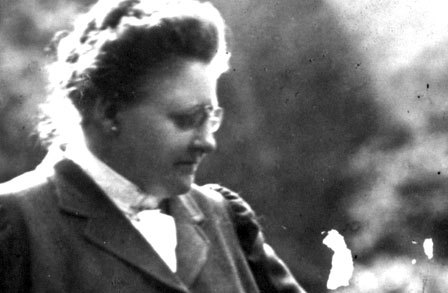
And we’ll start today with a genuine Big Beast (literally actually) in the field of Chinois poetry – the “hippopoetess” (as Ezra Pound called her, because she was obese) Amy Lowell (1874-1925), friend of Florence Ayscough and Harriert Monroe and all those leading gals of things Chinois (and a lot more on this blog to come soon about Florence Ayscough). But today, it’s Lowell’s “Reflections“, published in a journal of poems edited by Harriet Monroe entitled The New Poetry and published in 1917.
WHEN I looked into your eyes,
I saw a garden
With peonies, and tinkling pagodas,
And round-arched bridges
Over still lakes.
A woman sat beside the water
In a rain-blue, silken garment.
She reached through the water
To pluck the crimson peonies
Beneath the surface,
But as she grasped the stems,
They jarred and broke into white-green ripples,
And as she drew out her hand,
The water-drops dripping from it
Stained her rain-blue dress like tears.
Posted: July 13th, 2012 | No Comments »
Interesting little factoids suitable for the China Rhyming blog pop up in the unlikeliest of places. I while back I spent a couple of days in Phoenix and Scottsdale promoting Midnight in Peking. I cannot but recommend the excellent Poisoned Pen booksoire there, a murder/thriller readers treasure trove run by the dynamic Barbara Peters – it’s a delightful place, Barbara was a great host and a nice crowd came along and bought books – what more could you ask for. Well, I did get a bit more. Some book lovers took me along with them for dinner where I was staying at the fantabulous Valley Ho Hotel, built in the 1950s with all the hubris of that decade in America and a now beautifully restored to its beach blanket Babylon hula hula glory.
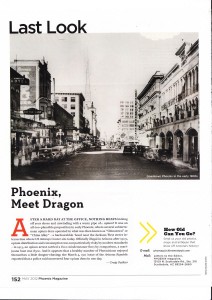
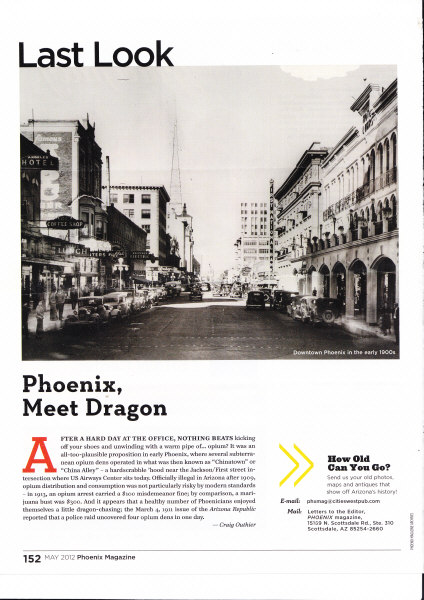
Anyway, while in Phoenix I did see this photo from the archives in a local tourism and what to do magazine – a downtown Phoenix street from the 1920s where apparently all the Chinese run opium dens were….this is by Jackon and First Street where you could have found Chinatown or China Alley approximately where the US Airways Center is today. Opium smoking was made illegal in Arizona in 1909 apparently but the local cops were reporting having raided four Chinese dope dens in 1911.