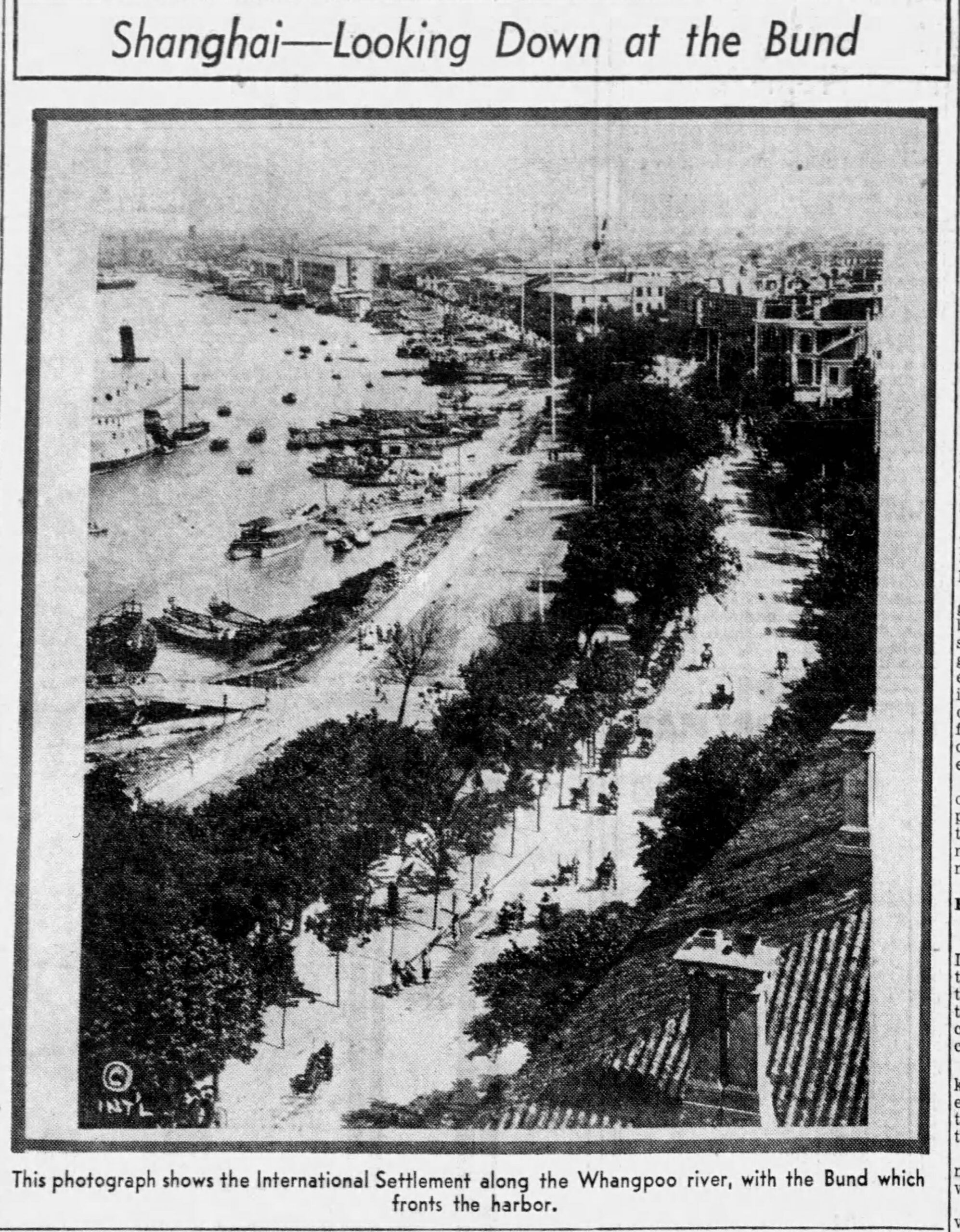
This photograph of the Shanghai Bund (Waitan) was published in American newspapers in 1935. Anyone who knew Shanghai then may have laughed over their breakfast pancakes as the image is at least ten or 15 years out of date. No Cathay Hotel, no construction of the Bank of China building and no cars, plus a few other giveaways…. I think this photo must have been taken from the spire of Gilbert Scott’s Holy Trinity Church (aka the “Red Church”), c.1869 that still stands (despite Red Guards and fire) at the northern end of the Bund on Jiujiang Lu.
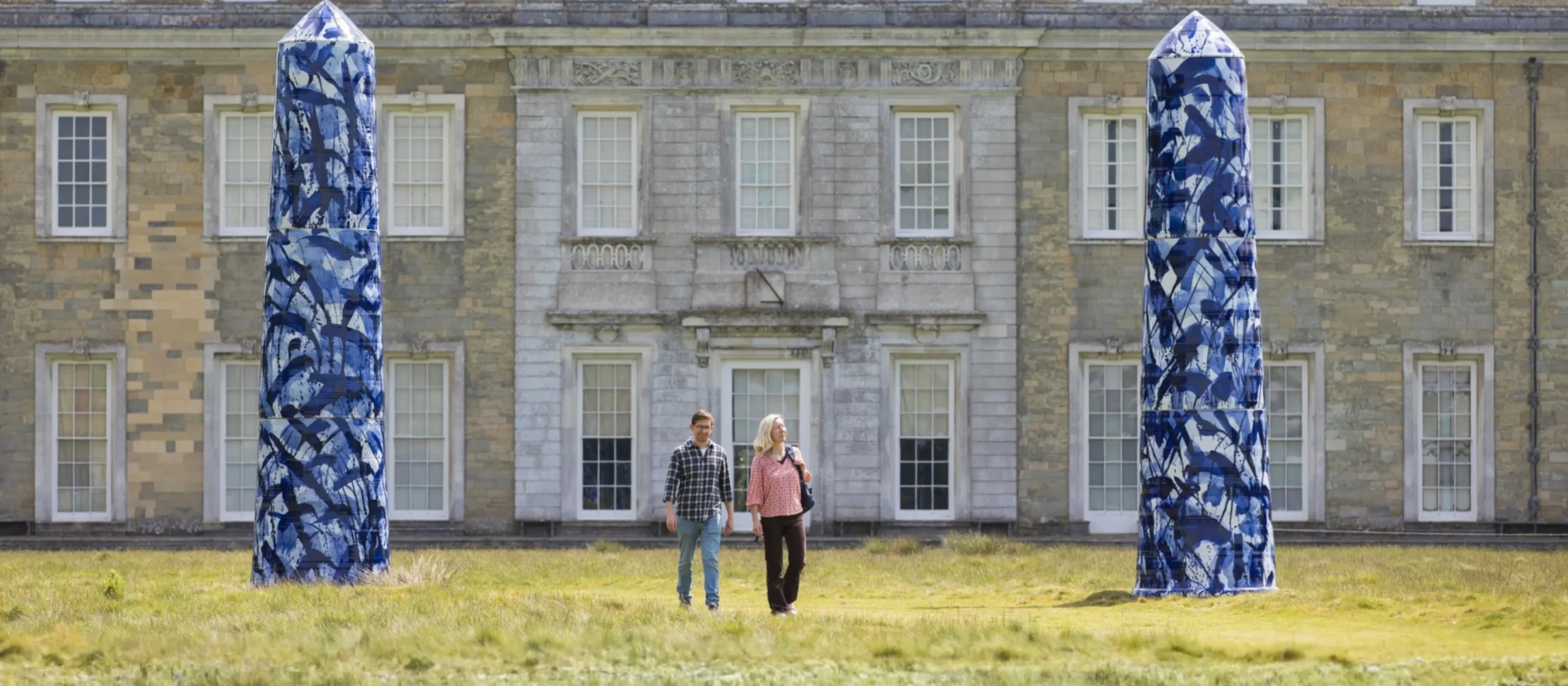
Petworth House in West Sussex is well worth a visit if you’ve never been. Landscaped gardens created by Capability Brow, a beautiful house which includes a collection of art featuring works by JMW Turner and John Constable. You may know it from Bridgerton. I have in the past blogged about the Chinoiserie and Chinese pieces at Petworth (here) which includes Chinese vases from the Kangxi Period (c.1662-1772) and cabinets. This makes Petworth an excellent location for a new exhibition Expressions in Blue: Monumental Porcelain by Felicity Aylieff.
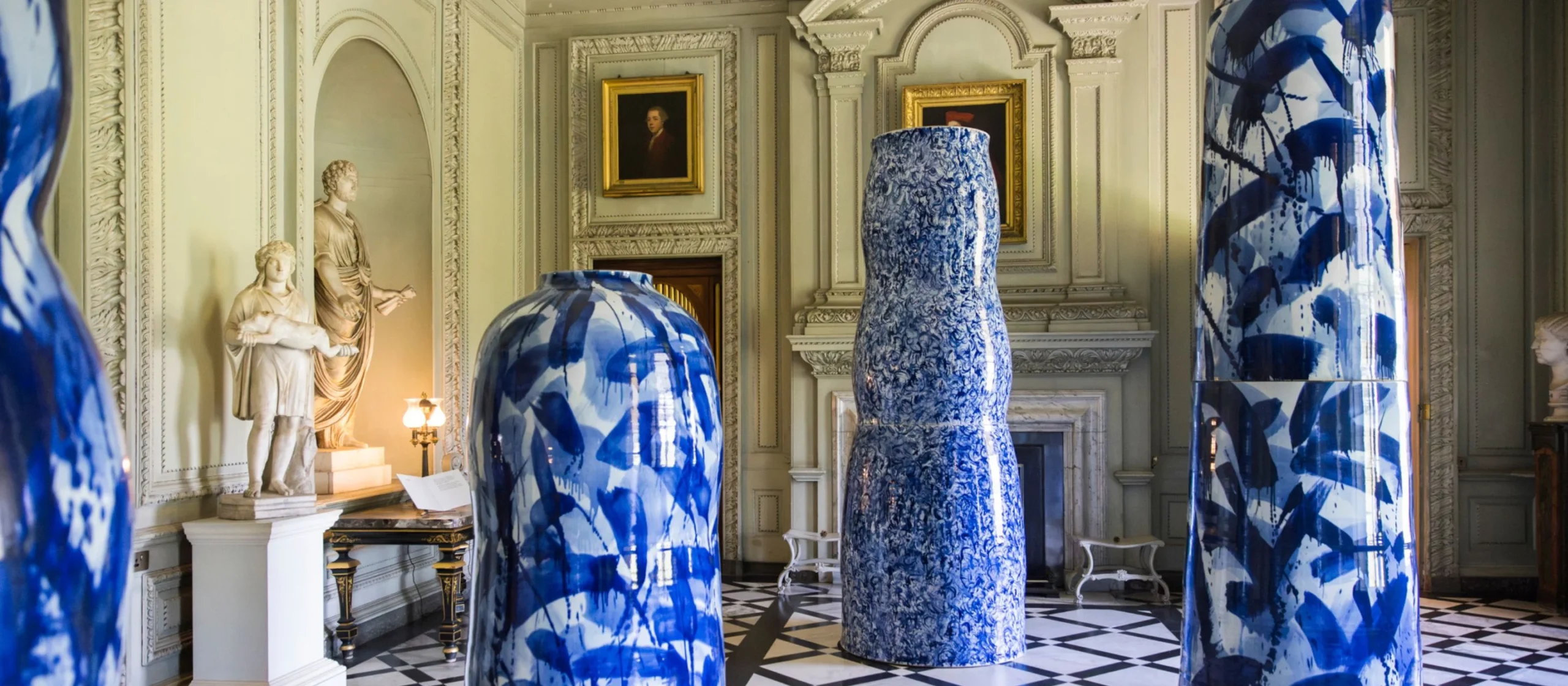
Aylieff’s highly ornamental floral fencai enamelled vessels, some over 6ft tall and all made in Jingdezhen, take their inspiration from the decorative interior in Petworth’s Carved Room, in particular the intricate wood carvings by Grinling Gibbons. A couple of examples below and you can see more details here.
Expressions in Blue: Monumental Porcelain by Felicity Aylieff is on till 27 September 2026 (click here for details)…
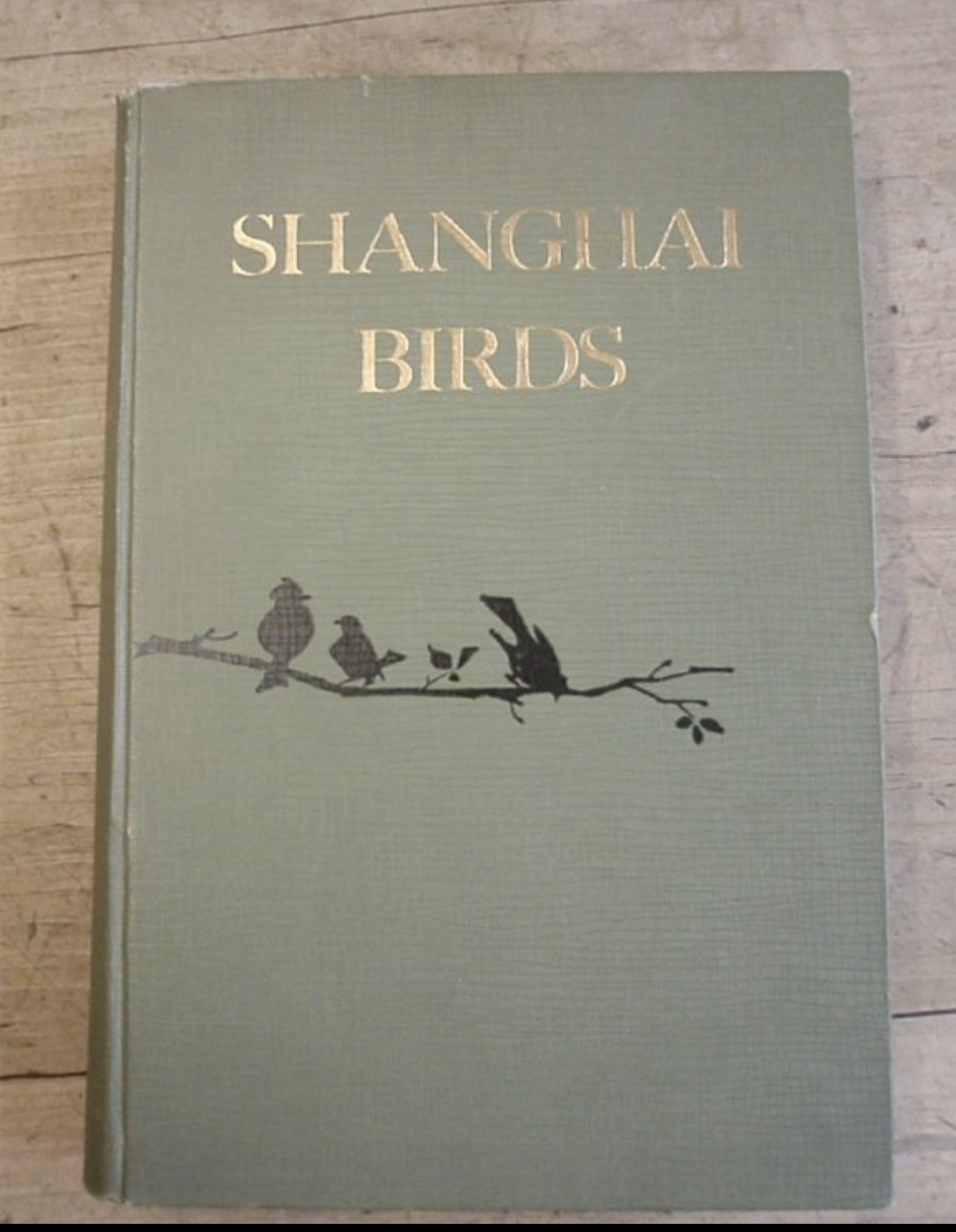
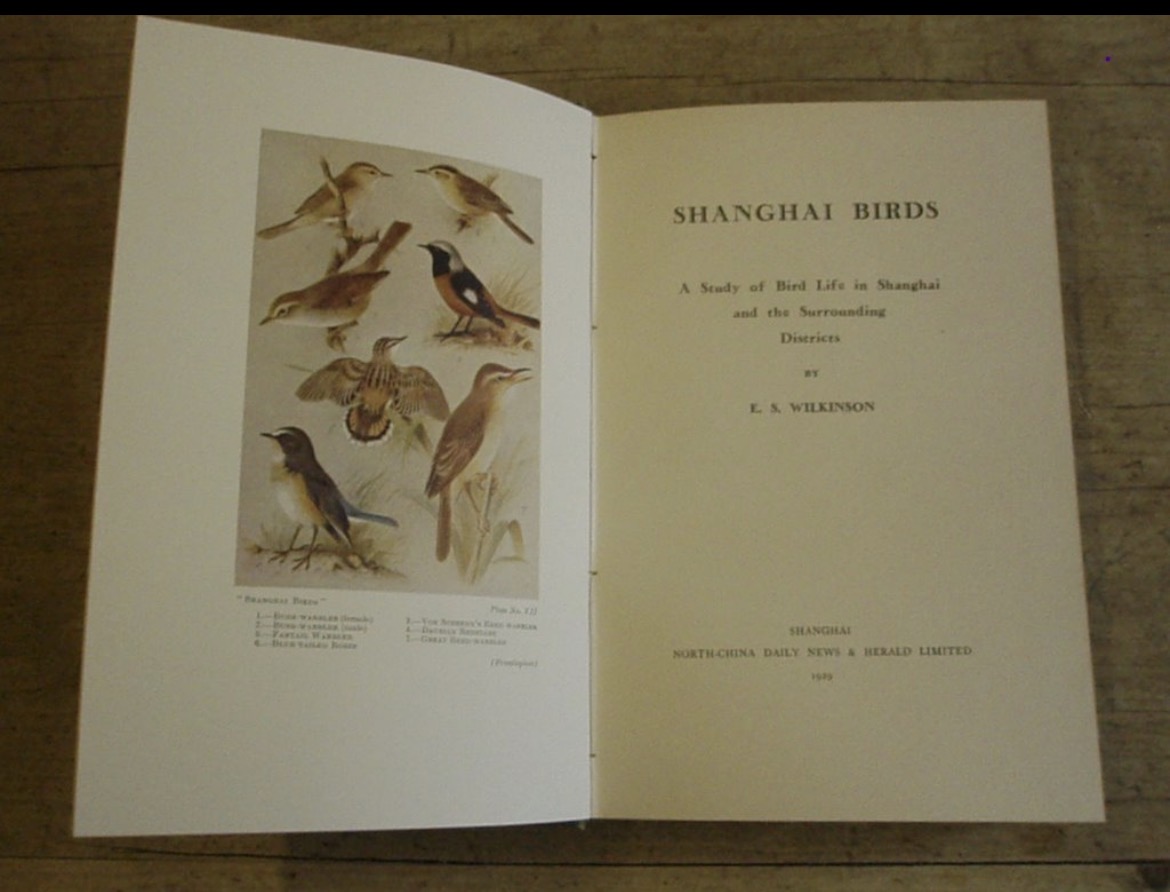
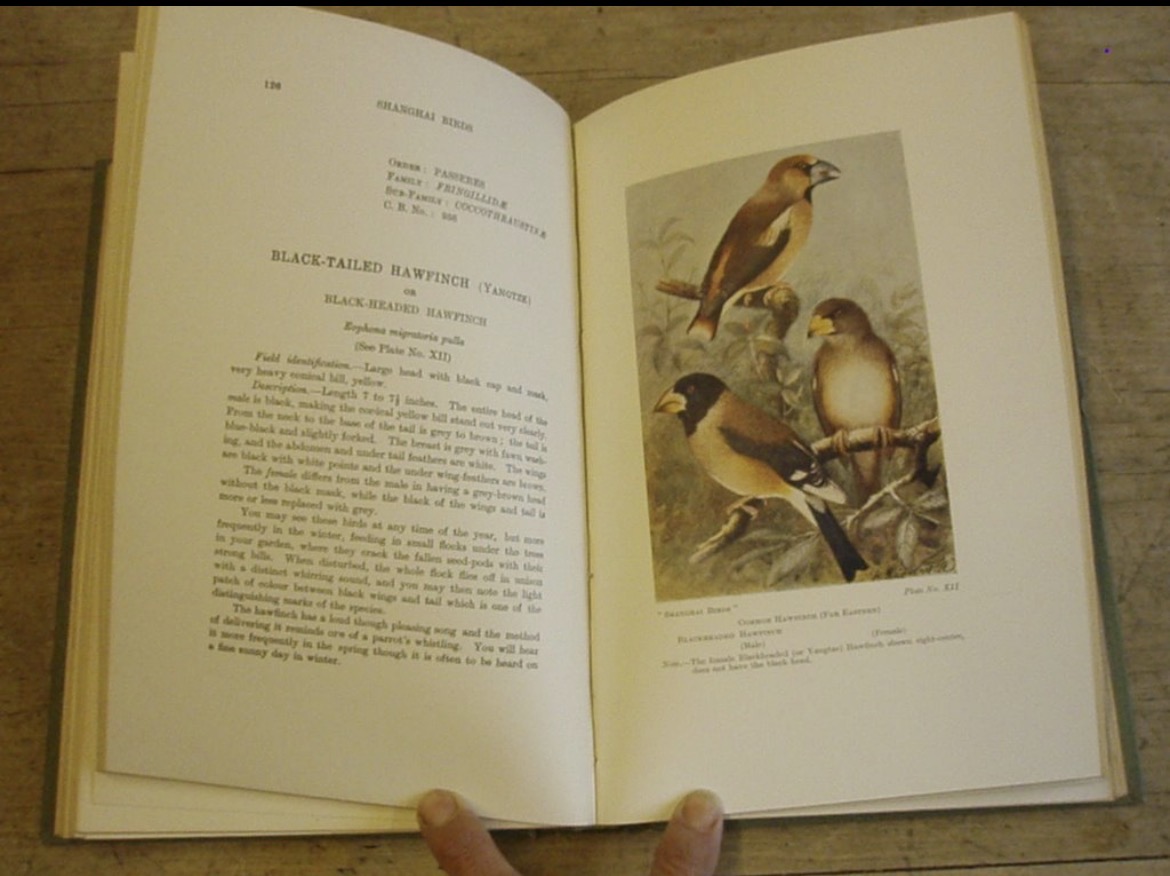
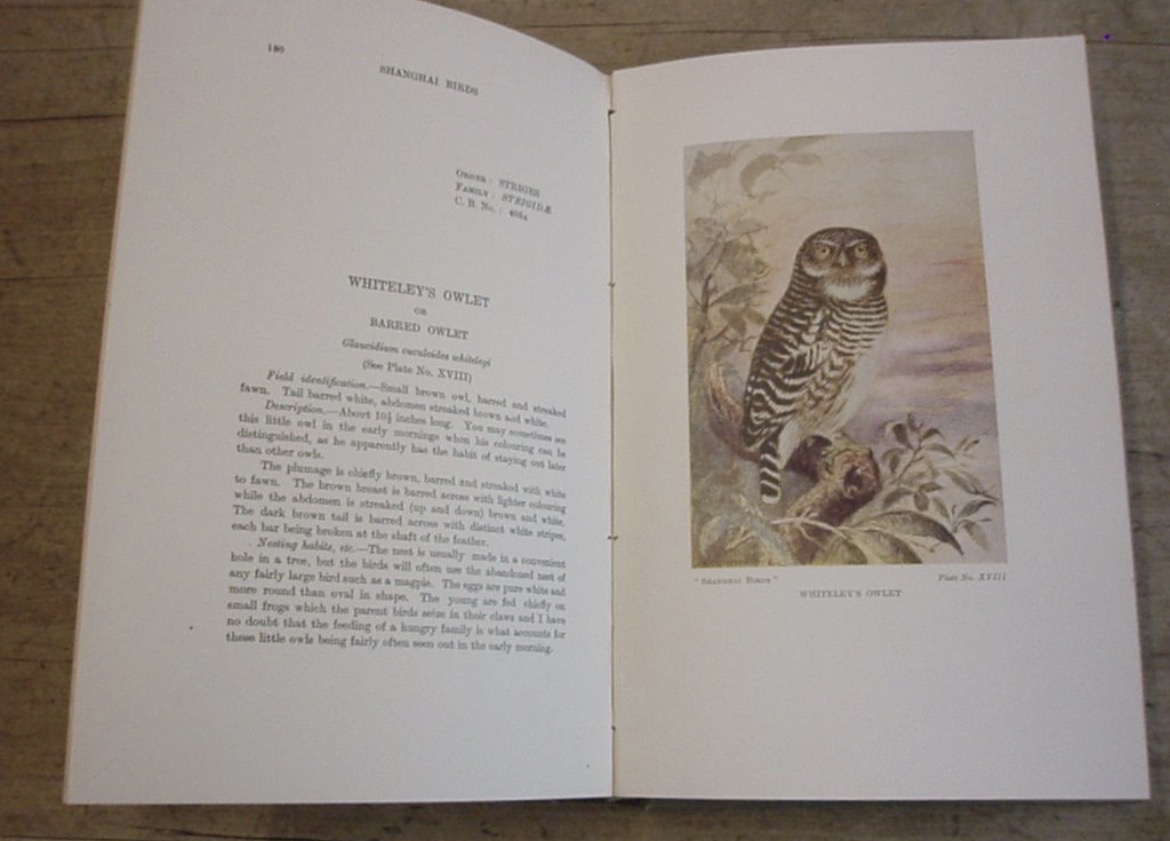
Shanghai Birds. A Study of Bird Life in Shanghai and the Surrounding Districts by E.S. Wilkinson (Edward Sheldon Wilkinson, 1883–1950), published by the North-China Daily News.
Wilkinson was a British chartered accountant working for the Shanghai Municipal Council, an amateur naturalist, and birdwatcher. He wrote several Shanghai hiking guides and bird-related books a calendars and wrote the “Country Diary” column for the North-China Daily News.
During WW2 he was interned by the Japanese in Shanghai where he ran camp classes in bird watching and ornithology.
If you’re in Hong Kong this month do pop into the Foreign Correspondents’ Club to see their latest photo exhibition on the club walls.
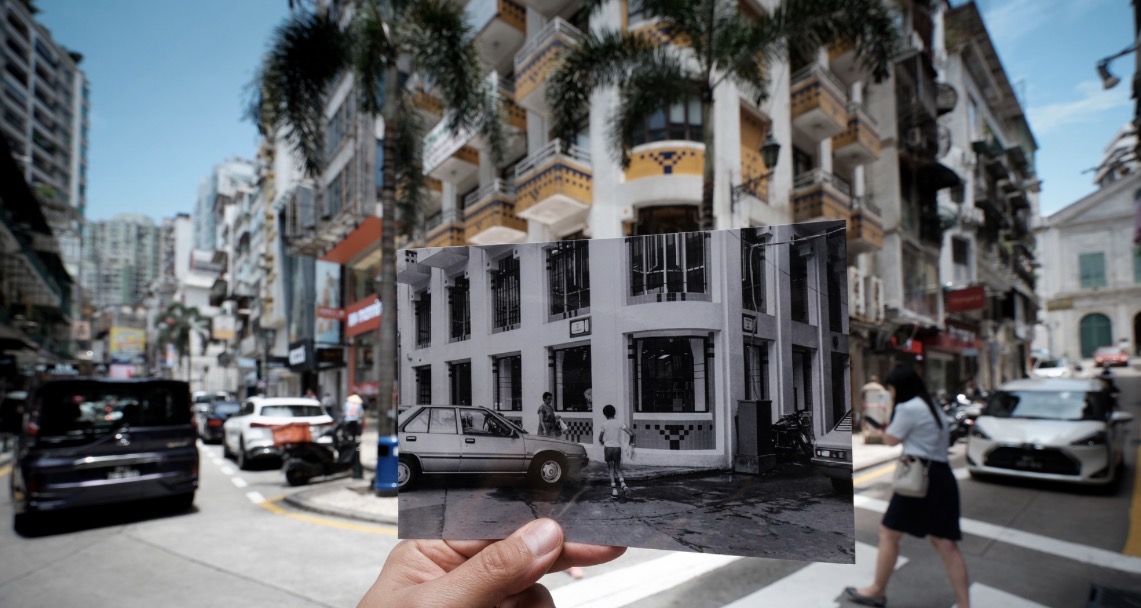
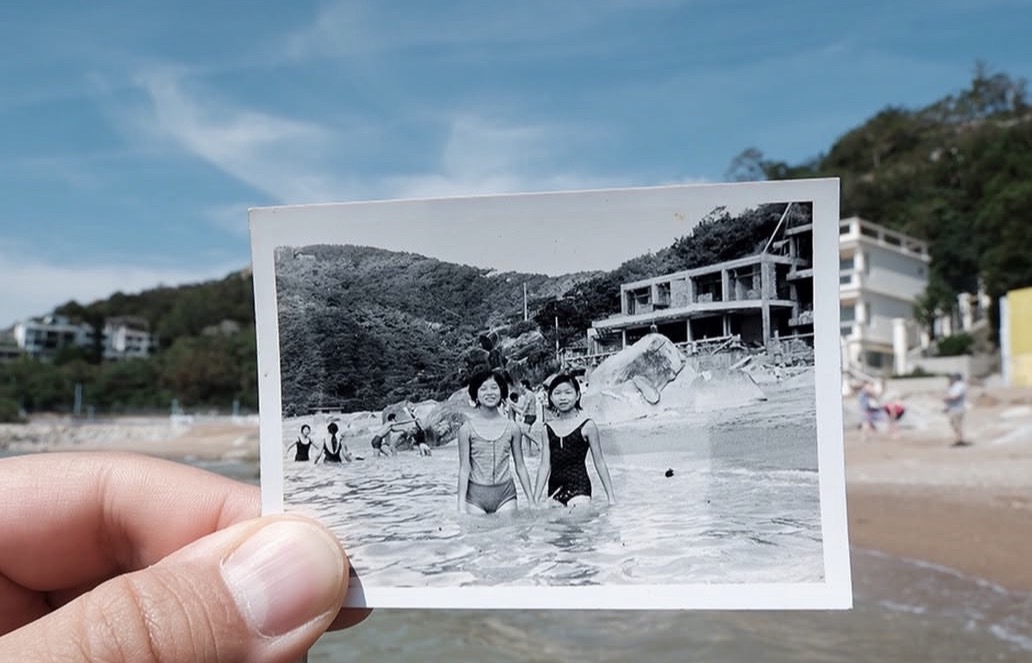
Portugal-born, Macao-based photographer Gonçalo Lobo Pinheiro captures Macao’s fading streets, colonial-era buildings and everyday corners, the kind of scenes that disappear as the city keeps changing. Praia de Cheoc Van, Largo do Senado, the old Portuguese school, the Protestant cemetery, documented before they’re gone or already changed for good.
The exhibit is on in the FCC’s Main Bar & Lounge till 31 July….
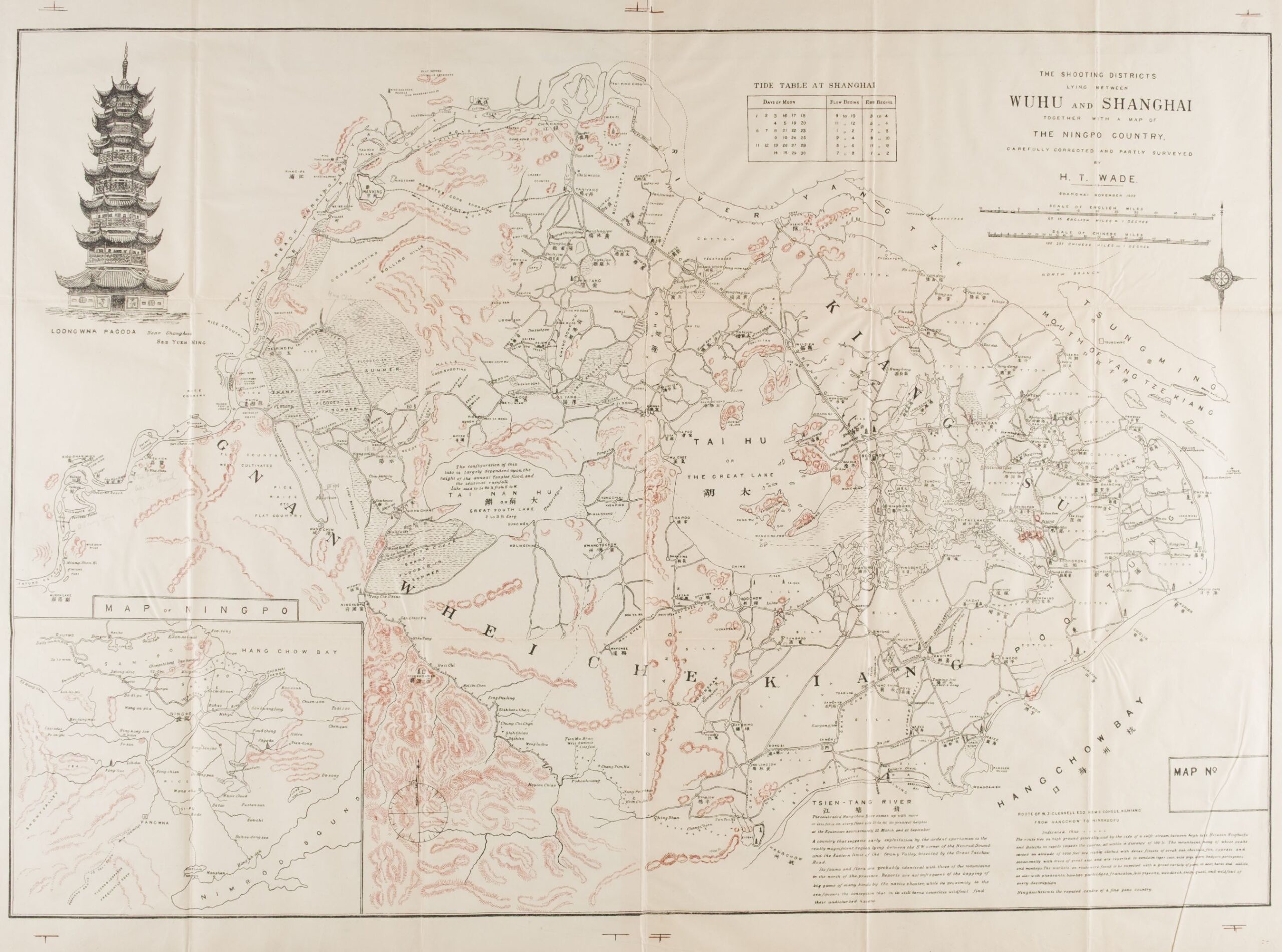
My thanks to old China aficionado and collector Ed Lanfranco in California for alerting me to this great map – HT Wade’s The Shooting Districts lying between Wuhu and Shanghai together with a map of the Ningpo Country, 1903. Henling Thomas “HT” Wade was the author of With Boat and Gun in the Yangtze Valley, 1910. This is a lovely detailed map with a vignette of the Loongwha (Longhua) Pagoda in the top left corner. I believe Wade himself, a trained cartographer, produced the map. This is the 1903 version though I think the first version of this map was published in 1893. Wade also drew detailed maps of Shanghai, other treaty ports and Hong Kong.
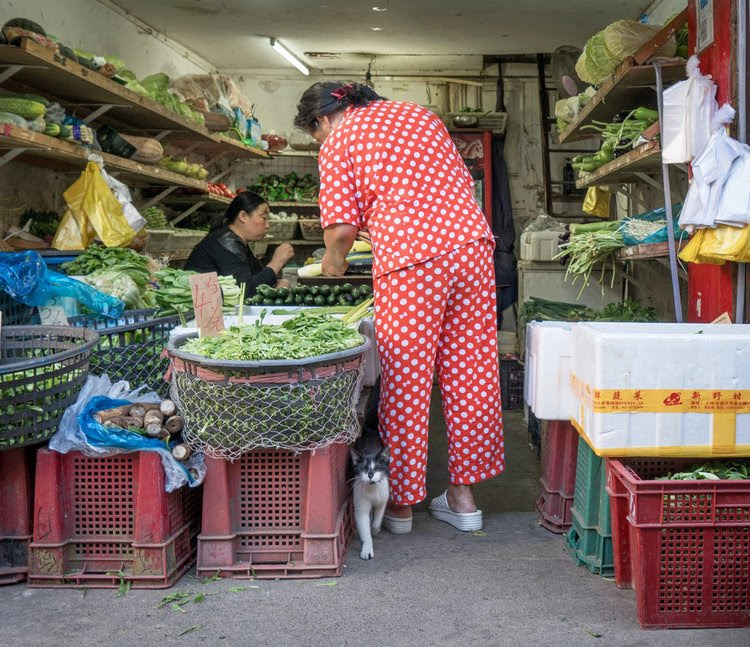
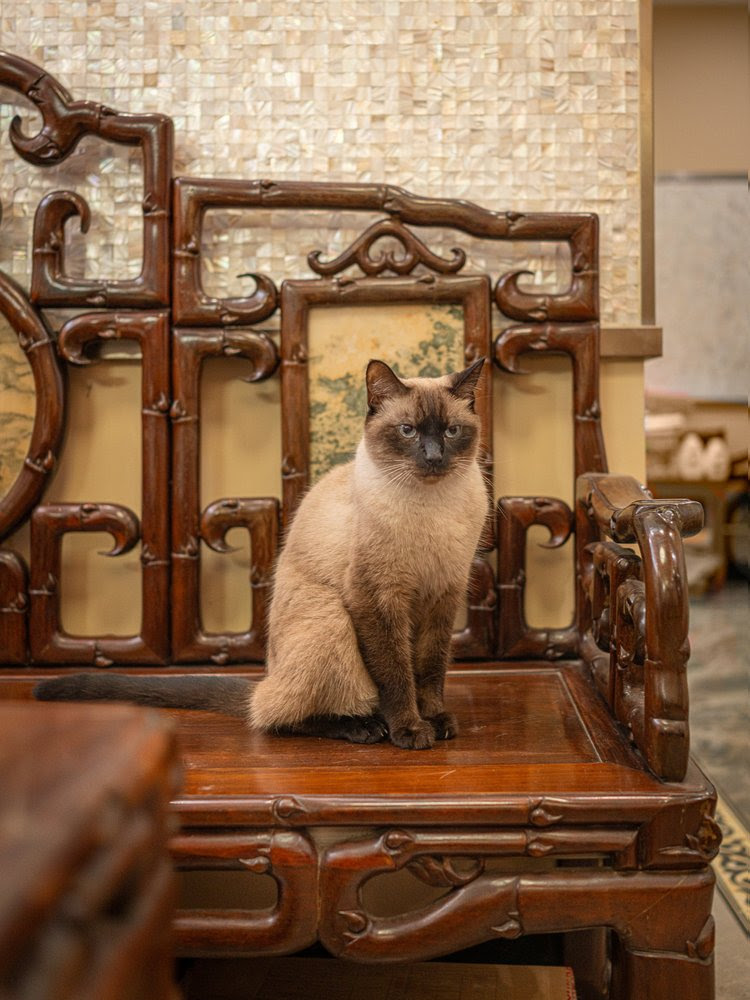
A decade after the viral success of Marcel Heijnen’s Hong Kong Shop Cats, a long-awaited sequel has finally been published. This time, the Dutch photographer turns his lens towards the urban cats of China in Hide-and-Seek: China’s City Cats (躲猫猫). You can buy the book here…..
Encompassing a comprehensive China edition alongside three city-specific volumes, this brand-new four-book collection marks the culmination of Heijnen’s enduring fascination with the feline inhabitants who navigate the ever-shifting landscapes of China’s major cities.
Marcel Heijnen has traversed nearly twenty Chinese cities, documenting the communal courtyards of Shanghai’s shikumen, the enduring residential pockets of Guangzhou, and the lived-in reality of Hong Kong’s traditional trade districts. Rather than seeing these spaces as mere relics, Heijnen portrays them as active, functioning ecosystems in which cats are integral to the social fabric. His lens documents these felines as the “kings and queens” of their domains: ancestral halls, active construction sites, and the small-scale retail hubs that form the backbone of local neighbourhoods.
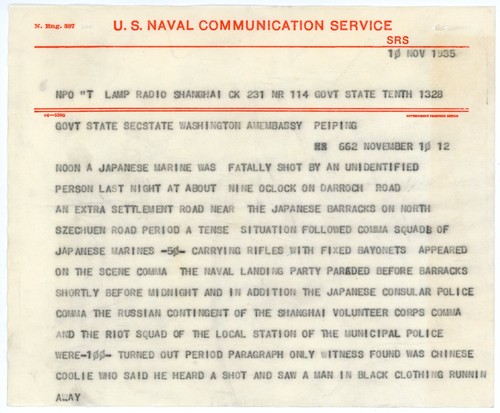
An interesting small nugget of Shanghai and Chinese history from the great old China ephemera collector Roy Delbyck. But perhaps this US Naval Communication needs some context.
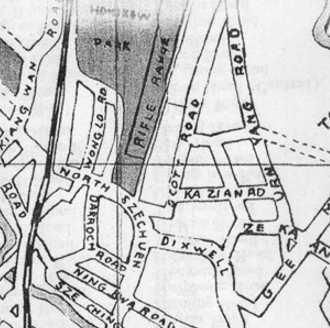
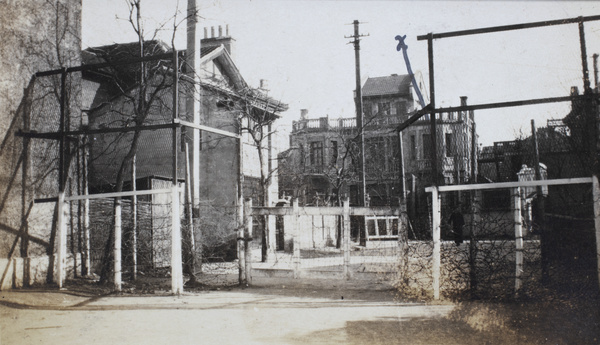
What happened: On November 10 1938 a Japanese marine was shot dead by an assassin. The shooting occurred c.9pm on Darroch Road, outside the official International Settlement in what was called the Northern External Roads, just over the northern border of the Settlement at Hongkou. In fact Darroch Road (now Duolon Lu) was only 500-600 metres long and is best known today as being the former home of many left wing writers including Lu Xun, Mao Dun, and Guo Moruo. It was mostly residential and a mix of longtang and Spanish-Garden style villas but had been a front line in the war of 1932 and was again with one junction known as Hellfire Corner and barbed wire barricades along the road as you can see below. As you can read the Russian Shanghai Volunteers regiment, the Japanese gendarmes and their “Bluejacket” marines all turned out but caught no one. A labourer (“coolie” in the crude foreigner vernacular of 1938) saw a man in black running away.
Why?: 1935 was a time of serious tension – the attacks on Chinese Shanghai of 1937 were ahead but anticipated, while the war of 1932 was still a recent memory. In 1935, Shanghai experienced heightened political tension, intense anti-Japanese student demonstrations, and severe censorship driven by Japanese military encroachment in North China and Tokyo’s direct pressure on local Chinese authorities. Japan used the He–Umezu Agreement and the Chin–Doihara Agreement in 1935 to force Chinese Nationalist (KMT) forces and political operations out of Hebei and Chahar provinces. Japanese diplomats and consuls in Shanghai heavily pressured the municipal administration to suppress local salvationist publications, ban anti-Japanese groups, and penalize media critical of the Japanese emperor – the KMT in large part complied. High-profile judicial punishments—such as the imprisonment of editor Du Zhongyuan for articles deemed derogatory toward Tokyo—inflamed local public opinion. It was perhaps little wonder that someone decided to take matters in their own hands and fight back.
And then?: Events continued to spiral out of control with Chinese students and resistors angry with both the Japanese and seemingly copliant KMT officials. Tang Yu-jen (former Vice Minister of Foreign Affairs and a high-ranking political figure in China’s Nanjing government) was assassinated on December 25, 1935, at 4:45 p.m. outside his residence at 235 Rue Gaston Kahn in the French Concession of Shanghai. Gunmen in a motor car fired a volley of shots as he arrived home, inflicting fatal wounds.
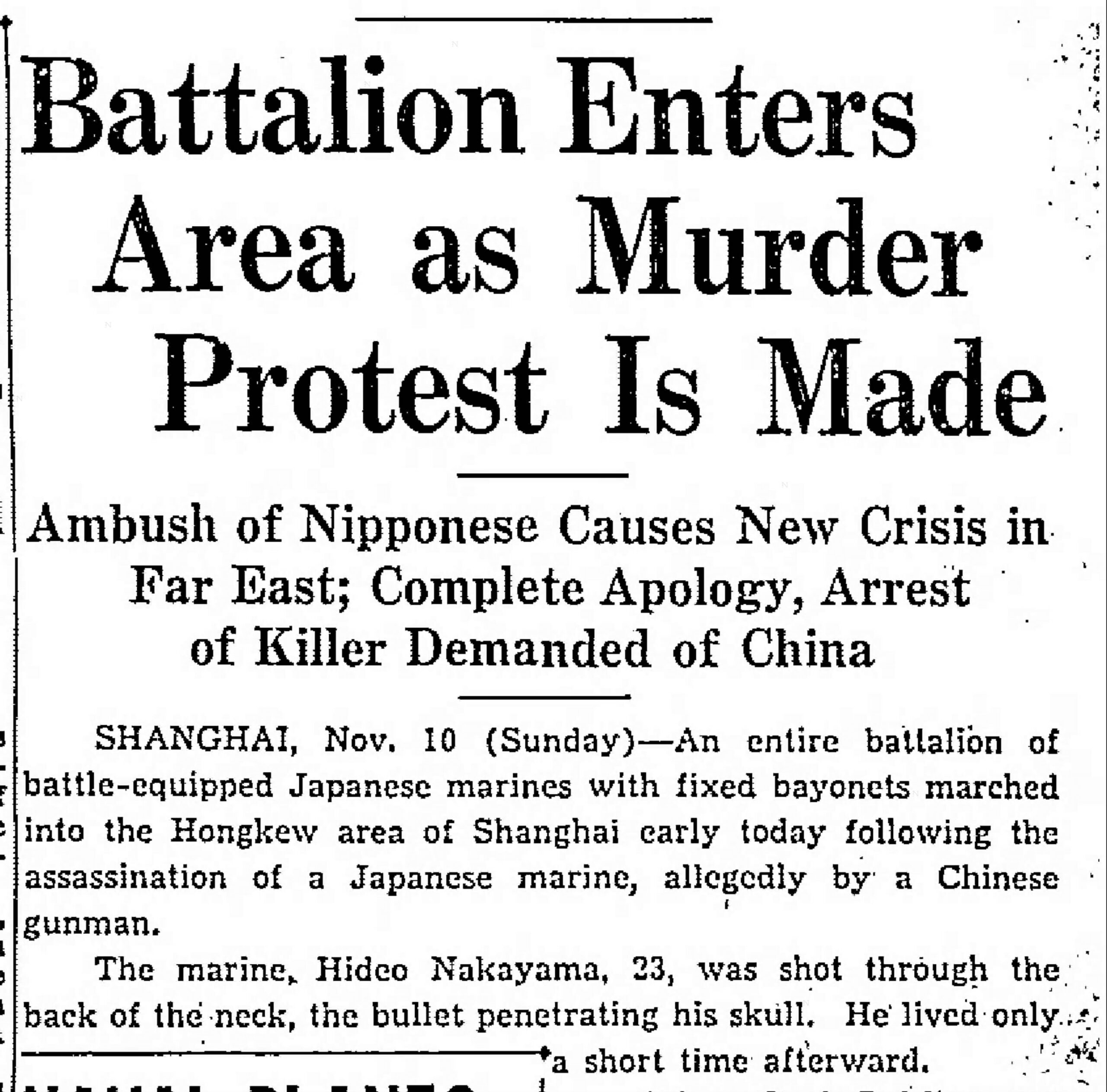
Although: Japanese was known for its provocations and used the assassination to flood their Marines into northern Shanghai, as the newspaper article below shows, thereby strengthening their hold over Shanghai north of Suzhou Creek.
Darroch Road was close by the Japanese barracks on North Szechuen Road (Sichuan Bei Lu) – the park and rifle range above Darroch Road is what is now Lu Xun Park.
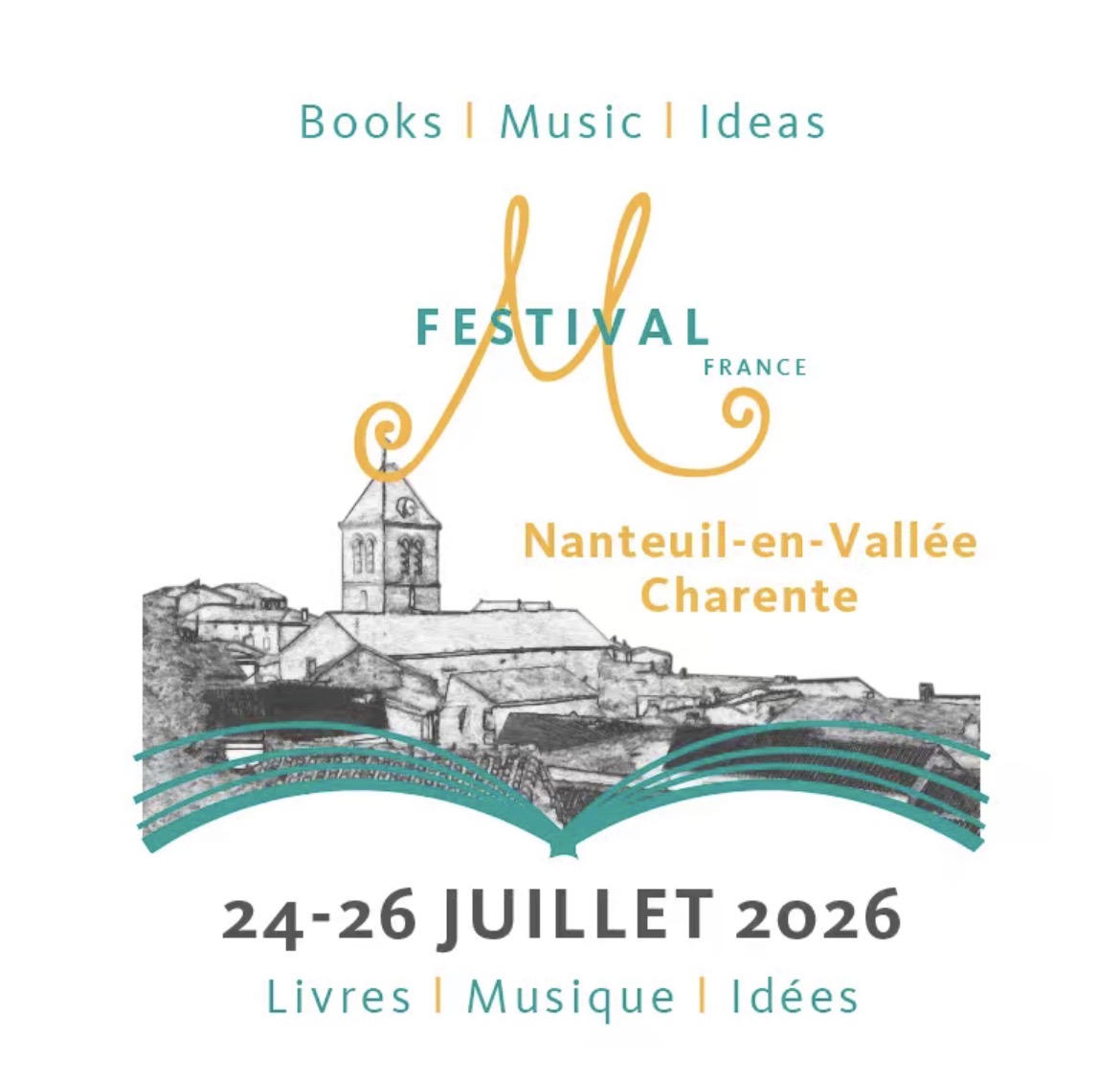
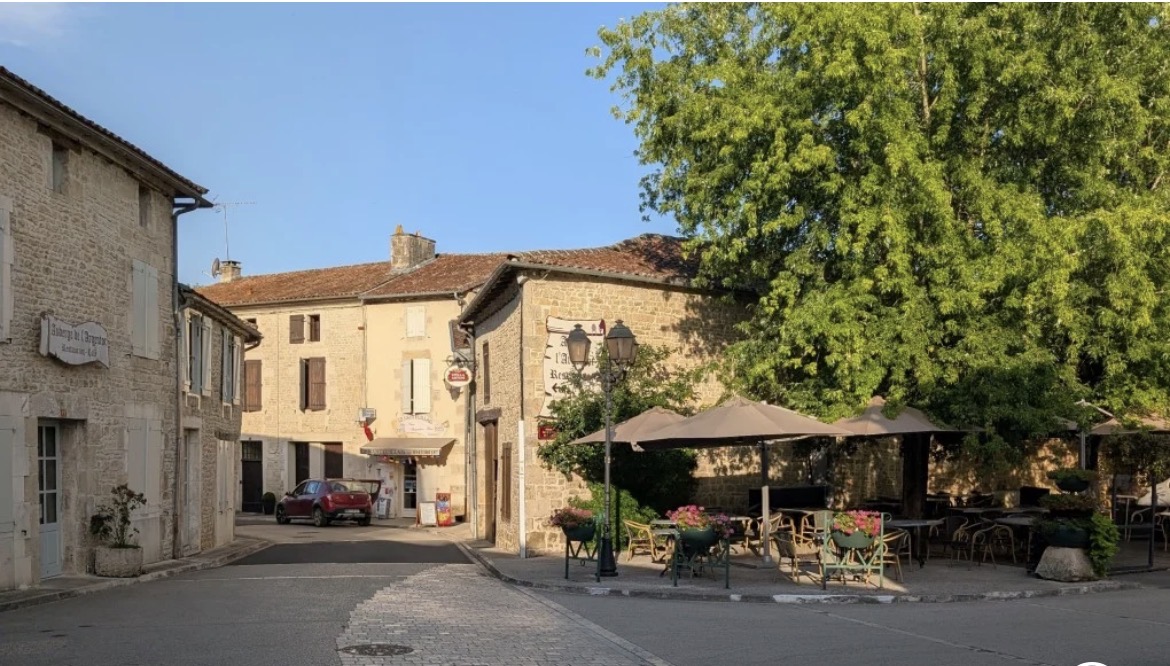
If you have find memories the old M on the Bund and Captial M literary festivals in China then you may like to know it’s all happening again this July 25/26, and this time it’s in the beautiful village of Nanteuil-en-Vallee, Charente, in France. Details and programme all here – https://m-restaurantgroup.com/m-festival-nanteuil-programme/
The weekend line up includes: Alan Hollinghurst, Amy Tan, Fuchsia Dunlop, Marie NDaiye, Victor Mallet, Anne Sebba, Simone Gelin, Tash Aw, Aube Rey Lescure, Yin Myo Su, Helen Scales, Harriet Welty Rochefort, Aaliyah Bilal, Philip Eisenbeiss, Philip Marcovici, Ross Garnaut, Nick Bonner, Bénédicte Charpiat, Jonathan Kerr, Frédéric Lemaître, Edward Denison, and Ren Guang Yu.
I’ll be doing a couple of events:
Bienvenue à La Concession Française de Shanghai – Shanghai’s French Concession (1849–1943) was always more cosmopolitan, more raffish, and, frankly, more corrupt. Within its borders were Shanghai’s wildest nightclubs, a concentration of Russian émigrés on a street known as “Little Odessa”, and all the city’s legendary Chinese gangs. Paul French (City of Devils: A Shanghai Noir) introduces a cast of characters that once inhabited La Concession from Shanghai Godfather Du Yuesheng to Sûreté chief Louis Fabre, the Parisian and Corsican mobsters who bolt-holed in Frenchtown, to the courageous Shanghai Free French of WWII.
And with Anne Sebba – The Extraordinary Life of Wallis Simpson, Duchess of Windsor – A unique opportunity to hear Anne Sebba (That Woman) and Paul French (Her Lotus Year) together to discuss the extraordinary life of Wallis Simpson. From her notorious yet little-known time in 1920s China, to the dramatic events of the Abdication Crisis and the long years of exile as the Duchess of Windsor, this conversation promises fresh insights into one of the 20th century’s most controversial women.